Generation of self-certified identity for efficient access control list management

a self-certified identity and access control technology, applied in the field of home networks, can solve problems such as difficult management of acls across multiple upnp devices

US8600058B2Inactive Publication Date: 2013-12-03SAMSUNG ELECTRONICS CO LTD
11 Cites 3 Cited by

Patent Information

Authority / Receiving Office
US · United States
Patent Type
Patents(United States)
Current Assignee / Owner
Publication Date
2013-12-03
Estimated Expiration
Not applicable · inactive patent

Smart Images

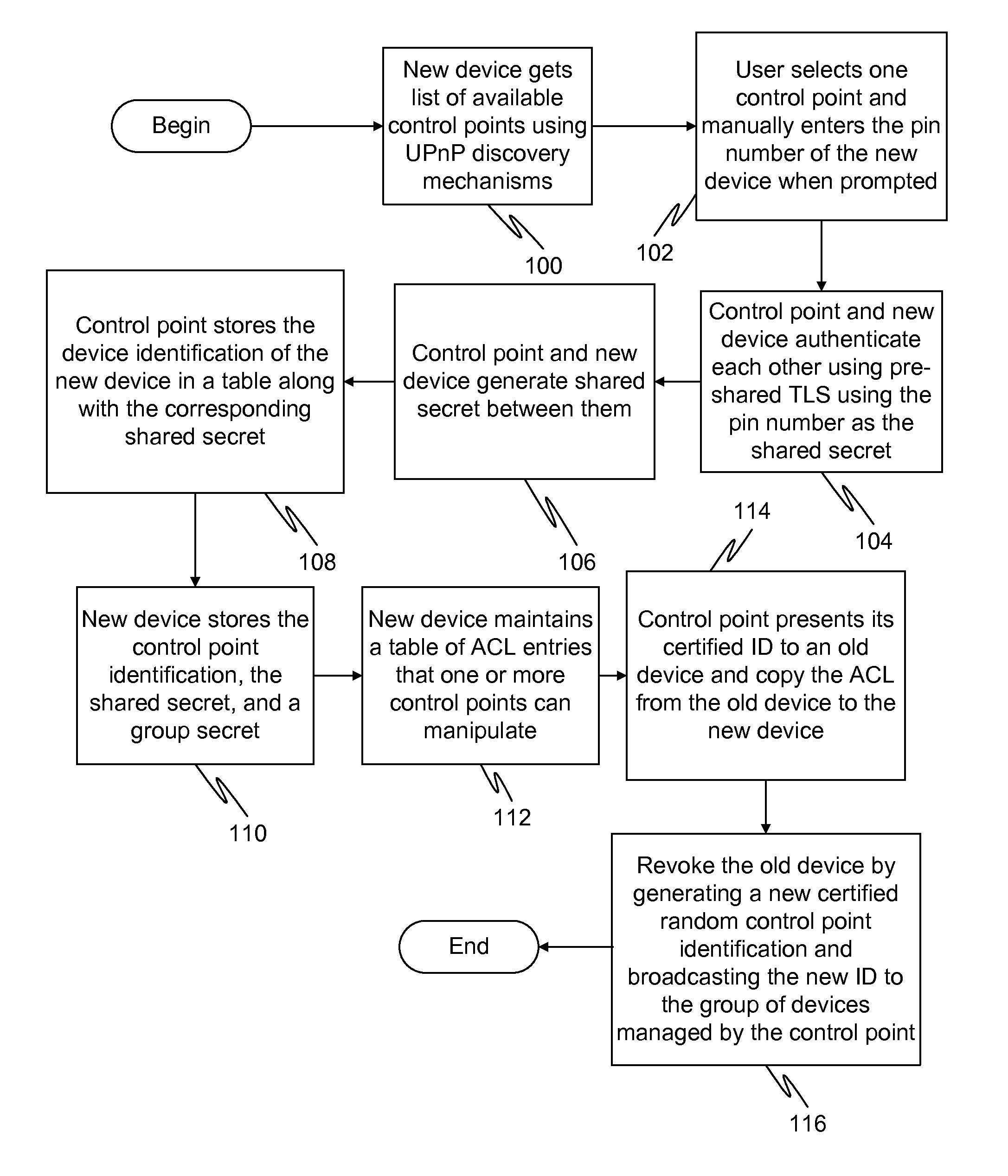
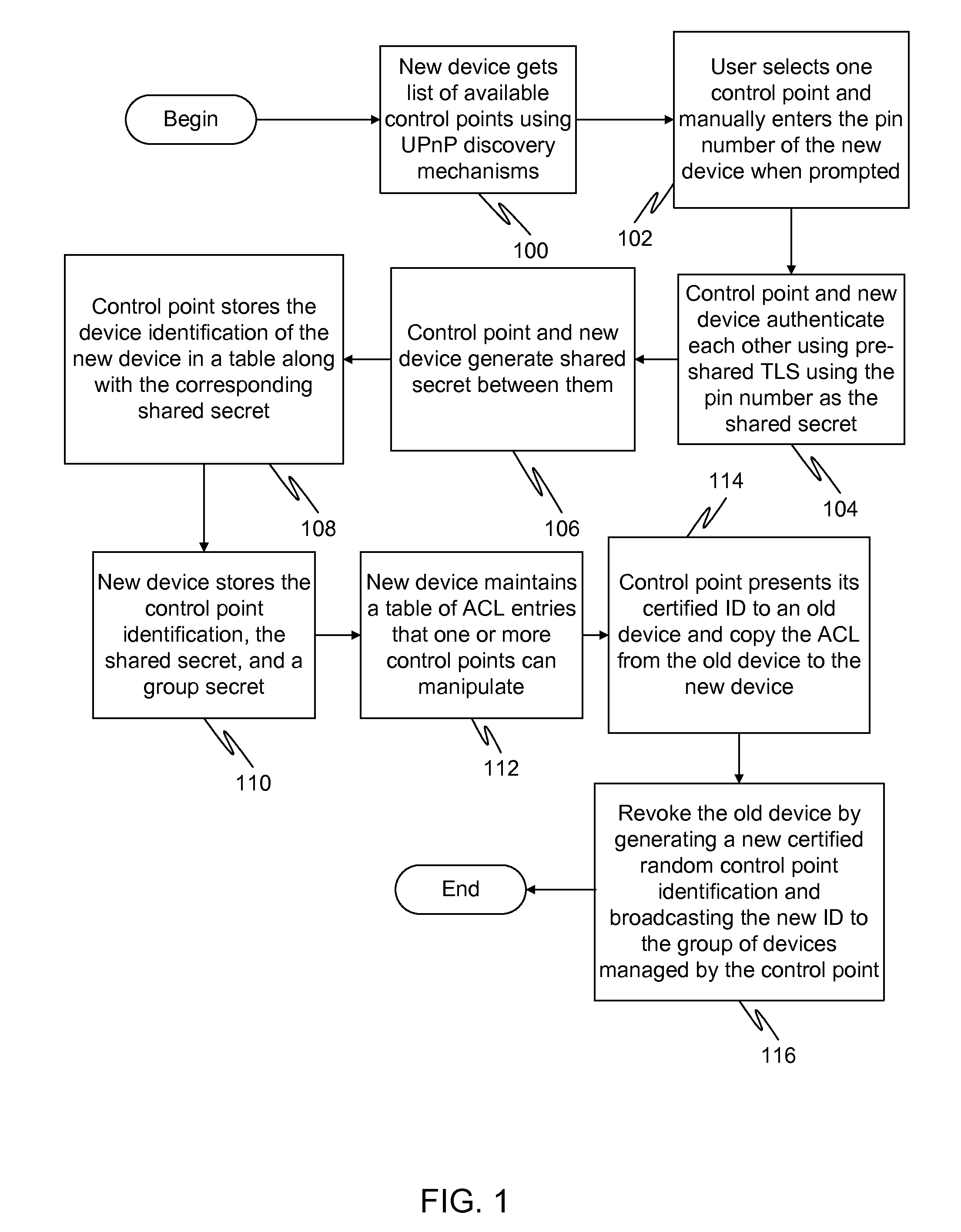
  • Figure 1
    Figure 1
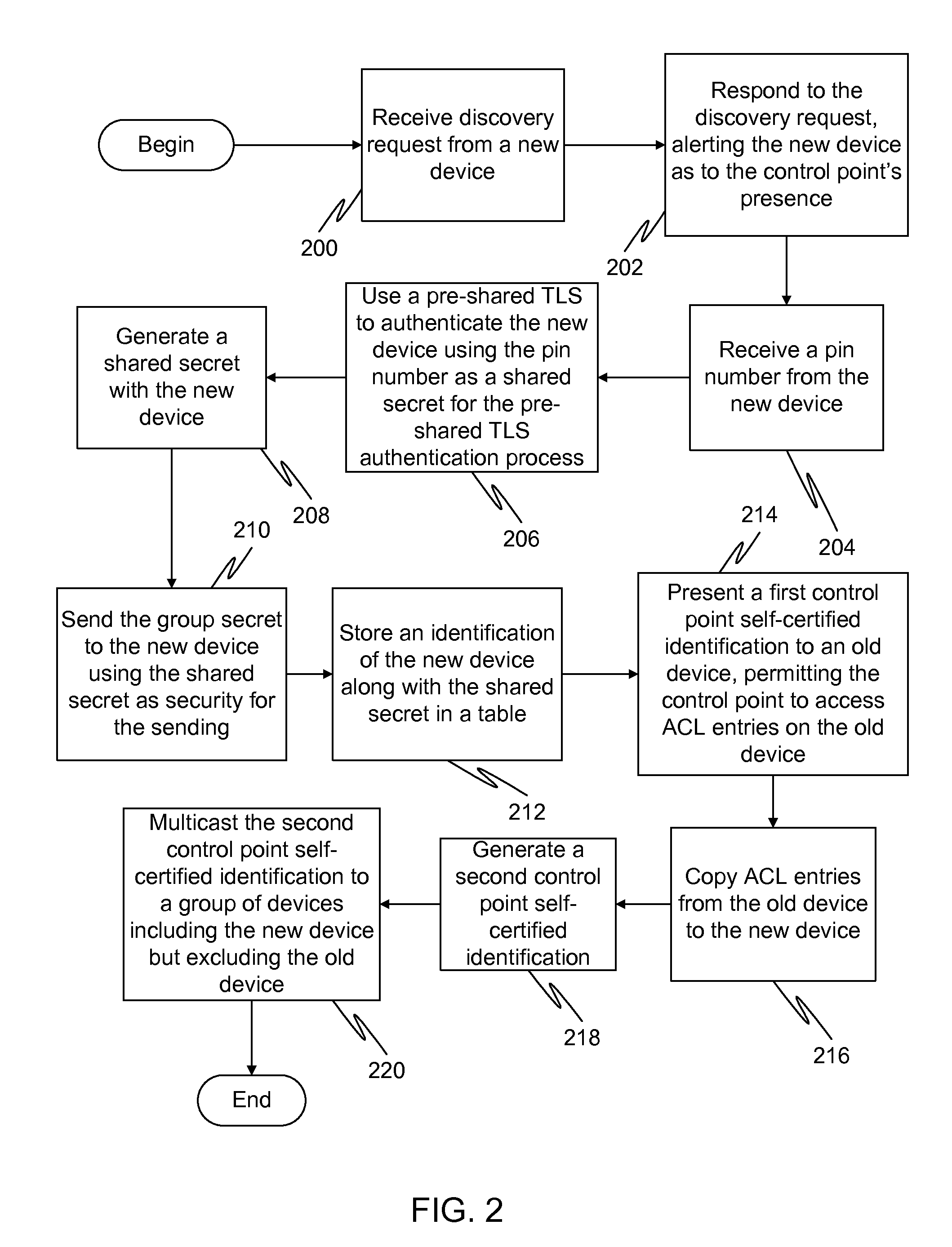
  • Figure 2
    Figure 2
  • Figure 3
    Figure 3
Patent Text Reader

Abstract

In a first embodiment of the present invention, a method for registering a new device to a control point in a home network is provided, the method comprising: generating a first self-certified identification at the control point, the generation using a pseudo-random generated number and using an identification of the control point; and sending a secure message to the new device containing the first self-certified identification.
Need to check novelty before this filing date? Find Prior Art

Description

BACKGROUND OF THE INVENTION

[0001] 1. Field of the Invention

[0002] The present invention relates to home networks. More particularly, the present invention relates to the generation of self-certified identity for efficient access control list management in a home network.

[0003] 2. Description of the Related Art

[0004] Universal Plug and Play (UPnP) is a distributed, open networking architecture that allows devices to connect seamlessly and to simplify the implementation of networks in the home (data sharing, communications, and entertainment) and corporate environments. UPnP achieves this by defining and publishing UPnP device control protocols built upon open, Internet-based communication standards.

[0005] UPnP has grown in popularity of late in part due to the rise in popularity of media servers. Media servers are small computers that store multiple types of content (e.g., photos, music, videos, etc.). The content may then be streamed from a media server to one or more control points (e.g...

Examples

Embodiment Construction

[0022]Reference will now be made in detail to specific embodiments of the invention including the best modes contemplated by the inventors for carrying out the invention. Examples of these specific embodiments are illustrated in the accompanying drawings. While the invention is described in conjunction with these specific embodiments, it will be understood that it is not intended to limit the invention to the described embodiments. On the contrary, it is intended to cover alternatives, modifications, and equivalents as may be included within the spirit and scope of the invention as defined by the appended claims. In the following description, specific details are set forth in order to provide a thorough understanding of the present invention. The present invention may be practiced without some or all of these specific details. In addition, well known features may not have been described in detail to avoid unnecessarily obscuring the invention.

[0023]In accordance with the present inv...