
Windscreen wiper device
a wiper device and wiper technology, applied in vehicle maintenance, vehicle cleaning, domestic applications, etc., can solve the problems of complex machinery, tools, and all the expenses involved
- Summary
- Abstract
- Description
- Claims
- Application Information
AI Technical Summary
Benefits of technology
Problems solved by technology
Method used
Image

Examples
Embodiment Construction
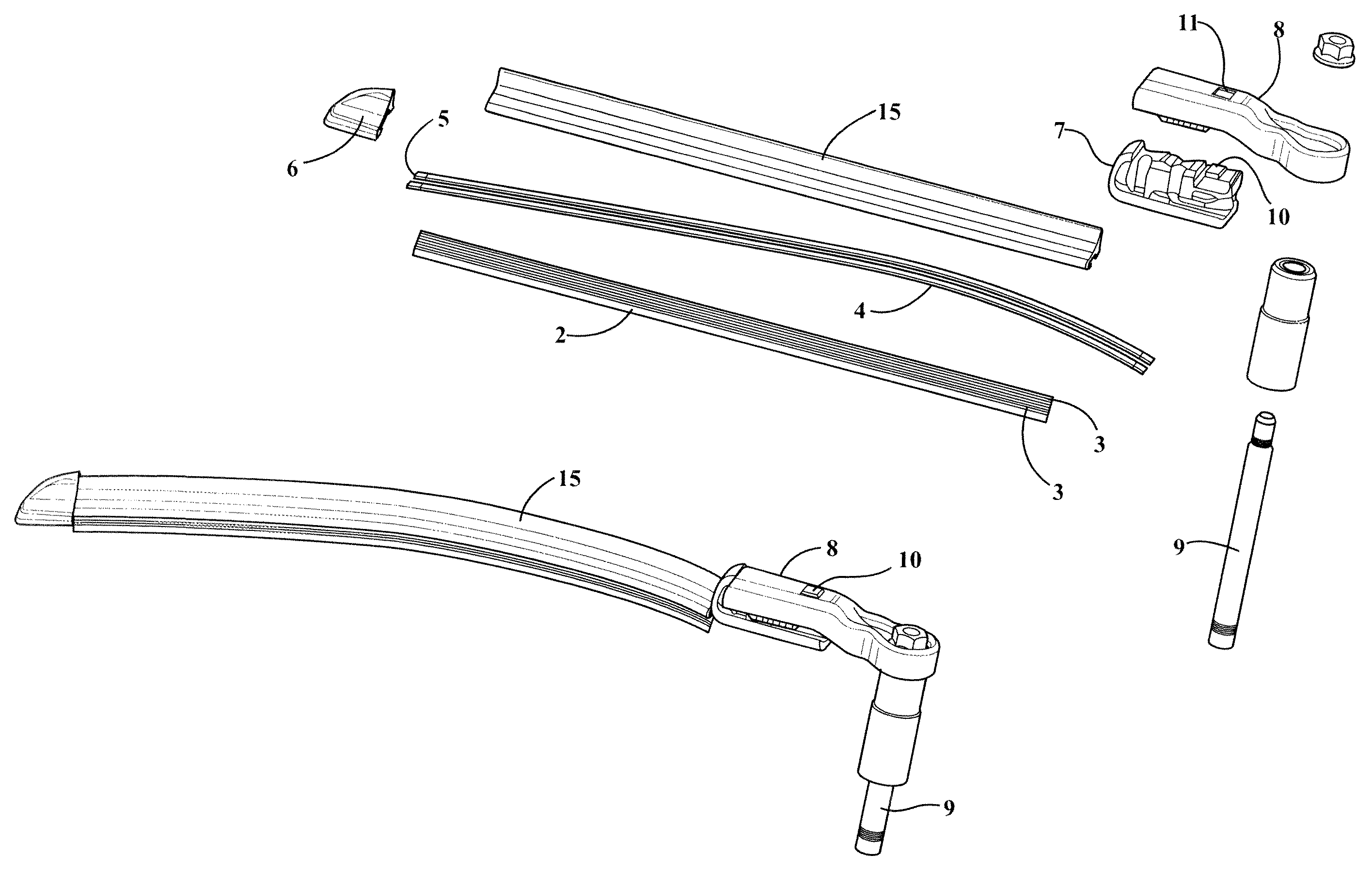
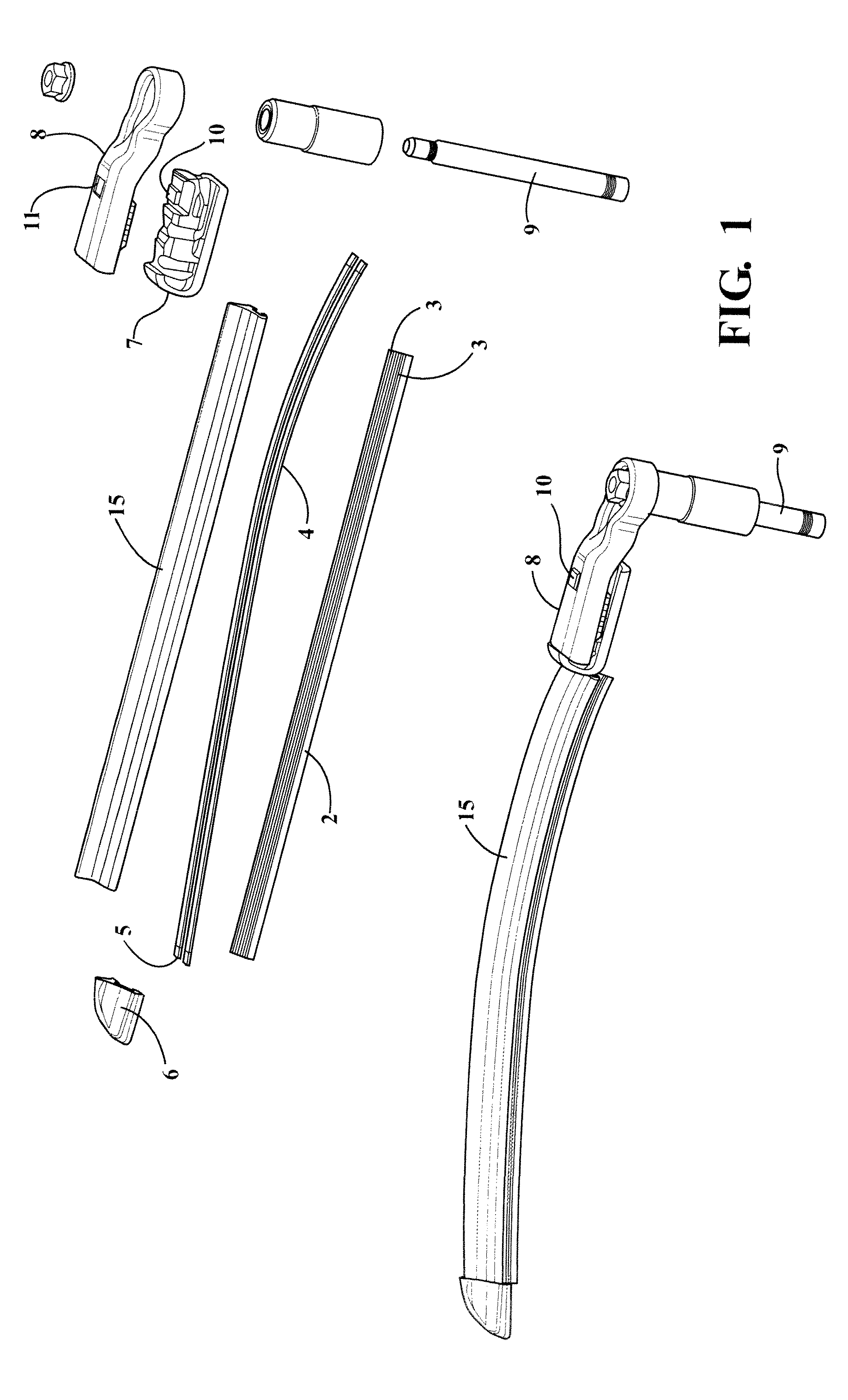
[0023]The windscreen wiper device 1 is built up of an elastomeric wiper blade 2, in the longitudinal sides of which opposing longitudinal grooves 3 are formed, and of longitudinal strips 4 made of spring band steel, which are fitted in the longitudinal grooves 3. The strips 4 form a flexible carrier element for the wiper blade 2, as it were, which is thus biassed in a curved position (the curvature in operative position being that of a windscreen to be wiped).
[0024]Neighbouring ends 5 of the strips 4 at one end of the wiper blade 2 are interconnected by means of a connecting piece 6 or “end cap” functioning as clamping member. In this embodiment, the connecting piece 6 is a separate constructional element, which may be form-locked (“positive locking” or “having a positive fit”) or force-locked to the ends 5 of the strips 4. In another preferred embodiment, the connecting piece 6 is in one piece with the strips 4 made of spring band steel. In the latter case the connecting piece 6 fo...
PUM
 Login to View More
 Abstract
Description
Claims
Application Information
 Login to View More