
Method for synthesizing 1,2-pentanediol
A synthetic method, the technology of pentanediol, applied in the first field, can solve the problems of difficult product separation, serious environmental pollution, polybrominated substances, etc., and achieve the effect of low cost, good product quality and wide source
Patent Information
- Authority / Receiving Office
- CN · China
- Patent Type
- Patents(China)
- Current Assignee / Owner
- Publication Date
- 2013-05-22
- Estimated Expiration
- Not applicable · inactive patent
Smart Images
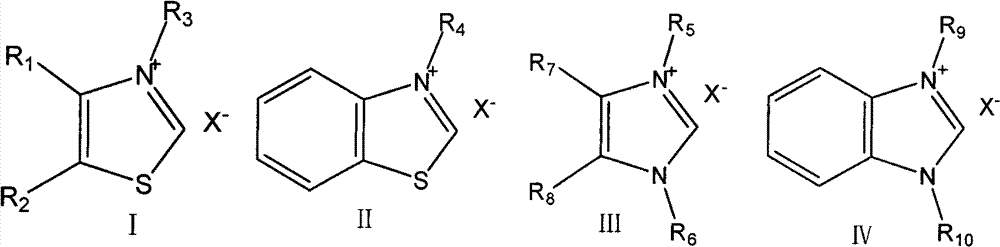
Figure 1 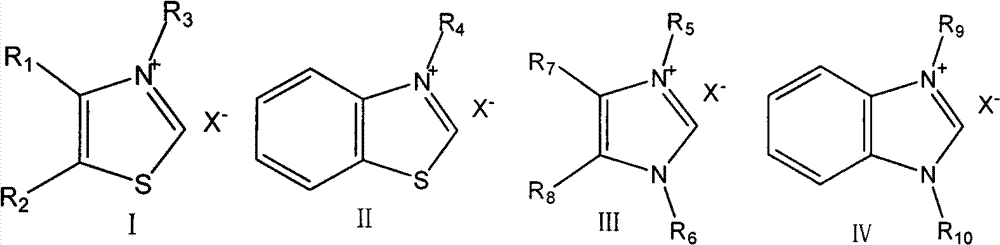
Figure 2 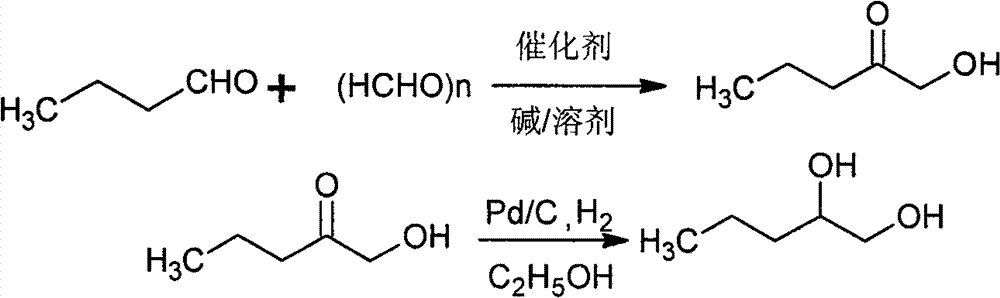
Figure 3
Abstract
Description
technical field
[0001] The invention relates to a synthesis method of 1,2-pentanediol, in particular to a method for preparing 1,2-pentanediol by using n-butyraldehyde and paraformaldehyde as raw materials through the principle of polarity conversion. Background technique
[0002] 1,2-pentanediol is not only used as a fungicide propiconazole intermediate, but also an important raw material for the production of polyester fibers, surfactants, medicines and other products. At present, there are few domestic enterprises producing 1,2-pentanediol, especially few enterprises with large output, which makes the country have to rely on imports to meet demand, which largely restricts the development of propiconazole in China.
[0003] U.S. Patent No. 4479021 discloses a method that uses n-pentene as a raw material to obtain 1,2-pentanediol through epoxidation, alkaline hydrolysis and purification in the presence of formic acid and hydrogen peroxide. The preparation of 1,2-pentanedio...
Examples
Embodiment 1
[0034] Embodiment 1: the first step reaction, in the 500ml reactor that thermometer is housed, stirrer, add n-butyraldehyde 36g (0.5mol), paraformaldehyde 22.5g (0.75mol), catalyst 3-ethylbenzothiazole 12.25 g (0.05 mol) of bromide salt, 5.05 g (0.05 mol) of triethylamine, 200 ml of absolute ethanol, under the protection of nitrogen gas, and react at a constant temperature of 70 ° C for 5 h. After the reaction, distill under reduced pressure to separate light fractions such as n-butyraldehyde and solvent, and rectify the residue under reduced pressure at 20 mmHg to obtain 33 g of intermediate product 1-hydroxyl-2-pentanone, with a yield of 65%, detected by GC Its purity is greater than 98%.
[0035] In the second step reaction, 33g (0.3166mol) of the intermediate product 1-hydroxyl-2-pentanone obtained in the previous step reaction, catalyst Pd / C0.33g, and absolute ethanol 150ml are put into a pressure reactor equipped with a thermometer and agitator In the process, vacuum fi...
Embodiment 2-5
[0036] Embodiment 2-5: Same as Embodiment 1, the difference is that different thiazole (imidazole) salts are involved as catalysts for the first step reaction.
[0037] The first step reaction, feeding: n-butyraldehyde 36g (0.5mol), paraformaldehyde 22.5g (0.75mol), triethylamine 5.05g (0.05mol), absolute ethanol 200ml, 0.05mol catalyst A, B, C or d.
[0038] Operation steps Repeat the first step reaction. Nitrogen protection, constant temperature reaction at 70°C for 5h. After the reaction, low boiling point components such as the solvent were distilled off under reduced pressure, and the residue was distilled under reduced pressure at 20 mmHg to obtain the intermediate product 1-hydroxy-2-pentanone.
[0039] In the second step reaction, the intermediate product 1-hydroxy-2-pentanone is hydrogenated and reduced under the action of catalyst Pd / C, the reaction temperature is controlled at 40-50°C, the reaction time is 4h, and the product 1,2-pentanedi is obtained by vacuum di...
Embodiment 6-12
[0045] Embodiment 6-12: Same as Example 1, the difference is that sodium methoxide, sodium hydroxide, sodium carbonate, 1,8-diazacyclo[5,4,0]undecene-7 (DBU), Sodium acetate, pyridine, and N,N-dimethylethanolamine are used as bases in the first step reaction respectively.
[0046] The first step reaction, feeding: 36g (0.5mol) of n-butyraldehyde, 22.5g (0.75mol) of paraformaldehyde, 12.25g (0.05mol) of 3-ethylbenzothiazole bromide, 200ml absolute ethanol, 0.05mol methanol Sodium, Sodium Hydroxide, Sodium Carbonate, DBU, Sodium Acetate, Pyridine, or N,N-Dimethylethanolamine.
[0047]Operation steps Repeat the first step reaction. Nitrogen protection, constant temperature reaction at 70°C for 5h. After the reaction, low boiling point components such as the solvent were distilled off under reduced pressure, and the residual reactants were distilled under reduced pressure at 20 mmHg to obtain the intermediate product 1-hydroxyl-2-pentanone. GC detects its purity and calculates ...