
Preparation method of fluoropyridine compounds
A fluorine-containing pyridine and compound technology is applied in the field of preparation of pharmaceutical intermediates, which can solve the problems of single application object, inability to use large-scale mass production, etc., and achieve the effects of reducing damage and high yield.
Patent Information
- Authority / Receiving Office
- CN · China
- Patent Type
- Applications(China)
- Current Assignee / Owner
- Publication Date
- 2013-01-30
- Estimated Expiration
- Not applicable · inactive patent
Smart Images
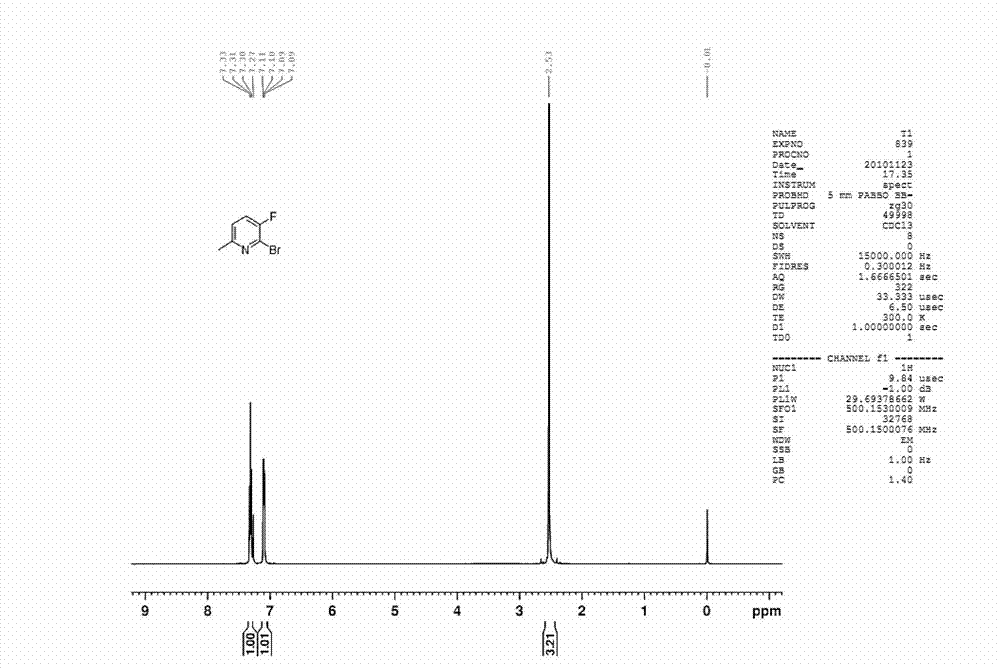
Figure 1 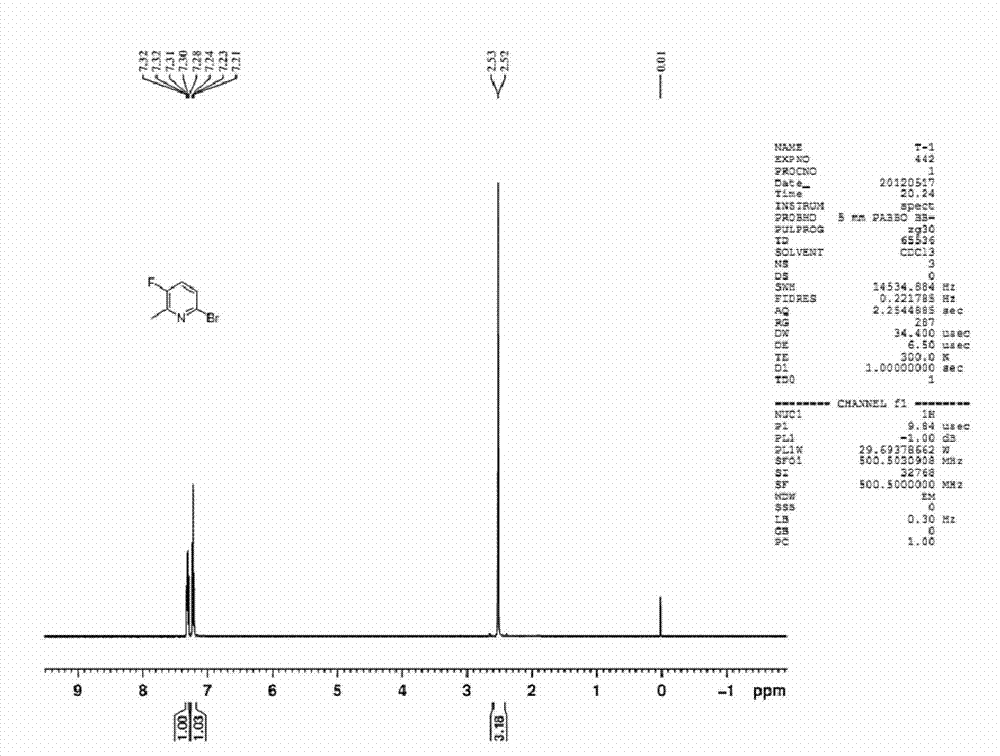
Figure 2 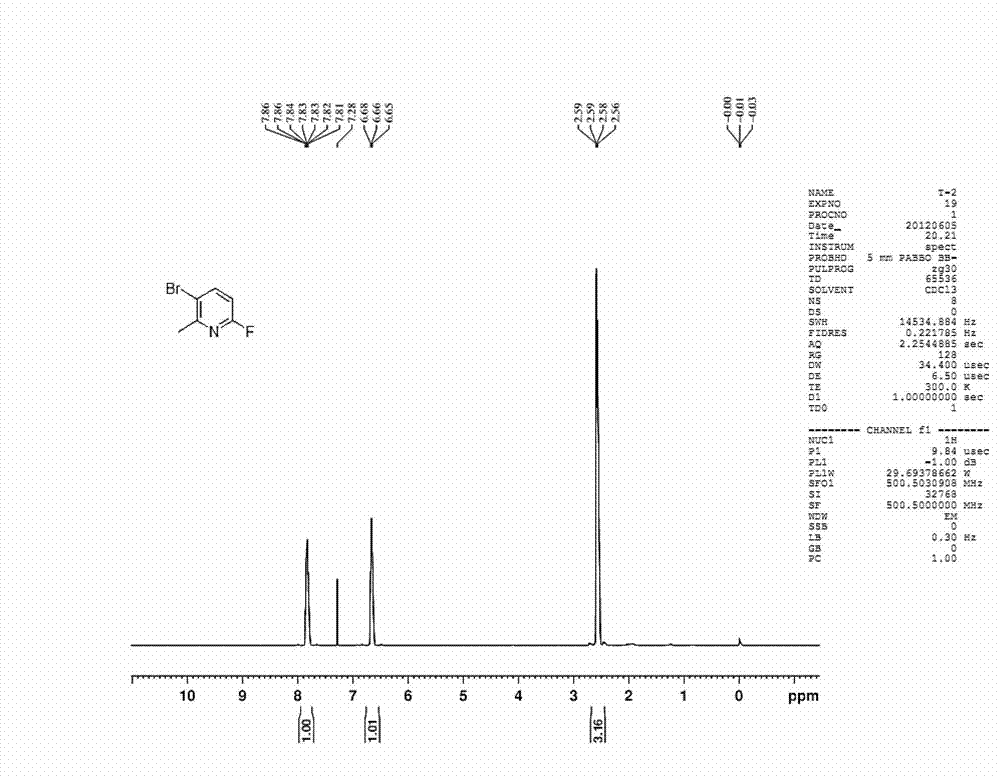
Figure 3
Abstract
Description
technical field
[0001] The present invention relates to a method in the technical field of preparation of pharmaceutical intermediates, in particular to a method for preparing fluorine-containing pyridine compounds. Background technique
[0002] Pyridine derivatives are an important class of pharmaceutical intermediates, which can be used as raw materials for the synthesis of drugs such as steroids, sulfonamides, antihistamines and spirocyclic amides. Fluorine-containing pyridine compounds are important pyridine derivatives and are widely used in organic synthesis and pharmaceutical intermediate synthesis. Since the atomic radii of fluorine atoms and hydrogen atoms are quite close, when a hydrogen atom in a molecule is replaced by a fluorine atom, it will not cause a significant change in the three-dimensional configuration of the molecule. However, due to the strong electron-withdrawing ability of fluorine atoms, the electronic properties of the original molecule will ofte...
Examples
Embodiment 1
[0034] Preparation of 2-bromo-3-fluoro-6-methylpyridine
[0035] synthetic route:
[0036]
[0037] making process:
[0038] The first step: under ice bath conditions, 3-amino-6-picoline, compound A1 (22.6g, 0.209mol, 1.0eq) was added to 150mL of acetonitrile, and sodium bromide was added thereto under stirring and sodium bromate aqueous solution 100mL (containing sodium bromide 0.139mol, 14.3g, containing sodium bromate 0.070mol, 10.6g), after adding, concentrated sulfuric acid (0.314mol, 30.7g, 1.5eq) was added dropwise to it aqueous solution (80mL) and kept in cold conditions. After reacting at room temperature for 3 hours, a saturated sodium bicarbonate solution was added to the reaction solution until the reaction solution became neutral. The reaction solution was extracted with ethyl acetate (150 mL*3). The organic phase was dried with anhydrous sodium sulfate, filtered, spin-dried, and recrystallized with ethyl acetate / petroleum ether system to obtain 3-amino-2-b...
Embodiment 2
[0042] Preparation of 2-bromo-5-fluoro-6-methylpyridine
[0043] synthetic route:
[0044]
[0045] making process:
[0046] The first step: 2-hydroxyl-5-nitro-6-picoline, compound B1 (26.8g, 0.174mol, 1.0eq) was added to 120mL acetonitrile, and slowly added phosphorus oxybromide ( 99.8g, 0.348mol, 2.0eq), after the addition, the reaction temperature was raised to 110°C-130°C, and the reaction was continued for 3 hours. The reaction solution was cooled and slowly added to an ice-water mixture to quench, adjusted to neutrality with saturated sodium bicarbonate solution, extracted with dichloromethane (150mL*3), dried with anhydrous sodium sulfate, filtered, and spin-dried to obtain 2-bromo-6-methyl-5-nitropyridine, 35.0 g of the crude product of compound B2, the yield is 92.8%
[0047] The second step: the crude product B2 (35.0 g, 0.161 mol) was added to 150 ml of methanol, 15 g of Raney nickel was added thereto, and reacted at room temperature under hydrogen pressure (40 ...
Embodiment 3
[0051] Preparation of 5-bromo-2-fluoro-6-methylpyridine
[0052]
[0053] making process:
[0054] The first step: under ice-bath conditions, 2-amino-6-picoline, compound C1 (27.3g, 0.253mol, 1.0eq) was added to 180mL of acetonitrile, and sodium bromide was added thereto under stirring and sodium bromate aqueous solution 100mL (containing sodium bromide 0.169mol, 17.4g, containing sodium bromate 0.084mol, 12.7g), after adding, concentrated sulfuric acid (0.380mol, 37.2g, 1.5eq) was added dropwise to it aqueous solution (80mL) and kept in cold conditions. After reacting at room temperature for 3 hours, a saturated sodium bicarbonate solution was added to the reaction solution until the reaction solution became neutral. The reaction solution was extracted with ethyl acetate (150 mL*3). The organic phase was dried with anhydrous sodium sulfate, filtered, spin-dried, and recrystallized with ethyl acetate / petroleum ether system to obtain 5-bromo-2-amino-6-picoline, namely com...