
Processes for production of synthetic naphtha
A manufacturing method and a technology for naphtha, which are used in the catalytic reforming of naphtha, the preparation of liquid hydrocarbon mixtures, the petroleum industry, etc. Heat and unstable operation stabilization effect
Patent Information
- Authority / Receiving Office
- CN · China
- Patent Type
- Applications(China)
- Current Assignee / Owner
- Publication Date
- 2013-01-30
- Estimated Expiration
- Not applicable · inactive patent
Smart Images
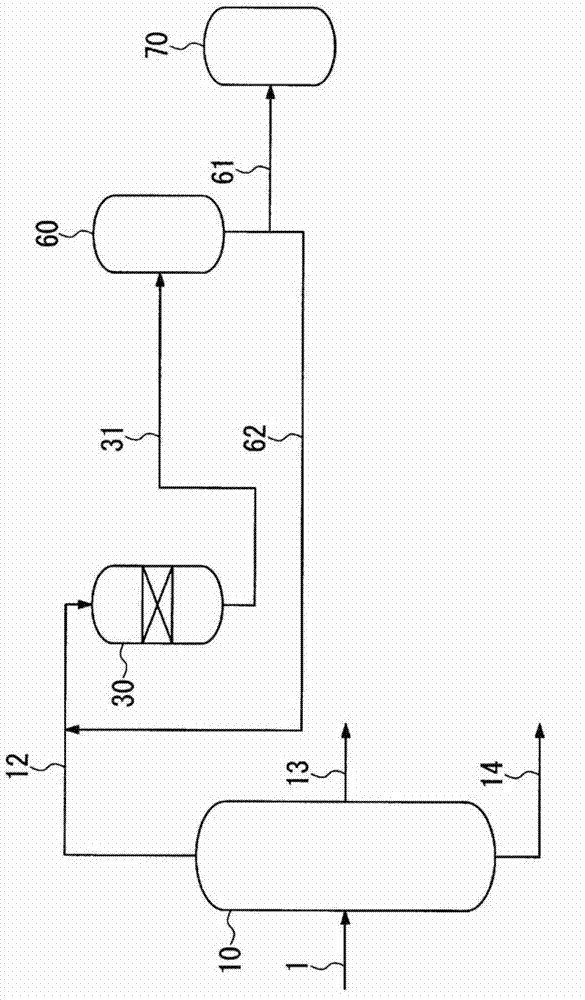
Figure 1 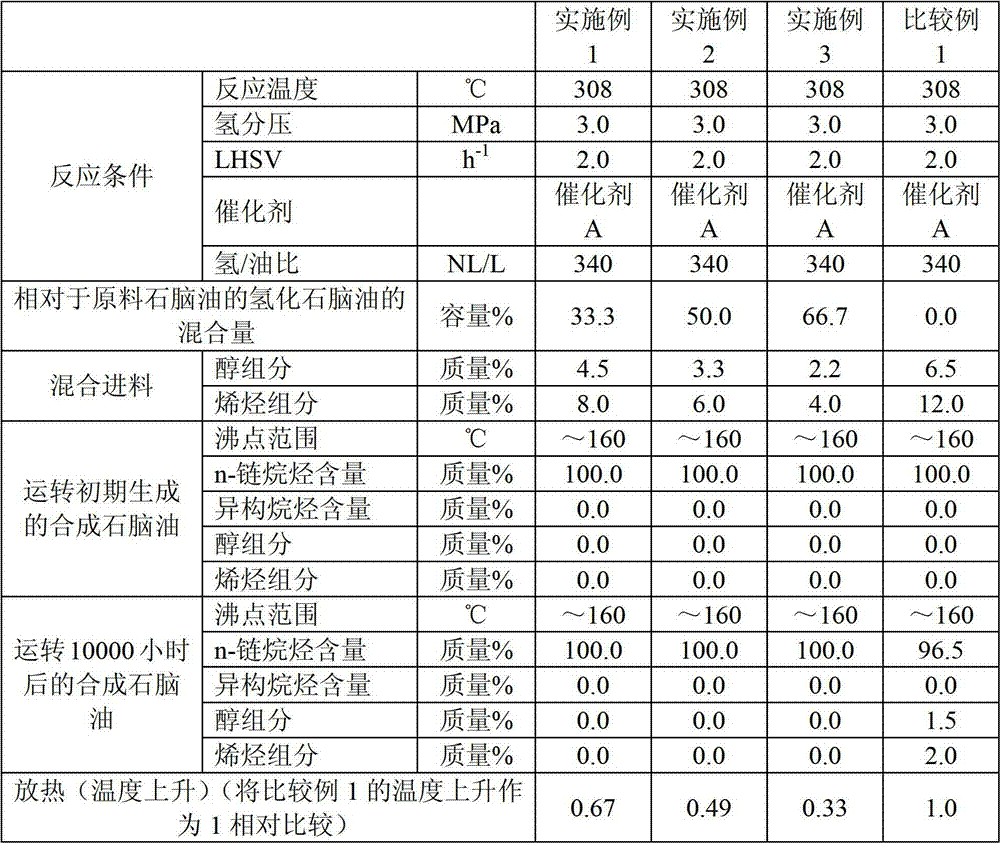
Figure 2 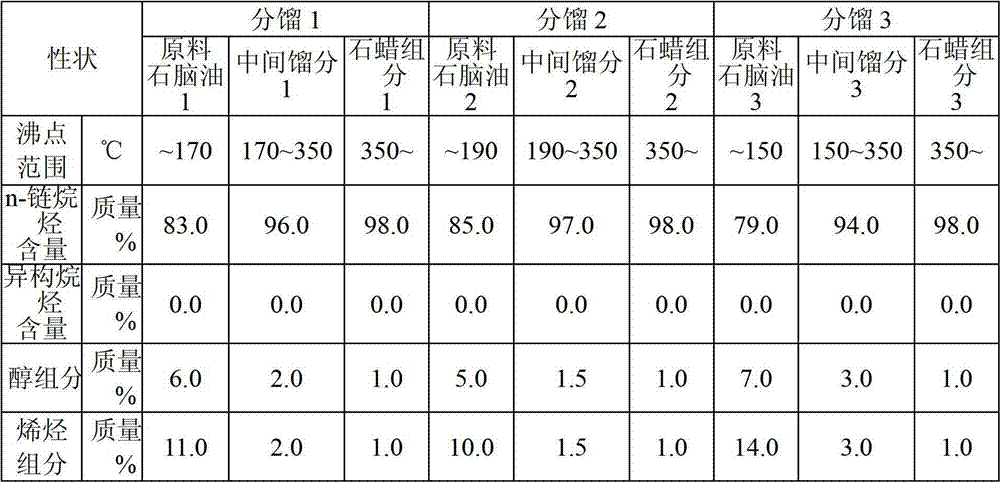
Figure 3
Abstract
Description
[0001] This application is a divisional application of Chinese patent application No. 200880108565.4 (international application number PCT / JP2008 / 067308) submitted on March 24, 2010. technical field
[0002] The present invention relates to a process for the manufacture of synthetic naphtha from synthetic oil obtained by the Fischer-Tropsch synthesis. Background technique
[0003] In recent years, from the viewpoint of reducing the environmental load, there has been a demand for an environmentally friendly green liquid fuel with a low content of sulfur components and aromatic hydrocarbons. Therefore, in the petroleum industry, Fischer-Tropsch synthesis (hereinafter referred to as "FT synthesis") using carbon monoxide and hydrogen as raw materials has been studied as a method for producing green fuels. According to the FT synthesis method, since it is possible to produce a liquid fuel base material, such as a diesel fuel base material, which is rich in paraffins and does not ...
Examples
Embodiment 1
[0086] (hydrofinishing of naphtha fractions)
[0087] Fill hydrogenation catalyst A (150ml) in figure 1 In the flow-through reactor of the fixed bed, that is, the hydrotreating unit 30, the naphtha fraction (raw naphtha) obtained as above is supplied from the top of the reactor 30 at a rate of 300ml / h, Hydrotreating was carried out under the above reaction conditions.
[0088] That is to say, relative to the naphtha fraction, hydrogen is supplied from the top of the tower at a hydrogen / oil ratio of 340NL / L, and the back pressure valve is adjusted to stabilize the pressure of the reaction tower at an inlet pressure of 3.0MPa (hydrogen partial pressure) for hydrogenation. refined. The reaction temperature at this time was 308°C.
[0089] The naphtha fraction hydrotreated in the hydrotreating unit 30 is stored in a storage tank 70 from a line 61 via a stabilization column 60 from a line 31 .
[0090] Here, a part of the obtained hydrogenated naphtha fraction is recycled from ...
Embodiment 2
[0094] (hydrofinishing of naphtha fractions)
[0095] Catalyst A (150ml) is filled in a flow-through reactor of a fixed bed, that is, a hydrotreating unit 30, and the naphtha fraction (raw naphtha ), under hydrogen flow, under the following reaction conditions for hydrogenation treatment.
[0096] That is to say, relative to the naphtha fraction, hydrogen is supplied from the top of the tower at a hydrogen / oil ratio of 340NL / L, and the back pressure valve is adjusted to stabilize the pressure of the reaction tower at an inlet pressure of 3.0MPa (hydrogen partial pressure) for hydrogenation. refined. The reaction temperature at this time was 308°C.
[0097] Here, the obtained hydrogenated naphtha fraction was mixed with 50.0% by volume relative to the raw material naphtha, and after obtaining the mixed feed having the properties shown in Table 2, it was carried out under the same conditions as the above-mentioned hydrotreating conditions. Processing to obtain synthetic napht...
Embodiment 3
[0100] (hydrofinishing of naphtha fractions)
[0101] Catalyst A (150ml) is filled in a flow-through reactor of a fixed bed, that is, a hydrotreating unit 30, and the naphtha fraction (raw naphtha ), under hydrogen flow, under the following reaction conditions for hydrogenation treatment.
[0102] That is to say, relative to the naphtha fraction, hydrogen is supplied from the top of the tower at a hydrogen / oil ratio of 340NL / L, and the back pressure valve is adjusted to stabilize the pressure of the reaction tower at an inlet pressure of 3.0MPa (hydrogen partial pressure) for hydrogenation. refined. The reaction temperature at this time was 308°C.
[0103] Here, the obtained hydrogenated naphtha fraction was mixed at 66.7% by volume with respect to the raw naphtha, and after obtaining the mixed feed having the properties shown in Table 2, it was carried out under the same conditions as the above-mentioned hydrotreating conditions. Processing to obtain synthetic naphtha. Ta...