
A method for utilizing water-phase extraction process wastewater of tea seed oil and shampoo formula
A water-phase extraction, shampoo technology, applied in pharmaceutical formulations, cosmetic preparations, hair care and other directions, can solve problems such as efficient utilization of waste water that has not yet been found, reduce the amount of surfactants and conditioners, and improve economical efficiency. Benefit, the effect of reducing pollution
Patent Information
- Authority / Receiving Office
- CN · China
- Patent Type
- Patents(China)
- Current Assignee / Owner
- Publication Date
- 2016-03-16
Smart Images
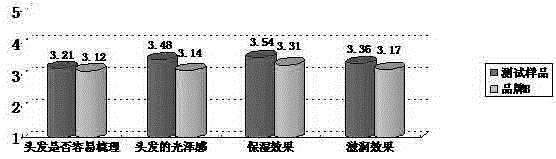
Figure 1 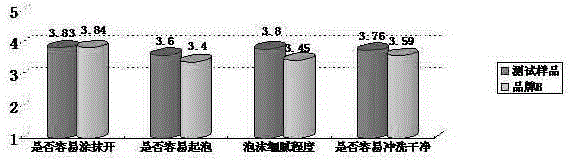
Figure 2 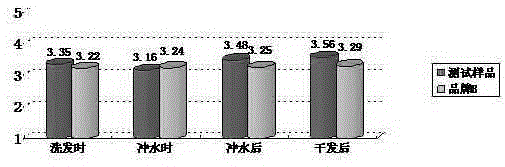
Figure 3
Abstract
Description
technical field
[0001] The invention belongs to the field of utilization of by-products in agricultural product processing, and in particular relates to a method for utilizing waste water from tea seed oil extraction process in water phase. technical background
[0002] Camellia oleifera seed, also known as camellia seed, is one of the world's four major woody oil plants unique to my country. Camellia oleifera seeds contain about 10.0-14.0% tea saponin in addition to 35.0-60.0% tea seed oil. The production process of tea seed oil can be pressing method, solvent leaching method and aqueous phase extraction method (including aqueous enzymatic method, water substitution method, etc.). Among them, the process of extracting tea seed oil by the aqueous phase extraction method has the advantages of good oil quality and low energy consumption, but there is a large amount of process wastewater, wastewater discharge will pollute the environment, and wastewater treatment will increase...
Examples
Embodiment 1
[0020] Shampoo is prepared from the following raw materials by weight percentage: Process waste water: 70; Sodium fatty alcohol polyoxyethylene ether sulfate: 12; Sodium lauroyl glutamate: 5; Alkyl glucoside: 3; Fatty acid esters: 2; Hydroxypropyl guar gum: 0.5; Cationic cellulose: 0.5; Acrylate copolymer: 3; D-panthenol: 0.5; Allantoin: 0.5; Dimethicone: 2 ; Citric acid: appropriate amount; Essence: 0.4;
[0021] Process flow: Weigh the waste water by weight percentage and add it to the emulsification tank, heat it to 75-80°C, add the acrylate copolymer into the emulsification tank, and neutralize it with a dilute sodium hydroxide solution to neutrality, then add the fatty alcohol polyoxyethylene Add sodium ether sulfate, sodium lauroyl glutamate, alkyl glucoside and ethylene glycol distearate into the emulsification tank successively, mix and stir for 15-20 minutes, then cool down to 45-50°C and add hydroxypropyl guar in turn Glue, cationic cellulose, D-panthenol, allantoin...
Embodiment 2
[0023] Shampoo is prepared from the following raw materials by weight percentage: process wastewater: 67; sodium fatty alcohol polyoxyethylene ether sulfate: 10; sodium lauroyl glutamate: 5; alkyl glucoside: 3; cocamidopropyl Betaine: 3; Ethylene Glycol Distearate: 2; Hydroxypropyl Guar Gum: 0.5; Cationic Cellulose: 0.5; Acrylates Copolymer: 3; D-Panthenol: 1; Allantoin: 0.5 ;Polydimethylsiloxane: 2; Polysiloxane quaternary ammonium salt-1:2; Citric acid: appropriate amount; Fragrance: 0.4;
[0024] Process flow: Weigh the waste water by weight percentage and add it to the emulsification tank, heat it to 75-80°C, add the acrylate copolymer into the emulsification tank, and neutralize it with a dilute sodium hydroxide solution to neutrality, then add the fatty alcohol polyoxyethylene Add sodium ether sulfate, sodium lauroyl glutamate, alkyl glucoside, cocamidopropyl betaine and ethylene glycol distearate into the emulsification tank successively, mix and stir for 15-20 minutes,...
Embodiment 3
[0026] The shampoo is prepared from the following raw materials by weight percentage: process wastewater: 65; sodium fatty alcohol polyoxyethylene ether sulfate: 9; sodium lauroyl glutamate: 6; alkyl glucoside: 3; coconut oil fatty acid diethanol Amide: 2; Cocamidopropyl Betaine: 3; Ethylene Glycol Distearate: 2; Hydroxypropyl Guar: 0.5; Cationic Cellulose: 0.3; Acrylate Copolymer: 3; Alcohol: 0.5; Allantoin: 0.5; Polydimethylsiloxane: 3; Polysiloxane quaternary ammonium salt-1:1; Citric acid: appropriate amount; Fragrance: 0.4;
[0027] Process flow: Weigh the waste water by weight percentage and add it to the emulsification tank, heat it to 75-80°C, add the acrylate copolymer into the emulsification tank, and neutralize it with a dilute sodium hydroxide solution to neutrality, then add the fatty alcohol polyoxyethylene Add sodium ether sulfate, sodium lauroyl glutamate, alkyl glucoside, coconut oil fatty acid diethanolamide, cocamidopropyl betaine and ethylene glycol distear...