
Lithium ion battery
A lithium-ion battery and electrode group technology, which is applied in battery electrodes, secondary batteries, circuits, etc., can solve the problem that the anti-overdischarge solution of lithium-ion batteries is not ideal.
Patent Information
- Authority / Receiving Office
- CN · China
- Patent Type
- Applications(China)
- Current Assignee / Owner
- Publication Date
- 2014-04-02
Smart Images
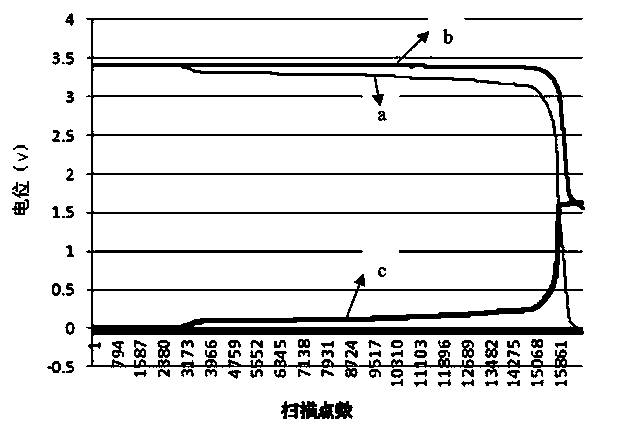
Figure 1 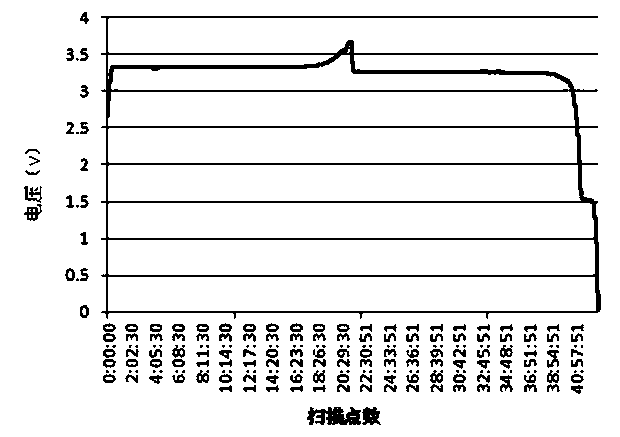
Figure 2
Abstract
Description
technical field
[0001] The invention relates to a lithium ion battery. Background technique
[0002] Compared with other chemical power sources, lithium-ion batteries have many excellent properties, such as high energy density, long cycle life, high open circuit voltage, no memory effect, safety and pollution-free, etc. After nearly two decades of rapid development, lithium-ion batteries have been widely used in mobile phones, notebook computers, digital cameras and other fields. With the rise of global oil prices and the enhancement of people's awareness of environmental protection, both research institutions and enterprises are paying attention to the development of electric vehicles. Researchers generally believe that lithium-ion batteries are one of the most promising chemical power sources for electric vehicles. Compared with other mobile devices, electric vehicles have higher requirements on the performance of batteries such as cycle life, energy density, consistency...
Examples
preparation example Construction
[0033] The preparation of the negative electrode can be that first lithium and / or lithium alloy, negative electrode active material and negative electrode binder are configured together to form a slurry and attached to the negative electrode conductive substrate, for example, lithium and / or lithium alloy, negative electrode active material and negative electrode binder can be After dry mixing of the binder, etc., it is attached to the negative electrode conductive substrate by spraying. It is also possible to wet mix lithium and / or lithium alloy, negative electrode active material, negative electrode binder, etc. with solvents and selectively add dispersants, etc., It is attached to the negative electrode conductive substrate by slurry coating and other methods. Generally, the solvent used at this time is an oily solvent, and the binder is an oily binder. Then drying, calendering, etc., wherein, the steps of drying and calendering are the same as the prior art, that is, drying ...
Embodiment approach
[0035] Among them, the separator can be selected from various separators used in lithium-ion batteries known to those skilled in the art, such as polyolefin microporous membrane (PP), polyethylene felt (PE), glass fiber felt or ultrafine glass fiber paper or PP / PE / PP. As a preferred embodiment, the separator is PP / PE / PP.
[0036] The casing is not limited in the present invention, and various battery casings known to those skilled in the art can be used, such as hard casings such as steel casings or aluminum casings, or soft packaging casings such as aluminum-plastic films, and the shape and size can be designed according to actual conditions .
[0037] The preparation method of the lithium-ion battery provided by the present invention can be a method known to those skilled in the art. Generally speaking, the method includes winding the positive pole, the negative pole and the separator between the positive pole and the negative pole in sequence to form a pole core, and The...
Embodiment 1
[0041] (1) Preparation of positive electrode:
[0042] 90g of lithium iron phosphate (D 50 =0.3 microns), 10g of iron phosphate with a minimum primary particle size of 30 microns (D 50=35 microns), 4g of binder polyvinylidene fluoride (PVDF), 5g of conductive agent SP (super conductive carbon black), 0.5g of dispersant polyvinylpyrrolidone (PVP) and 120g of N-methylpyrrolidone were added Stir in a vacuum mixer to form a uniform positive electrode slurry. The positive electrode slurry was evenly coated on both sides of an aluminum foil with a thickness of 16 μm, and then dried at 150° C. After rolling and cutting, a positive electrode sheet with a size of 453*40 mm is obtained.
[0043] (2) Preparation of negative electrode:
[0044] 45g natural graphite, 5g lithium titanate (LTO), 1g binder styrene-butadiene rubber latex (SBR), 0.5g binder carboxymethylcellulose (CMC), 0.025g metal lithium powder (purity 99.9%), 125g of NMP (N-methylpyrrolidone) was added into a vacuum mi...