
Quinoline deviate and preparation method and application thereof and corrosion and scale inhibitor composition
A technology of corrosion and scale inhibitors and derivatives, applied in drilling compositions, chemical instruments and methods, earthwork drilling and production, etc., can solve problems such as water injection wellbore protection research, achieve excellent corrosion and scale inhibition performance, excellent Corrosion and scale inhibition, easy to degrade effect
Patent Information
- Authority / Receiving Office
- CN · China
- Patent Type
- Applications(China)
- Current Assignee / Owner
- Publication Date
- 2015-04-29
Smart Images
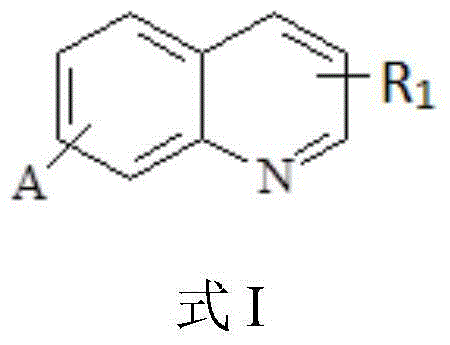
Figure 1 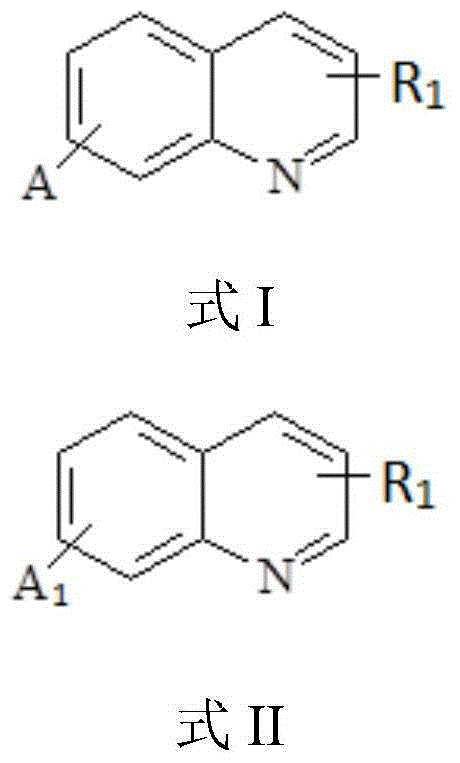
Figure 2 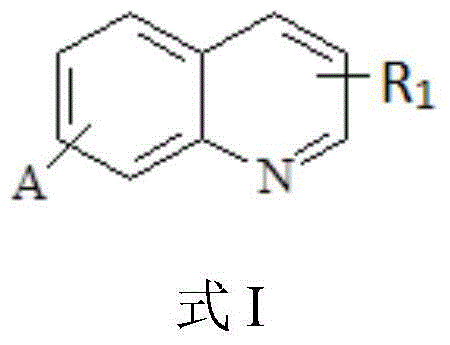
Figure 3
Abstract
Description
technical field
[0001] The invention relates to a quinoline derivative, a preparation method and application thereof, and a corrosion and scale inhibitor composition containing the quinoline derivative. Background technique
[0002] At present, most oil fields in my country have entered the middle and late stage of development, and water injection is widely used for oil production. In the case of severe shortage of water resources, the reinjection of oil production sewage not only solves the problem of water shortage, but also solves the environmental pollution caused by the discharge of oil production sewage. problem; however, oil production wastewater contains a large number of microorganisms, Ca 2+ , Mg 2+ , Cl - , SO 4 2- Corrosion and scaling ions can easily cause corrosion and scaling of facilities, especially under high temperature and high pressure conditions in the wellbore. Reduce the permeability of oil layers, seriously affecting the production and developmen...
Examples
Embodiment 1
[0046] This example was used to prepare 2-methyl-5-polyoxyethylene-quinoline.
[0047] Add 19.2g of 2-methyl-5-hydroxyquinoline (chemical reagent, TCI (Shanghai) Chemical Industry Development Co., Ltd.), catalyst (sodium hydroxide, 0.1 g) into the reactor, close the reactor, and replace with nitrogen Air in the kettle, stirring, heating up to 120° C., slowly press in about 44 grams of ethylene oxide, and then continue the reaction for two hours. Cool down to get the product. NMR 13 The analysis results of C showed that the peaks with chemical shifts of 67-72 were the formed ether bonds.
Embodiment 2
[0049] This example was used to prepare 3-methyl-6-polyoxyethylene-quinoline.
[0050] Add 19.2g of 3-methyl-6-hydroxyquinoline (chemical reagent, TCI (Shanghai) Chemical Industry Development Co., Ltd.), catalyst (sodium hydroxide, 0.1 g) into the reactor, close the reactor, and replace with nitrogen Air in the kettle, stirring, heating up to 120°C, slowly press in about 27 grams of ethylene oxide, and then continue the reaction for two hours. Cool down to get the product. NMR 13 The analysis results of C showed that the peaks with chemical shifts of 67-72 were the formed ether bonds.
Embodiment 3
[0052] This example was used to prepare 4-methyl-7-polyoxyethylene-quinoline.
[0053] Add 19.2g of 4-methyl-7-hydroxyquinoline (chemical reagent, TCI (Shanghai) Chemical Industry Development Co., Ltd.), catalyst (sodium hydroxide, 0.1 g) into the reactor, close the reactor, and replace with nitrogen Air in the kettle, stirring, heating up to 120°C, slowly press in about 88 grams of ethylene oxide, and then continue the reaction for two hours. Cool down to get the product. NMR 13 The analysis results of C showed that the peaks with chemical shifts of 67-72 were the formed ether bonds.