
High-activity flue gas desulfurization catalyst and preparation method thereof
A desulfurization catalyst and high-activity technology, applied in chemical instruments and methods, physical/chemical process catalysts, separation methods, etc., can solve problems such as strong interaction and uniform dispersion of unfavorable active components
Patent Information
- Authority / Receiving Office
- CN · China
- Patent Type
- Applications(China)
- Current Assignee / Owner
- Publication Date
- 2016-06-01
Smart Images
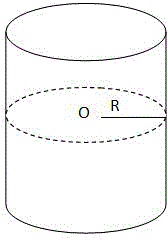
Figure 1 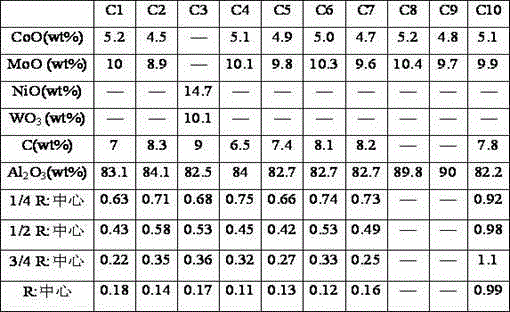
Figure 2
Abstract
Description
technical field
[0001] The invention relates to a highly active flue gas desulfurization catalyst and a preparation method thereof. Background technique
[0002] SO 2 It is the main air pollutant and the main cause of acid rain, which seriously pollutes the environment and is seriously harmful to the human body. The emission of coal-fired flue gas is SO 2 main source of . The traditional flue gas desulfurization is wet desulfurization. This method has complex process, high investment cost and secondary pollution. The dry desulfurization process is simple, but the desulfurization rate is low. Catalytic desulfurization greatly improves the efficiency of dry desulfurization.
[0003] SO in flue gas 2 Catalytic reduction technology is currently the most advanced flue gas desulfurization technology in the world. It can be applied to the desulfurization of flue gas from coal-fired or oil-fired boilers. It has the advantages of low operating costs and available by-products (sulf...
Examples
Embodiment 1
[0036] Weigh the pore volume as 0.9ml / g and the specific surface area as 220m 2 100 grams of gamma-phase cylindrical strip-shaped alumina carrier / g is put into the spray rolling pot, and in the rotating state, spray and impregnate 25 ml of xylitol aqueous solution with a mass concentration of 40% to the carrier in the rolling pot in the form of atomization ; Then continue to spray and impregnate the alumina carrier with 40ml of xylitol aqueous solution with a mass concentration of 20%; finally continue to spray and impregnate the alumina carrier with 40ml of xylitol aqueous solution with a mass concentration of 10%. After impregnation, transfer the alumina carrier into an autoclave, seal and heat-treat at 80°C for 120 minutes, then raise the temperature to 180°C, carbonize under autogenous pressure for 9 hours, and cool naturally to room temperature. Then the hydrothermally treated alumina carrier was dried at 120° C. for 3 hours.
[0037] The dried carrier is impregnated wit...
Embodiment 2
[0039] With embodiment 1, just use the aqueous solution of 30% sorbitol with 30ml mass concentration when spraying and impregnating for the first time, be the aqueous solution of 10% sorbitol with 50ml mass concentration when spraying and impregnating for the second time, spray for the third time When soaking, use 20ml of sorbitol aqueous solution with a mass concentration of 5%, the heat treatment temperature is 130°C, and the heat treatment time is 60 minutes. During the carbonization treatment, the temperature was 200° C., and the carbonization time was 8 hours.
[0040] The dried carrier is impregnated with an impregnation solution containing cobalt and molybdenum (cobalt nitrate and ammonium molybdate) for 3 hours, filtered off the excess solution, and dried at 120°C for 6 hours. The flue gas desulfurization catalyst C2 was obtained by calcination at lower temperature for 4 hours. The properties of the catalyst are shown in Table 1.
Embodiment 3
[0042] With embodiment 1, just adopt four times of spray impregnation, use 20ml mass concentration to be the aqueous solution of mannitol of 50% during the first spray impregnation, use 40ml mass concentration to be 30% sorbitol during the second spray impregnation 20ml aqueous solution of sorbitol with a mass concentration of 20% for the third spray dipping, and 20ml aqueous solution of sorbitol with a mass concentration of 10% for the fourth spray dipping, heat treatment temperature is 100°C, heat treatment The time is 90 minutes. During the carbonization treatment, the temperature was 240° C., and the carbonization time was 12 hours.
[0043] The dried carrier is impregnated with an impregnation solution containing nickel and tungsten (nickel nitrate and ammonium metatungstate) for 3 hours, filtered off the excess solution, and dried at 110°C for 8 hours. The flue gas desulfurization catalyst C3 was prepared by calcining at ℃ for 5 hours. The properties of the catalyst are...