
Method for producing lead sulfate with electrochemical activity from waste lead-acid batteries
A lead-acid battery and lead sulfate technology, applied in the direction of lead sulfate, etc., can solve problems such as sales difficulties, low prices, and output reduction, and achieve the effects of reducing production costs, simple process, and reducing pollution risks
Patent Information
- Authority / Receiving Office
- CN · China
- Current Assignee / Owner
- Publication Date
- 2017-05-10
Smart Images
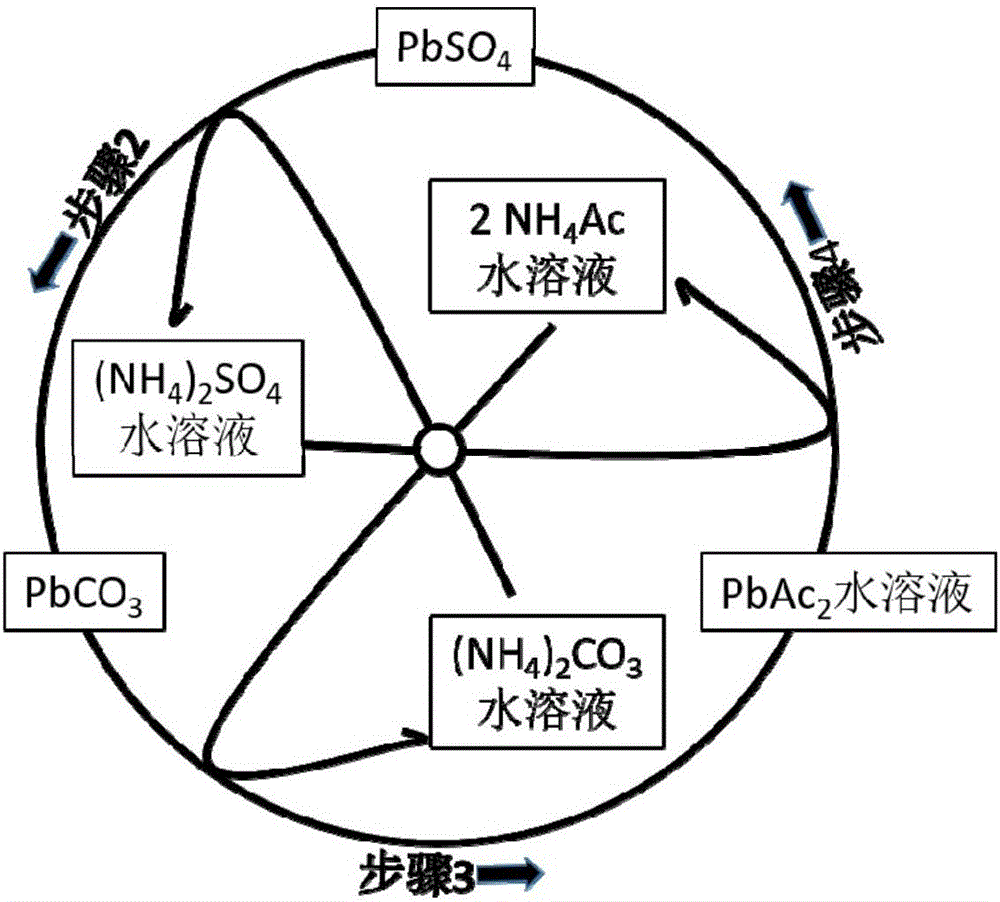
Figure 1 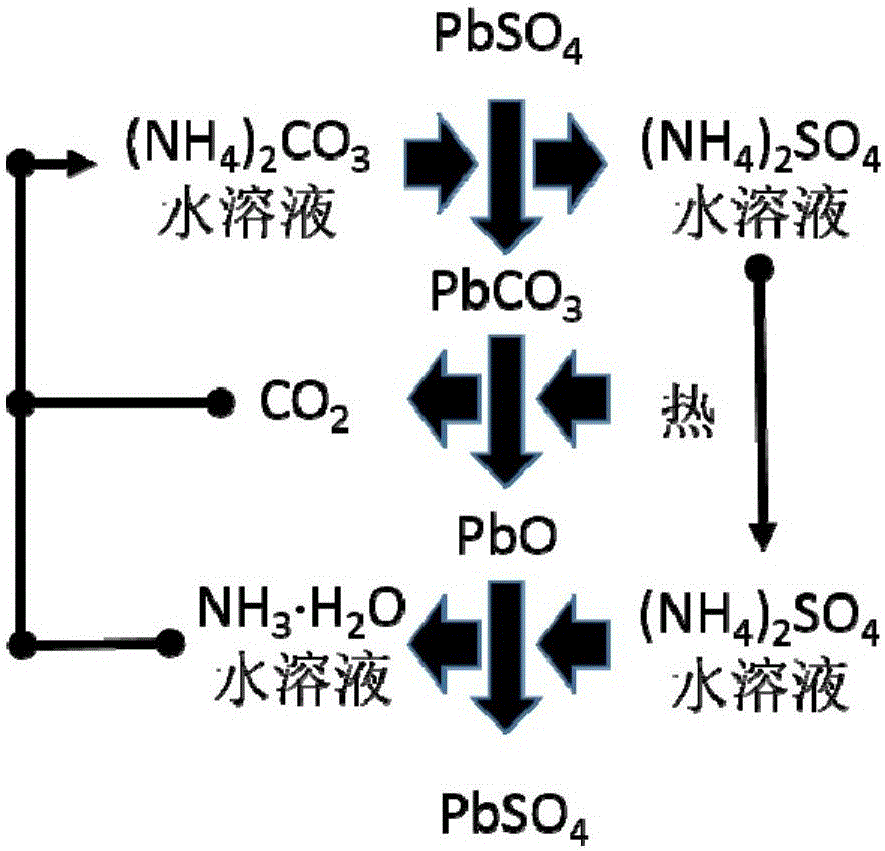
Figure 2 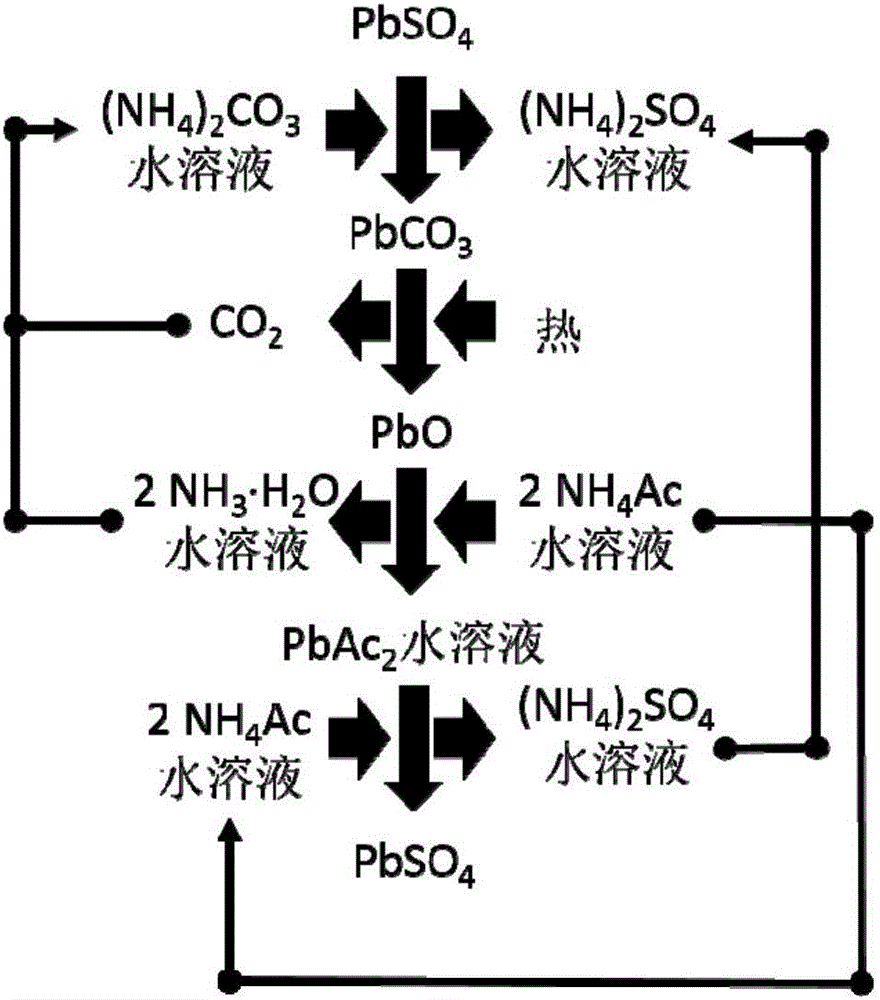
Figure 3
Abstract
Description
technical field
[0001] The invention belongs to the field of recycling chemical technology of waste lead-acid batteries, and in particular relates to a method for producing electrochemically active lead sulfate by using waste lead-acid batteries. Background technique
[0002] Lead sulfate is the electrode active material of lead-acid batteries. When a lead-acid battery is discharged, lead sulfate is formed on both electrodes. Studies have proved that chemically synthesized lead sulfate can be used as the positive active material of lead-acid batteries (Ke Zhang, Wei Liu, Beibei Ma, Mohammed Adnan Mezaal, Guanghua Li, Rui Zhang and Lixu Lei, "Leadsulfate used as the positive active material of lead acid batteries”, Journal of Solid State Electrochemistry, 20, 2267-2273 (2016)), and can also be used as its negative active material (YiLiu, Pengran Gao, Xianfu Bu, GuizhiKuang, Wei Liu, Lixu Lei, “Nanocrosses of leadsulphate as the negative active material of lead acid batterie...
Examples
Embodiment 1
[0052] Step (1): Gently disassemble the lead-acid battery to obtain the positive electrode sheet and the negative electrode sheet, and then separate the lead alloy grid and the electrode powder to obtain the positive electrode grid alloy, the negative electrode grid alloy, the positive electrode powder and the negative electrode powder. The content of lead sulfate in positive electrode powder and negative electrode powder was analyzed respectively.
[0053] Step (2): Put the obtained positive electrode powder (or negative electrode powder) into a stirred reactor, and then press the PbSO 4 Add sufficient amount of ammonium carbonate solution and stir to make it react. The reaction temperature is between room temperature and 50°C, and the reaction time is between 0.5 and 3 hours. Filter or centrifuge the solid (for positive electrode powder, the solid is PbO 2 and PbCO 3 The mixture of the negative electrode powder is Pb and PbCO 3 mixture) and solution (ammonium sulfate sol...
Embodiment 2
[0060] Step (1): Gently disassemble the lead-acid battery to obtain the positive electrode sheet and the negative electrode sheet, and then separate the lead alloy grid and the electrode powder to obtain the positive electrode grid alloy, the negative electrode grid alloy, the positive electrode powder and the negative electrode powder. The content of lead sulfate in positive electrode powder and negative electrode powder was analyzed respectively.
[0061] Step (2): Put the obtained positive electrode powder (or negative electrode powder) into a stirred reactor, and then press the PbSO 4 Add sufficient amount of ammonium carbonate solution and stir to make it react. The reaction temperature is between room temperature and 50°C, and the reaction time is between 0.5 and 3 hours. Filter or centrifuge the solid (for positive electrode powder, the solid is PbO 2 and PbCO 3 The mixture of the negative electrode powder is Pb and PbCO 3 mixture) and solution (ammonium sulfate sol...
Embodiment 3
[0068] Step (1): Gently disassemble the lead-acid battery to obtain the positive electrode sheet and the negative electrode sheet, and then separate the lead alloy grid and the electrode powder to obtain the positive electrode grid alloy, the negative electrode grid alloy, the positive electrode powder and the negative electrode powder. The content of lead sulfate in positive electrode powder and negative electrode powder was analyzed respectively.
[0069] Step (2): Put the obtained positive electrode powder (or negative electrode powder) into a stirred reactor, and then press the PbSO 4 Add sufficient amount of ammonium carbonate solution and stir to make it react. The reaction temperature is between room temperature and 50°C, and the reaction time is between 0.5 and 3 hours. Filter or centrifuge the solid (for positive electrode powder, the solid is PbO 2 and PbCO 3 The mixture of the negative electrode powder is Pb and PbCO 3 mixture) and solution (ammonium sulfate sol...