
Polyurethane foam stabilizer and preparation method
A polyurethane foam and stabilizer technology, applied in the chemical industry, can solve the problems of increasing the process of refining and desalination, increasing the difficulty of refining and processing end-capped products, and increasing the amount of waste salt.
Patent Information
- Authority / Receiving Office
- CN · China
- Current Assignee / Owner
- Publication Date
- 2017-06-13
Smart Images
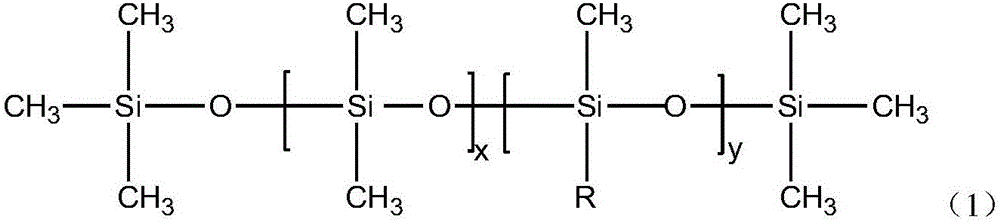
Figure 1 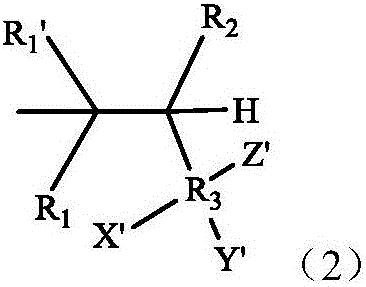
Figure 2 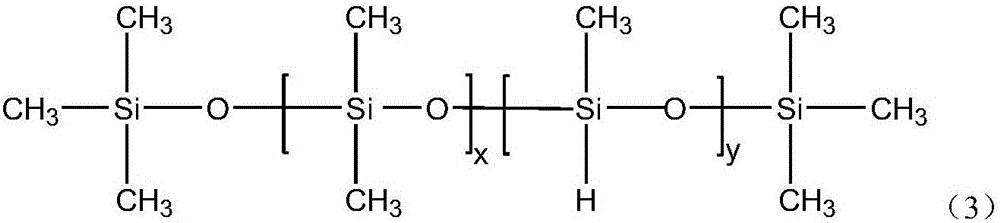
Figure 3
Abstract
Description
technical field
[0001] The invention belongs to the field of chemical industry, in particular to a polyurethane foam stabilizer and a preparation method. Background technique
[0002] Polyurethane foam is a high-performance structural material developed in the 1950s and 1960s. It has the characteristics of porous, low density, and high specific strength. It can be divided into rigid foam, soft foam, and semi-rigid foam according to its mechanical strength. Wait. Due to the wide range of uses of polyurethane foam, the development is very rapid.
[0003] Foam stabilizer, also known as foam stabilizer, is one of the key components in the production formula of polyurethane foam. It is a silicone surfactant. During the foaming process of polyurethane soft foam, silicone surfactant can reduce the surface tension of the system. , each component in the emulsified formula system is conducive to the formation of nuclei and bubbles, and the role of stabilizing the foam. And it has a...
Examples
Embodiment 1
[0065] (1) Add 332g of octamethylcyclotetrasiloxane, 11g of hexamethyldisiloxane and 36g of high hydrogen-containing silicone oil with a hydrogen content of 1.6%, add 6.4g of sulfuric acid to catalyze, react at 40°C for 8 hours, add 13g Sodium bicarbonate powder, neutralized and filtered to obtain low hydrogen silicone oil with a hydrogen content of 0.15%;
[0066] (2) Add 116g of allyl alcohol and 2.5g of sodium metal to the reaction kettle, replace with nitrogen, raise the temperature to 100°C, and continuously feed 684g of EO (ethylene oxide) / PO (propylene oxide) (mass ratio 4 / 6) at 0.2MPa, React until the pressure is no longer reduced, and the allyl alcohol polyether oligomer is obtained; take the allyl alcohol polyether oligomer 200g, add metal sodium 4g therein, and feed EO / PO (mass Ratio 4 / 6) 800g, react until the pressure is no longer reduced, and make allyl alcohol polyether (average molecular weight 2000), add phosphoric acid to neutralize, add 3g refining agent to s...
Embodiment 2
[0071] (1) Add 332g of octamethylcyclotetrasiloxane, 11g of hexamethyldisiloxane and 36g of high hydrogen-containing silicone oil with a hydrogen content of 1.6%, add 6.4g of sulfuric acid to catalyze, react at 40°C for 8 hours, add 13g Sodium bicarbonate powder, neutralized and filtered to obtain low hydrogen silicone oil with a hydrogen content of 0.15%;
[0072] (2) Add 144g of methallyl alcohol and 2.5g of sodium metal to the reaction kettle, replace with nitrogen, raise the temperature to 100°C, and continuously feed EO (ethylene oxide) / PO (propylene oxide) at 0.2MPa (mass ratio 4 / 6) 656g, react until the pressure no longer decreases, and obtain methallyl alcohol polyether oligomer; take 200g of methallyl alcohol polyether oligomer, add potassium hydroxide 4g to it, and continuously Pass 800g of EO / PO (mass ratio 4 / 6), react until the pressure no longer drops, and prepare methallyl alcohol polyether (average molecular weight 2000), neutralize with phosphoric acid, add 3g ...
Embodiment 3
[0077] (1) Add 332g of octamethylcyclotetrasiloxane, 11g of hexamethyldisiloxane and 36g of high hydrogen-containing silicone oil with a hydrogen content of 1.6%, add 6.4g of sulfuric acid to catalyze, react at 40°C for 8 hours, add 13g Sodium bicarbonate powder, neutralized and filtered to obtain low hydrogen silicone oil with a hydrogen content of 0.15%;
[0078] (2) Add 172g of isopentenol, 2.5g of sodium methoxide to the reaction kettle, replace with nitrogen, raise the temperature to 110°C, and continuously feed EO (ethylene oxide) / PO (propylene oxide) / BO (butylene oxide) at 0.3MPa (mass ratio 4 / 5 / 1) 628g, react until the pressure no longer decreases, and prepare the prenol oligomer; get the prenol oligomer 200g, add sodium hydride, sodium methylate therein The mixture (mass ratio 1:1) was 7g, and after nitrogen replacement, 800g of EO / PO / BO (mass ratio 4 / 5 / 1) was continuously introduced at 110°C and 0.3MPa, and reacted until the pressure no longer decreased to produce is...