
Transcription factor ZmNLP9 from corn and application of transcription factor ZmNLP9
A technology of transcription factors and uses, applied in the field of plant genetic engineering, can solve problems that cannot be solved in a short time, and achieve the effects of increasing the length of the main root, increasing the fresh weight, increasing the amino acid content and total nitrogen content in the body
Patent Information
- Authority / Receiving Office
- CN · China
- Patent Type
- Applications(China)
- Current Assignee / Owner
- Publication Date
- 2018-01-26
Smart Images
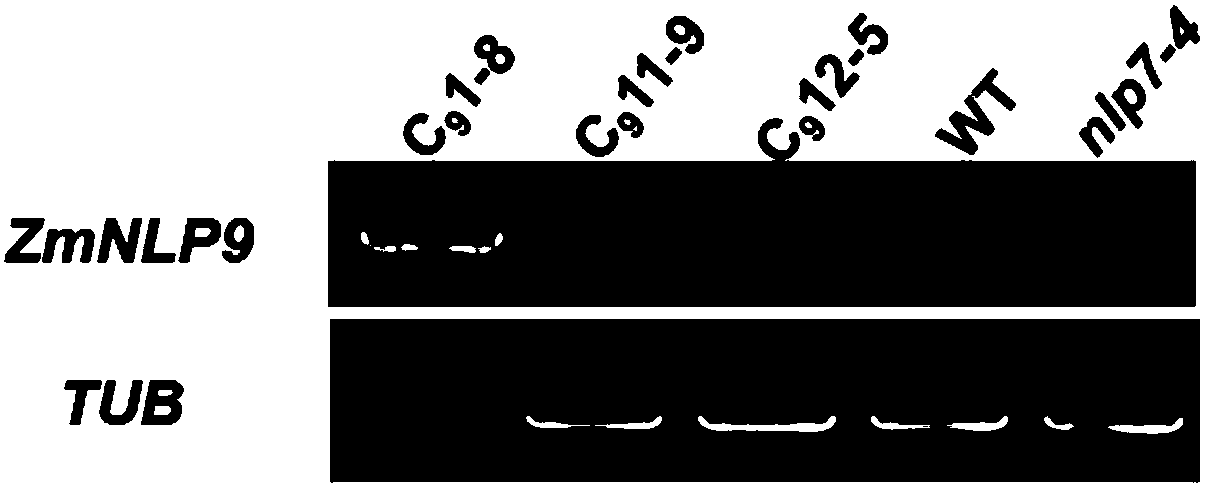
Figure 1 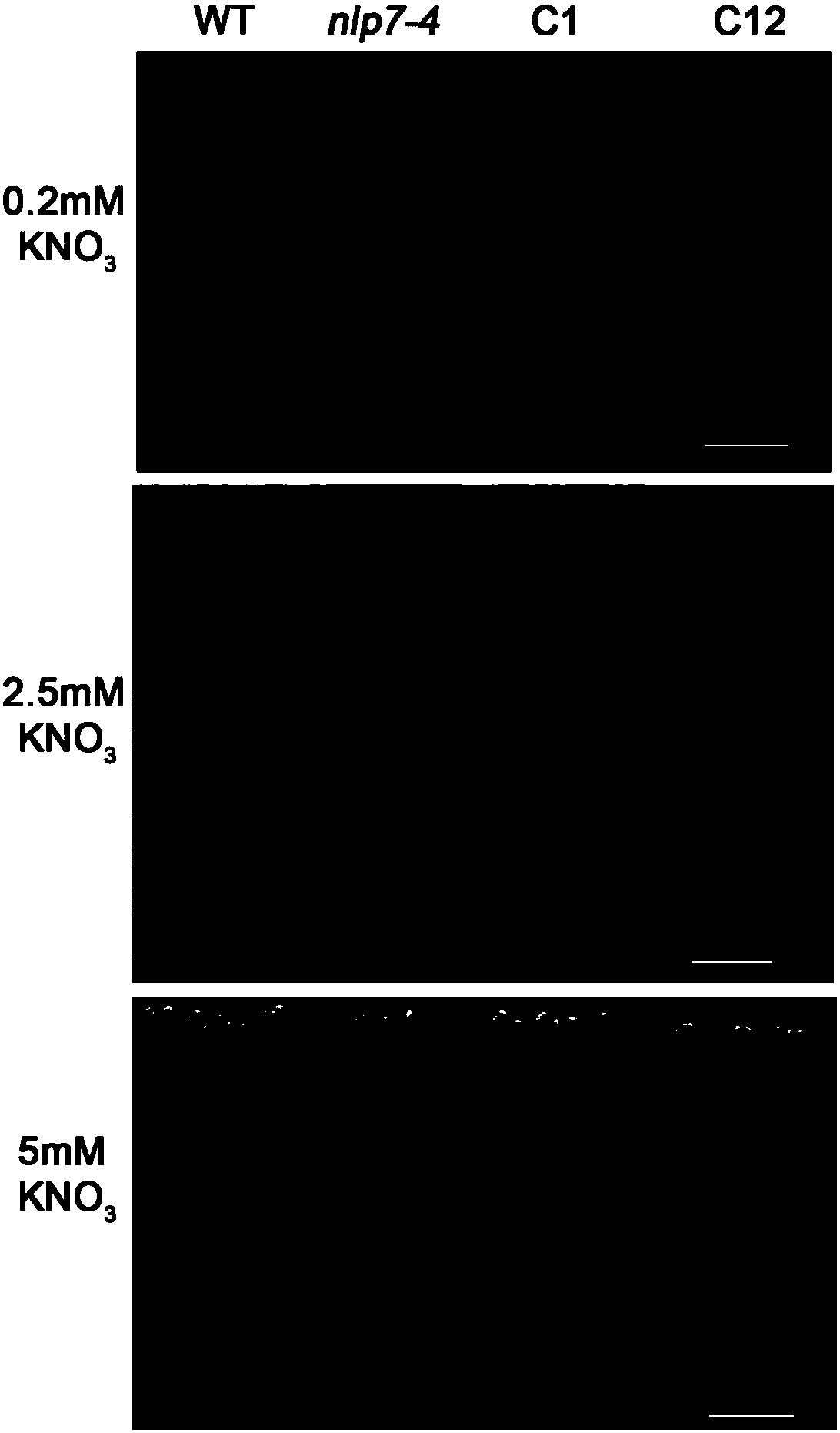
Figure 2 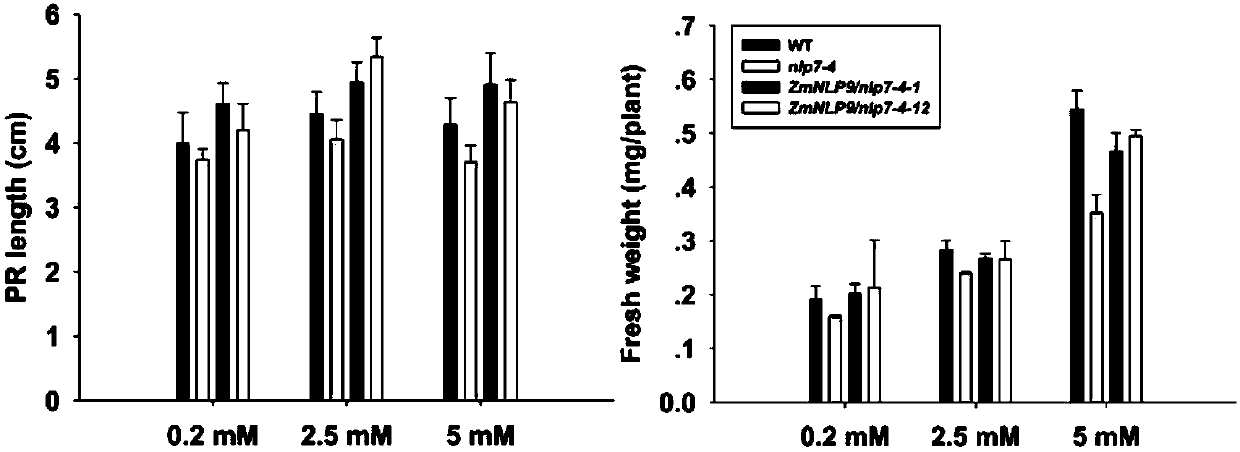
Figure 3
Abstract
Description
technical field
[0001] The invention relates to the technical field of plant genetic engineering, and provides a transcription factor ZmNLP9 derived from maize and its use. Background technique
[0002] Nitrogen is one of the important mineral nutrients to maintain plant growth and biological output, and it participates in the synthesis of nucleic acid, protein, lipid, chlorophyll and other biological macromolecules in the organism. Nitrogen deficiency significantly limits plant growth and development (Krouk et al., 2010, Current Opinion in Plant Biology 13, 265 272). Therefore, nitrogen fertilizers are widely used in agricultural production to increase crop yields and increase the cost of agricultural production. Every year, about 8.5-9.0 million tons of nitrogen fertilizers are applied to the soil globally, but 50-70% of them are not absorbed by plants and are lost to the environment, causing serious ecological and environmental problems such as eutrophication and soil ac...
Examples
Embodiment 1
[0040] Example 1 Obtaining of transcription factor ZmNLP9
[0041] RNA was extracted from leaves of maize seedlings at the three-leaf stage and reverse-transcribed into cDNA. Using cDNA as a template, use
[0042] Upstream primer: 5'-GGGTCGACGCAGCAGCAAGGTTTCATCCCAT', the nucleotide sequence of which is shown in SEQ ID NO.3;
[0043] Downstream primer: 5'-GGGGTACCTCAACCAGAGCTTCCACAAGAACTGC-3', the nucleotide sequence of which is shown in SEQID NO.4;
[0044] The nucleic acid sequence of ZmNLP9 was amplified by polymerase chain reaction (PCR). The amplification program was: 98°C pre-denaturation for 2 minutes; The final extension is 8min. After PCR, agarose gel electrophoresis analysis was performed, and the amplified fragment obtained the target gene fragment shown in SEQ ID NO.1; the encoded amino acid sequence was shown in SEQ ID NO.2.
Embodiment 2
[0045] Example 2 Construction of Overexpression Arabidopsis Vector and Its Application
[0046]Using the pBI121 vector as a template, primers 35S_F (5'-AAGCTTatggtggagcacgacactctcga-3', whose nucleotide sequence is shown in SEQ ID NO.5;) and 35S_R: (5'-AAGCTTagagatagatttgtagagagagactgg-3', whose nucleotide sequence As shown in SEQ ID NO.6;), use Pfu high-fidelity enzyme to amplify the 35S promoter sequence, PCR reaction conditions: 98°C pre-denaturation for 4 minutes; then 98°C for 30s, 58°C for 30s, 72°C for 1min, 25 cycles; Final extension at 72°C for 8 min; since the HindIII restriction site was added to the primers 35S_F and 35S_R, the PCR amplified product was digested with HindIII, and then ligated into the plant expression vector pCAMBIA1300, which was also digested with HindIII, and then digested and sequenced Identify the cloning that the 35S promoter is connected in the correct direction, and construct a plant overexpression vector containing the 35S promoter; then u...
Embodiment 3
[0049] Embodiment 3 function verification
[0050] The strain that is cultivated on the basis of the seeds of the transgenic plants transferred to the ZmNLP9 gene obtained in Example 2 in KNO 3 The phenotypes of MS plants grown on solid medium at concentrations of 0.2mM, 2.5mM, and 5mM were analyzed. From the result ( figure 2 ) It can be seen that the main root length and fresh weight of transgenic Arabidopsis plants expressing ZmNLP9 gene are significantly increased compared with recipient plants; under 1 / 2MS culture conditions, the amino acid content and total nitrogen content of transgenic Arabidopsis plants expressing ZmNLP9 gene significantly increased compared with recipient plants.