
Catalytic cracking catalyst and preparation method thereof
A catalytic cracking and catalyst technology, used in catalytic cracking, physical/chemical process catalysts, molecular sieve catalysts, etc., can solve problems such as low micropore volume, achieve low coke yield, high gasoline and liquefied gas yield, and excellent heavy oil. The effect of transforming power
Patent Information
- Authority / Receiving Office
- CN · China
- Patent Type
- Applications(China)
- Current Assignee / Owner
- Publication Date
- 2018-05-01
Smart Images
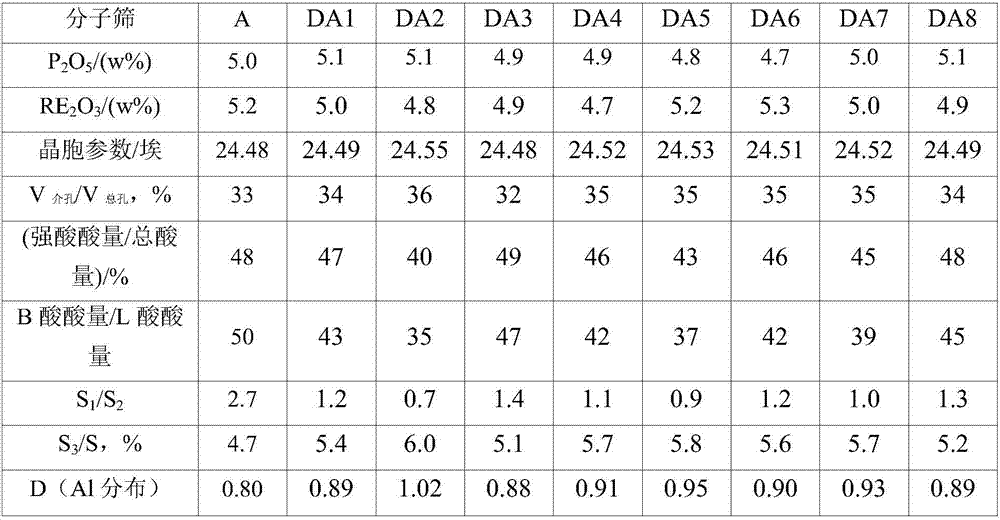
Figure 1 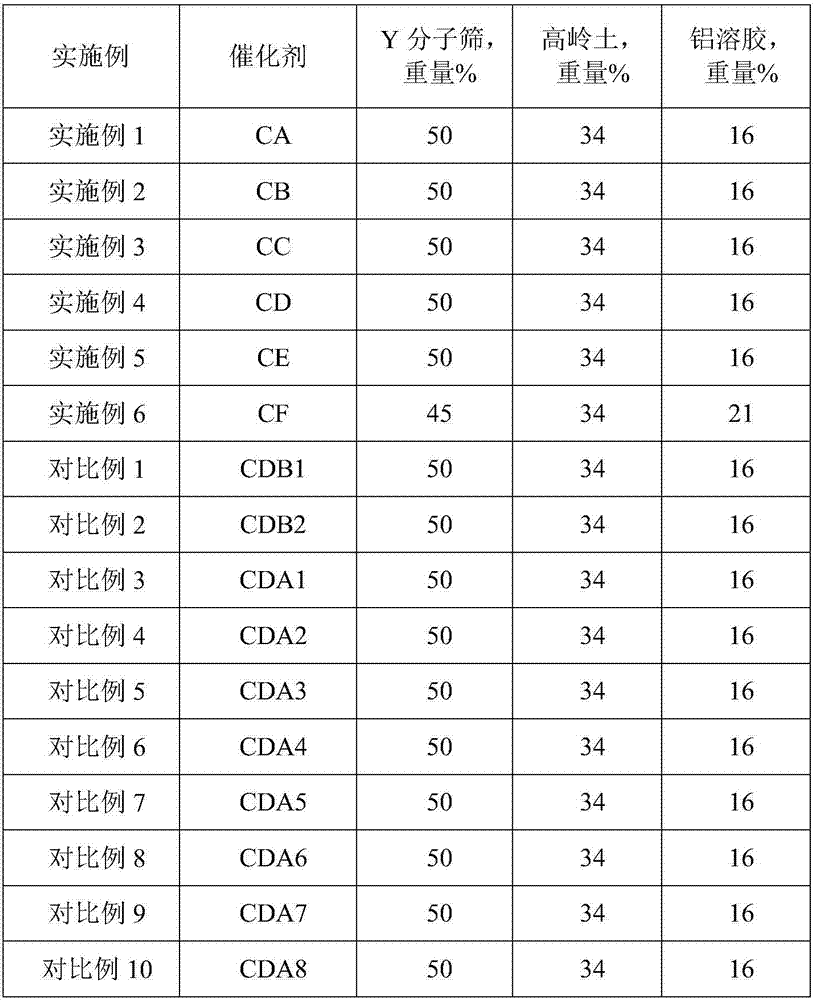
Figure 2 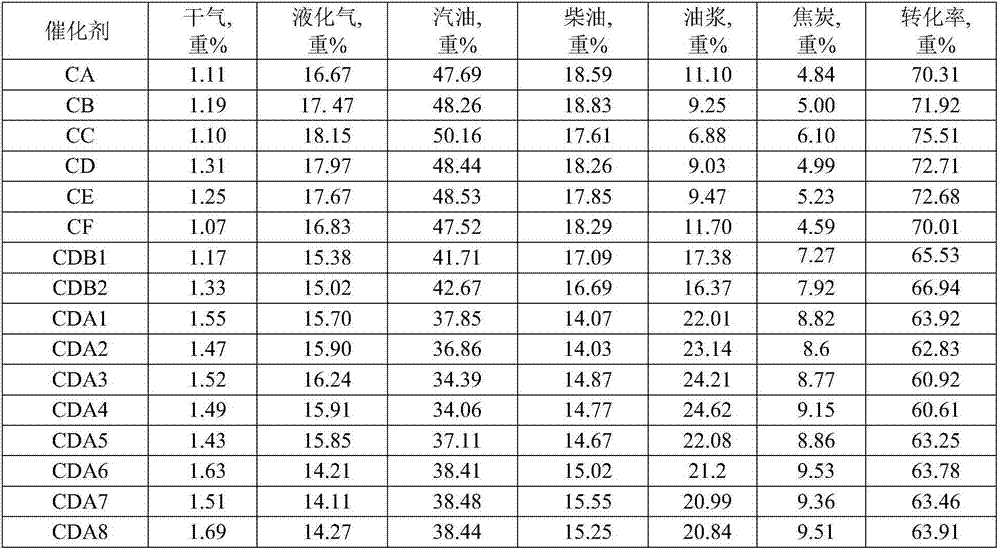
Figure 3
Abstract
Description
technical field
[0001] The invention relates to a catalytic cracking catalyst and a preparation method thereof. Background technique
[0002] Catalytic cracking (FCC) is an important secondary processing process of crude oil and occupies a pivotal position in the oil refining industry. In the catalytic cracking process, heavy fractions such as vacuum distillate oil or residues of heavier components react in the presence of catalysts and are converted into high value-added products such as liquefied gas, gasoline, and diesel oil. In this process, it is usually necessary to use Catalytic material with high cracking activity. Molecular sieves are widely used in petroleum refining and processing industries due to their shape-selective properties, high specific surface area, and strong acidity. Y-type molecular sieves (HY, REY, USY) have been the main active components of catalytic cracking and hydrocracking catalysts since they were first used in the 1960s. However, with the ...
Examples
preparation example Construction
[0037] The present invention also provides a method for preparing a catalytic cracking catalyst, the preparation method comprising: mixing the raw materials used to prepare the catalytic cracking catalyst with water, and then performing beating and spray drying; wherein, in terms of dry weight, the raw materials include 25 - 75% by weight of phosphorus and rare earth-containing Y molecular sieve, 10-30% by weight of precursors of inorganic oxide binders and 15-65% by weight of natural minerals; crystals of said phosphorus and rare earth-containing Y molecular sieve The cell parameter is 24.35-24.55 angstrom; 2 o 5 Calculated and based on the dry weight of the molecular sieve, the phosphorus content of the molecular sieve is 0.3-10% by weight; 2 o 3 Calculated and based on the dry basis weight of the molecular sieve, the rare earth content of the molecular sieve is 0.5-19% by weight; the Al distribution parameter D of the molecular sieve satisfies: 0.4≤D≤0.9, wherein, D=Al(S)...
preparation Embodiment 1
[0066] Y molecular sieve (produced by Catalyst Qilu Branch, unit cell parameter 24.63 angstroms) and NH 4 Cl and distilled water were mixed and beaten evenly at a ratio of 1:1:10, ammonium was exchanged at 70°C for 1 hour, the sample was filtered, washed, and dried, and the sodium content of the molecular sieve was determined to be less than 5% by weight. The above-mentioned molecular sieves were calcined at 600°C for 2h. Take the calcined molecular sieve in an anhydrous dry environment, pass through SiCl 4Saturated dry gas, the reaction temperature is 550°C, and the reaction time is 2h; take 100g (dry basis mass) of the above-mentioned molecular sieve and add water to prepare a molecular sieve slurry with a solid content of 10% by weight, add 3g of citric acid during stirring, and then add 400g of hydrochloric acid (mass fraction 10%), the addition time was 30min; the temperature was raised to 75°C and stirred for 1h, filtered and washed until the filtrate was neutral; the f...
preparation Embodiment 2
[0072] Y molecular sieve (produced by Catalyst Qilu Branch, unit cell parameter 24.63 angstroms) and NH 4 Cl and distilled water were mixed and beaten evenly at a ratio of 1:1:10, ammonium was exchanged at 70°C for 1 hour, the sample was filtered, washed, and dried, and the sodium content of the molecular sieve was determined to be less than 5% by weight. The above-mentioned molecular sieves were calcined at 550°C for 3h. Take the calcined molecular sieve in an anhydrous dry environment, pass through SiCl 4 Saturated dry gas, the reaction temperature is 550°C, and the reaction time is 2h; take 100g (dry basis mass) of the above-mentioned molecular sieve and add water to prepare a molecular sieve slurry with a solid content of 10% by weight, add 5g of oxalic acid during stirring, and then add 200g of sulfuric acid (mass fraction 10 %), the addition time was 30 minutes; the temperature was raised to 30°C and stirred for 2 hours, filtered and washed until the filtrate was neutra...