
Visual carbon material structure and preparation method thereof
A technology of material structure and visualization of carbon, applied in chemical instruments and methods, nano-carbon, inorganic chemistry, etc., can solve problems such as high cost, complicated processing process, and error-prone
Patent Information
- Authority / Receiving Office
- CN · China
- Current Assignee / Owner
- Publication Date
- 2018-05-15
Smart Images
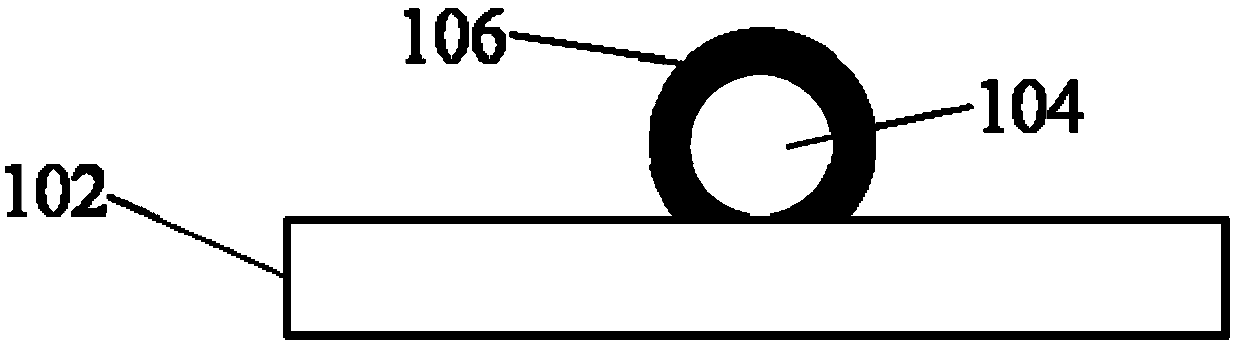
Figure 1
Abstract
Description
technical field
[0001] The invention relates to the technical field of carbon nanomaterial structures, in particular to a visualized carbon material structure and a preparation method thereof. Background technique
[0002] Low-dimensional carbon nanomaterials such as carbon nanotubes and graphene have demonstrated their theoretical and application value in more and more fields. Obtaining high-quality carbon nanomaterials and in-situ measurement have always been the main research in this field. One of the hot spots. At present, methods for preparing carbon nanotubes and graphene include laser evaporation, arc method, and vapor deposition method. Among them, chemical vapor deposition on substrates such as silicon, quartz, sapphire, metallic copper, and SiC is a general method to obtain the highest quality carbon nanomaterials. However, because the carbon nanomaterials obtained by this method are not densely arranged on the substrate, and there is no better way to grow them a...
Examples
Embodiment Construction
[0018] In describing embodiments of the invention, specific terminology is employed for the sake of clarity. However, it is not intended that the invention be limited to the specific terms so chosen. It is to be understood that each specific element includes all technical equivalents which operate in a similar method to achieve a similar purpose.
[0019] The present invention will be further described in detail below in conjunction with the accompanying drawings.
[0020] figure 1 To visualize the schematic diagram of the carbon material structure, its structure consists of the following parts:
[0021] 1. Carbon nanomaterial growth substrate 102: a variety of common substrates can be selected, and its characteristics are: highly flat surface, high temperature resistance, stable physical and chemical properties, etc., such as Si / SiO x , SiC, quartz, mica, corundum, ceramics, metal, etc.; in order to enhance the reflection of light and enhance the contrast of imaging, it is...