
Traditional Chinese medicine herbal tea for reducing internal heat and lowering lipid and preparation method thereof
A technology of traditional Chinese medicine and herbal tea, which is applied in the field of food formula technology research and development, can solve problems such as the inability to determine the best taste and best health care, blood fat-lowering effect, and various herbal tea formula processes, and achieve a significant fat-lowering effect and good sensory quality.
Patent Information
- Authority / Receiving Office
- CN · China
- Current Assignee / Owner
- Publication Date
- 2018-09-18
- Estimated Expiration
- Not applicable · inactive patent
Smart Images
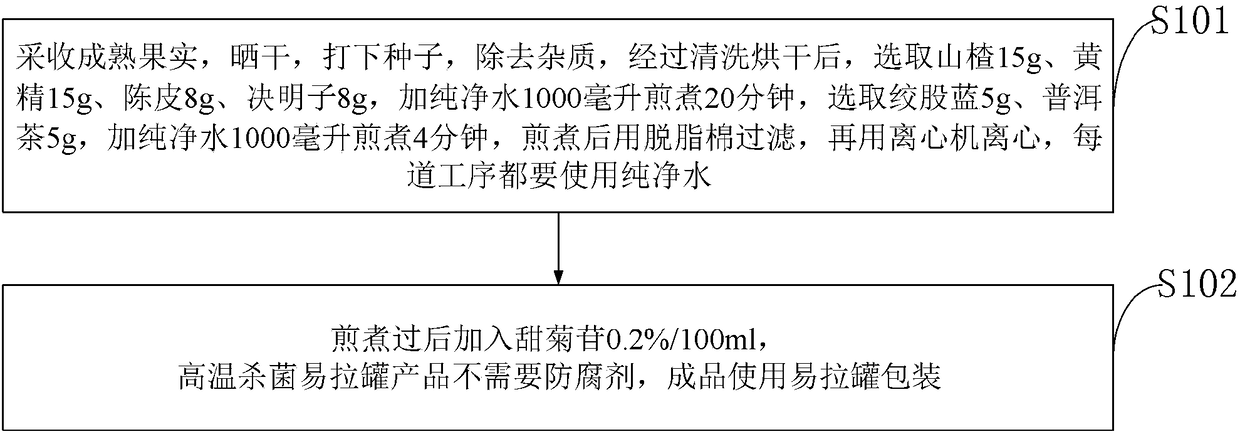
Figure 1 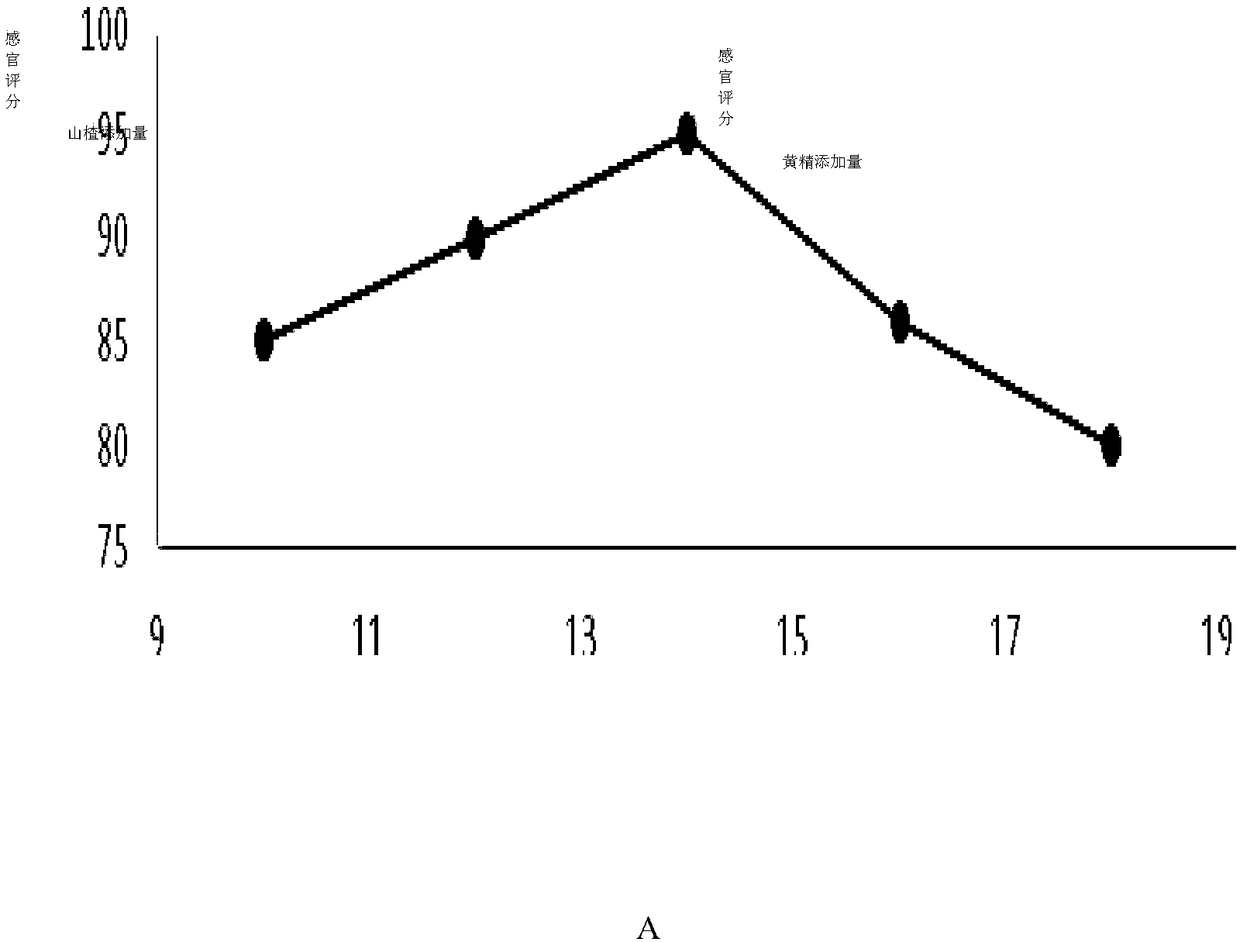
Figure 2 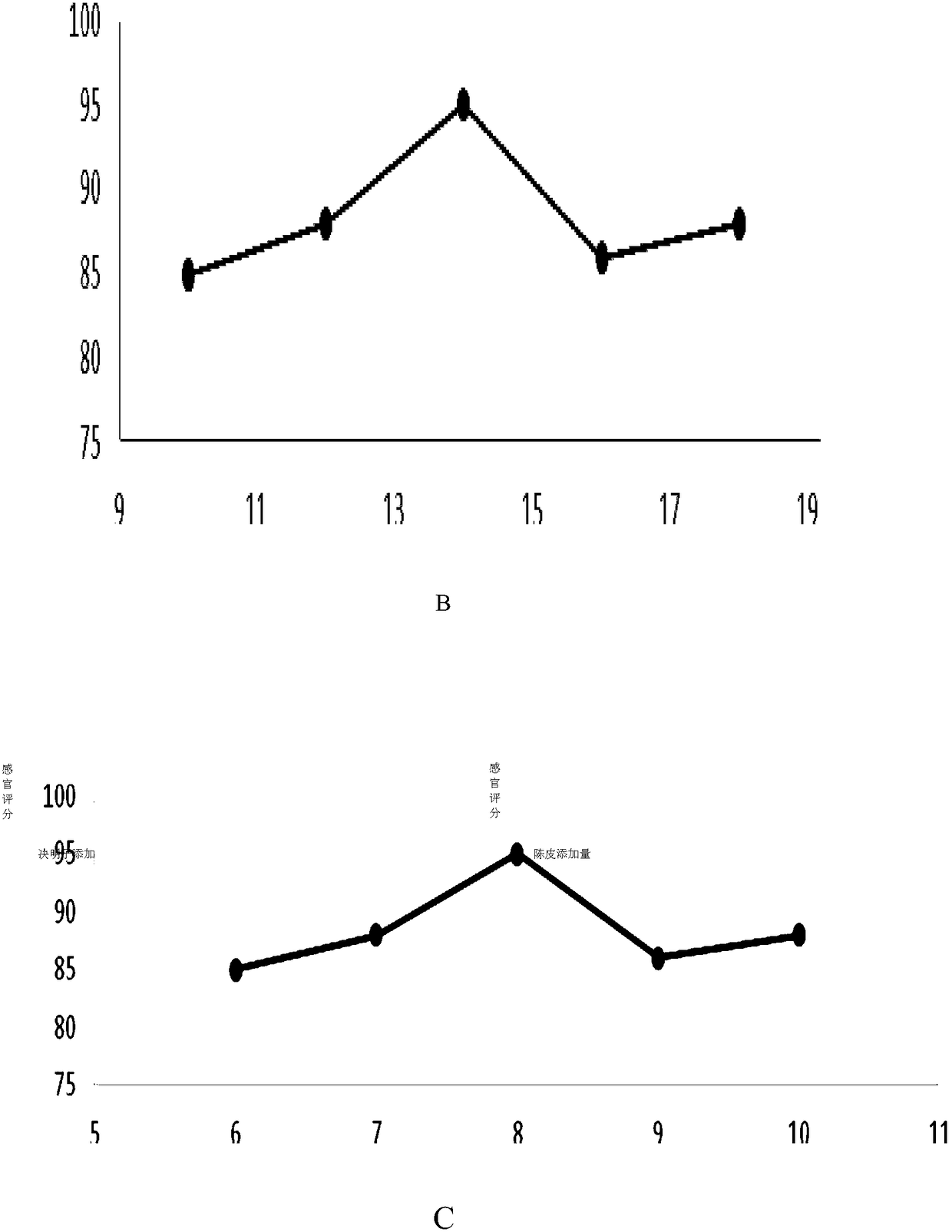
Figure 3
Abstract
Description
technical field
[0001] The invention belongs to the technical field of research and development of food formula technology, and in particular relates to a traditional Chinese medicine herbal tea for reducing fire and fat and a preparation method thereof. Background technique
[0002] Herbal tea is a general term for traditional Chinese herbal beverages. It is a drink made of decocted Chinese herbal medicines that are cold in nature and can dispel heat in the human body, so as to eliminate the heat in the human body in summer, or treat sore throats and other diseases caused by dryness in winter. On May 20, 2006, herbal tea was approved by the State Council to be included in the first batch of national intangible cultural heritage. Herbal tea is "neither cold nor tea". It is a beverage made by decocting compound or single native herbs commonly used by the people. The decoction of Chinese herbal medicines that are cold in nature and capable of dispelling internal heat is used ...
Examples
preparation example Construction
[0025] Such as figure 1 , the embodiment of the present invention provides the preparation method of the traditional Chinese medicine herbal tea for reducing fire and fat, which is divided into the following steps:
[0026] S101: Harvest ripe fruits, dry them in the sun, lay down the seeds, remove impurities, and after washing and drying, select 15g of hawthorn, 15g of Yunnan Polygonatum, 8g of tangerine peel, and 8g of cassia seeds, add 1000ml of purified water and boil for 20 minutes, select 5g of Gynostemma pentaphyllum, Add 5g of Pu'er tea, add 1000ml of pure water and boil for 4 minutes, filter with absorbent cotton after boiling, and then centrifuge with a centrifuge, use pure water for each process;
[0027] S102: Add stevioside 0.2% / 100ml after decocting, high-temperature sterilized pop-top can products do not require preservatives, and the finished product is packed in pop-top cans.
Embodiment 1
[0030] figure 2 It is a graph of the single factor test results of the Yunnan fire-reducing and lipid-lowering traditional Chinese herbal herbal tea formula provided by the embodiments of the present invention. In the figure: A, sensory score one; B, sensory score two; C, sensory score three; D, sensory score four.
[0031] Taking the sensory score as the index, according to the single factor test and the orthogonal test, the effects of different dosages of components on the taste of Yunnan Jianghuo Jiangzhi herbal tea were investigated.
[0032] Designation method of sensory evaluation
[0033]
[0034] (1) The choice of dosage of hawthorn
[0035] Add different amounts of hawthorn, 13g, 14g, 15g, 16g, 17g respectively, and decoct the rest of the components according to the corresponding grams of medicine. , The dosage of oolong tea is 5g, and the Yunnan herbal tea for reducing fire and fat is prepared. Using the sensory score as an index, the influence of different do...
Embodiment 2
[0047] Through the cell lipid-lowering experiment, the lipid-lowering data of Yunnan's traditional Chinese medicine herbal tea for reducing fire and lipid are obtained.
[0048] The high-fat model cells of LO2 cells imported into the liver and the finished product of Yunnan Jianghuo Jiangzhi herbal tea beverage were used to measure serum total cholesterol (TC), triglyceride (TG), low-density lipoprotein (LDL-C) and high-density lipoprotein Protein (LDL-C) concentration, so as to judge the lipid-lowering effect of the product.