
A hydrogen peroxide-responsive nitrogen mustard antitumor prodrug and its preparation method
A nitrogen mustard and preparation technology, applied in the field of nitrogen mustard anti-tumor prodrugs and their preparation, can solve the problems of poor tumor cell selectivity, short half-life, poor selectivity, etc., achieve rich structural types, reduce toxic side effects, and improve selection sexual effect
Patent Information
- Authority / Receiving Office
- CN · China
- Patent Type
- Patents(China)
- Current Assignee / Owner
- Publication Date
- 2020-09-04
Smart Images
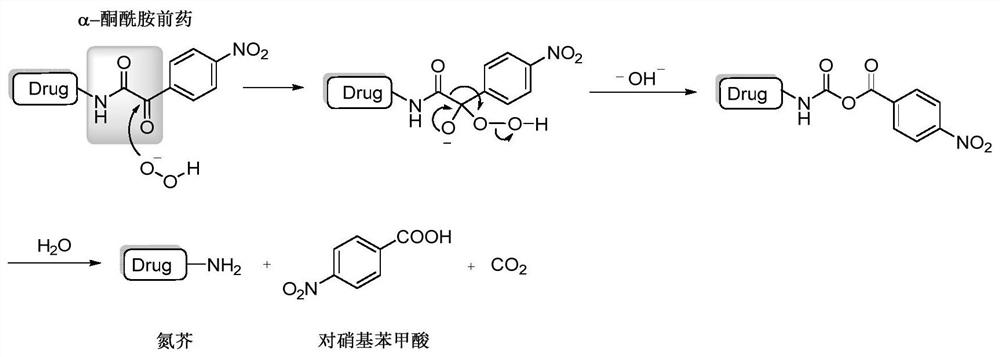
Figure 1 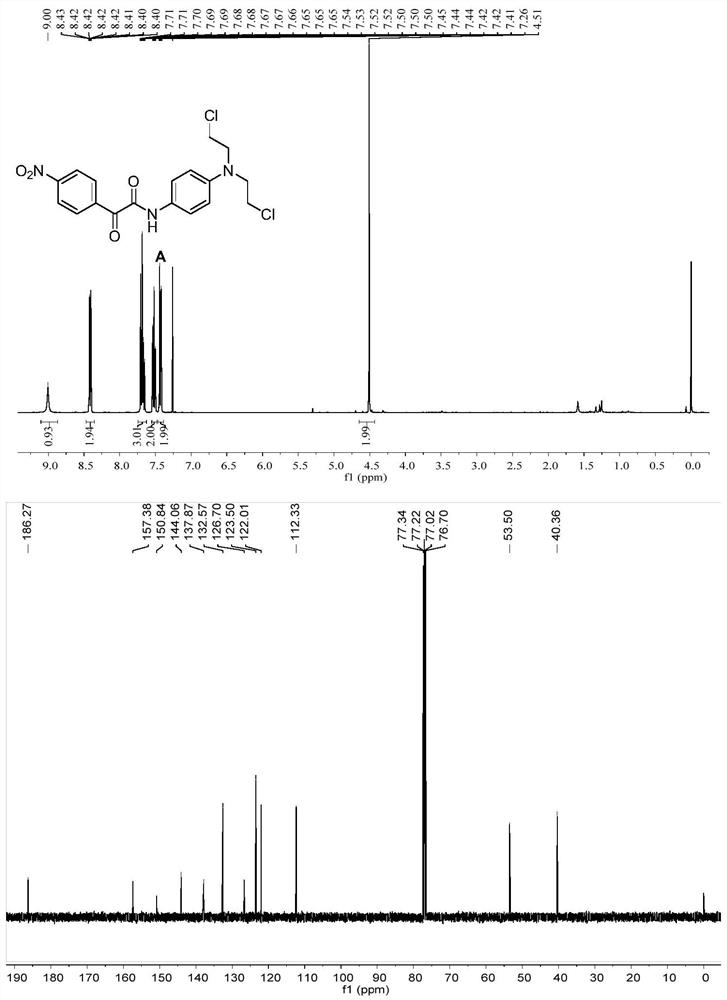
Figure 2 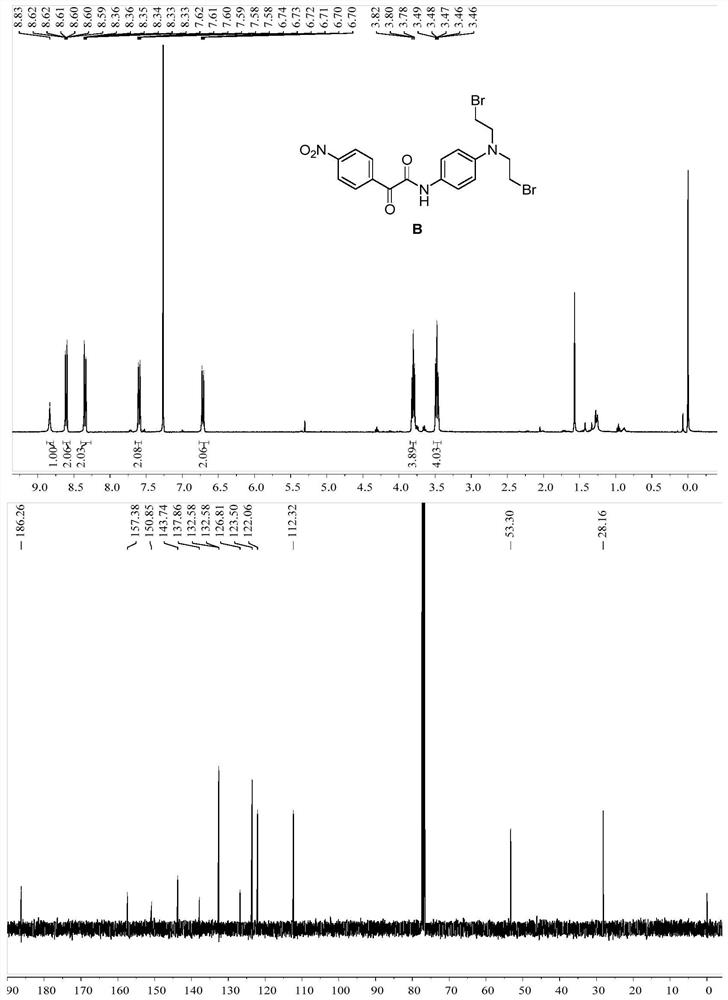
Figure 3
Abstract
Description
technical field
[0001] The invention relates to a hydrogen peroxide-responsive nitrogen mustard antitumor prodrug and a preparation method thereof, belonging to the field of medicinal chemistry. Background technique
[0002] Tumor is a kind of disease that seriously threatens human health, and it is still a big problem in the medical field. Due to poor selectivity to tumor cells, traditional chemotherapy tends to produce relatively large toxic and side effects during treatment. Nitrogen mustard is an important alkylating antitumor drug, but its clinical application is severely limited due to its short half-life, severe side effects, poor selectivity, and low therapeutic efficiency.
[0003] Prodrugs activated in the unique microenvironment of tumor cells are effective tools to reduce the toxic side effects of chemotherapeutic drugs. Compared with normal cells, tumor cells are in a variety of oxidative stress states due to insufficient oxygen supply, high metabolic demand a...
Examples
Embodiment 1
[0073] Embodiment 1: the synthesis of compound C
[0074] The first step: the synthesis of p-nitrophenylglyoxylic acid (intermediate 1)
[0075]
[0076] Concrete operation: p-Nitroacetophenone (1g) is dissolved in pyridine (10mL), adds SeO 2 (1g), the mixture was passed through nitrogen protection, and stirred at 90°C for 4h, wherein p-nitroacetophenone and SeO 2 The molar ratio is 1:1.5, cooling and filtering after the reaction is completed, the filter cake is washed 3 times with ethyl acetate, and the organic layer is collected and washed with 2M HCl, and finally the organic layer is combined, dried with anhydrous sodium sulfate, and the solvent is removed by distillation under reduced pressure. The yellow intermediate 1 was eluted by column chromatography.
[0077]The second step: the synthesis of N-(4-nitrophenyl)diethanolamine (intermediate 4)
[0078]
[0079] Specific operation: Dissolve p-nitrofluorobenzene (1mL) in dimethyl sulfoxide (DMSO), then add diethan...
Embodiment 2
[0090] Embodiment 2: the synthesis of compound A
[0091]
[0092] Specific operation: Dissolve compound C (100mg) in DMF (3mL), add halide LiCl (40.07mg), stir at 60°C for 3h, after the reaction, wash with water and saturated brine in sequence, add ethyl acetate for extraction, The organic layer was collected, dried by adding anhydrous sodium sulfate, the solvent was distilled off under reduced pressure, and eluted by column chromatography to obtain a dark brown solid A. 1 H NMR (400MHz, Chloroform-d) δ8.83(s,1H,NH),8.64–8.56(m,2H,Ar-H),8.38–8.29(m,2H,Ar-H),7.63–7.56( m,2H,Ar-H),6.78–6.68(m,2H,Ar-H),3.76(m,2H,NCH 2 ),3.65(m,2H,ClCH 2 ). 13 C NMR (101MHz, Chloroform-d) δ186.27, 157.38, 150.84, 144.06, 137.87, 132.57, 126.70, 123.50, 122.01, 112.33, 53.50, 40.36. Mass spectrometry (ESI-MS, m / z): Calcd for [M+ H] + ,409.06; found 410.061.m.p:141–143℃.
Embodiment 3
[0093] Embodiment 3: the synthesis of compound B
[0094]
[0095] Specific operation: Dissolve compound C (100mg) in DMF (3mL), add halide NaBr (97mg), stir at 60°C for 3h, after the reaction, wash with water and saturated brine, add ethyl acetate for extraction, collect The organic layer was dried by adding anhydrous sodium sulfate, the solvent was distilled off under reduced pressure, and column chromatography was eluted to obtain dark brown solid B. 1 H NMR (400MHz, Chloroform-d) δ8.83(s,1H,NH),8.65–8.56(m,2H,Ar-H),8.40–8.29(m,2H,Ar-H),7.65–7.54( m,2H,Ar-H),6.77–6.65(m,2H,Ar-H),3.80(t,J=7.5Hz,2H,NCH 2 ), 3.48 (dd, J=8.1, 6.9Hz, 2H, BrCH 2 ). 13 C NMR (101MHz, Chloroform-d) δ186.26, 157.38, 150.85, 143.74, 137.86, 132.58, 126.81, 123.50, 122.06, 112.32, 53.30, 28.16. Mass spectrometry (ESI-MS, m / z): Calcdfor[M+H ] + ,496.96; found 497.963.m.p:95–96℃.