
Preparation method of hydrophobic porous carbon material
A porous carbon material and hydrophobic technology, which is applied in the field of preparation of hydrophobic porous carbon materials, can solve problems such as failure to achieve pore-forming effect, and achieve the effects of facilitating pore-forming effect, increasing contact opportunities, and high activation efficiency
Patent Information
- Authority / Receiving Office
- CN · China
- Patent Type
- Patents(China)
- Current Assignee / Owner
- Publication Date
- 2022-05-13
Smart Images
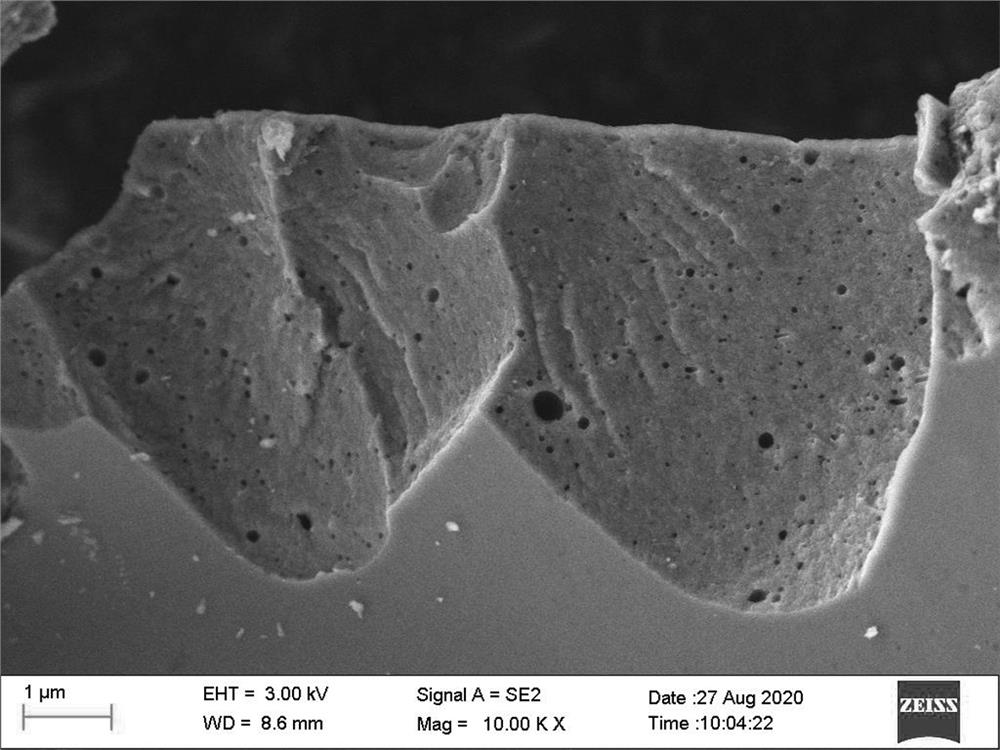
Figure 1 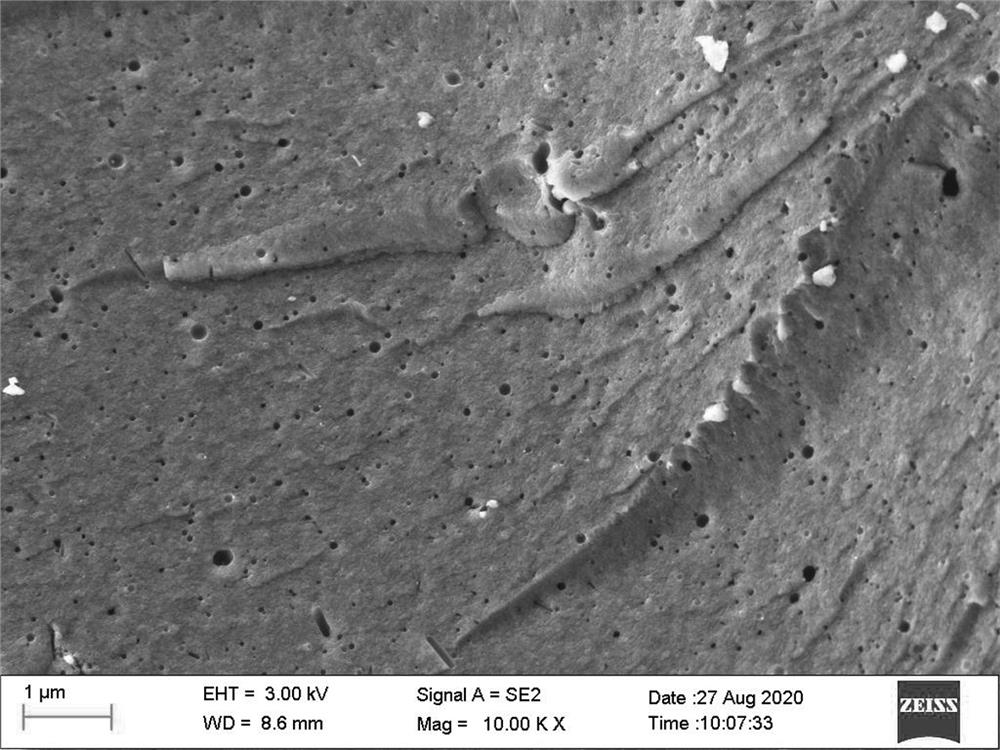
Figure 2 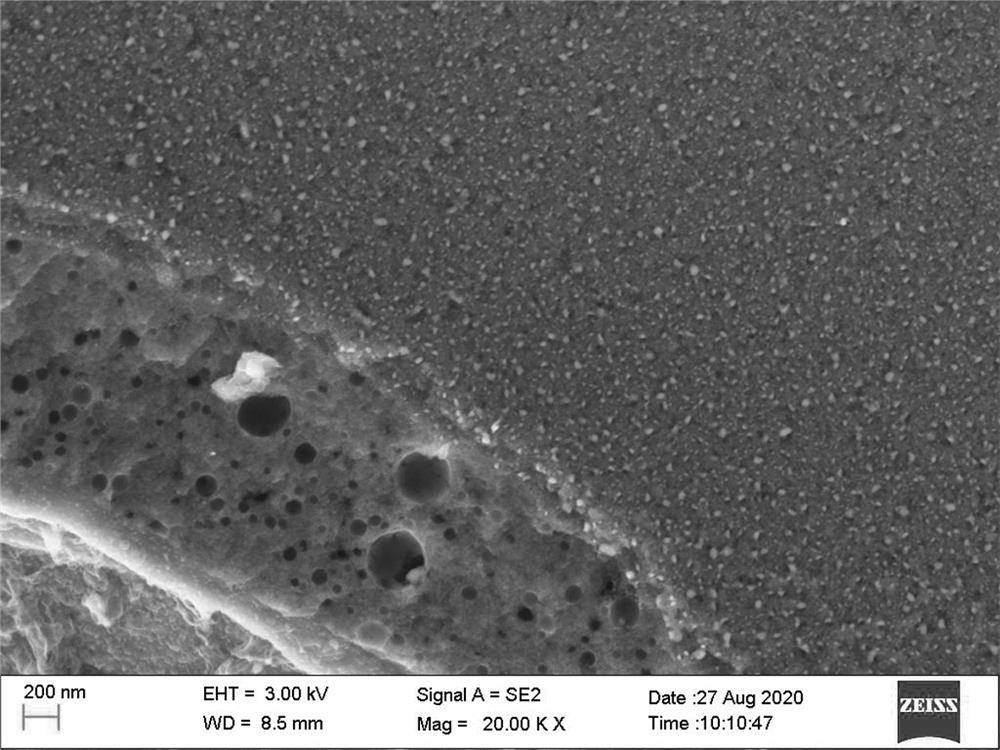
Figure 3
Abstract
Description
technical field
[0001] The invention relates to the field of carbon materials, in particular to a preparation method of a hydrophobic porous carbon material. Background technique
[0002] Porous carbon refers to a material with pores of different sizes between carbon and carbon, which can be divided into three categories according to the size of the pore diameter: microporous carbon materials (<2 nm), mesoporous carbon materials (2–50 nm) and large carbon materials. Porous carbon materials (>50 nm). Porous carbon has the advantages of high specific surface area, excellent electrical conductivity, tunable physical and chemical properties, cheap and easy to obtain, etc., and has shown great application prospects in energy storage and conversion, catalysis, adsorption and other fields. The selection and preparation method of porous carbon material precursor directly determine its performance and application range.
[0003] In the prior art, patent CN109437189A is a prep...
Examples
Embodiment 1
[0036] The preparation method of the hydrophobic porous carbon material of the present embodiment comprises the following steps:
[0037] (1) Pre-emulsify 2g dimethyldivinylsilane, 40g styrene, 10g ethyl acrylate, 0.2g dodecyl glucoside, 0.2g Tween-80 and 60g deionized water in a four-necked flask , under a nitrogen atmosphere, the temperature was raised to 85°C, and 0.2g potassium persulfate aqueous solution (5% w / w) was slowly added dropwise for emulsion polymerization, and kept for 2 hours to obtain silicopropylbenzene latex (SSAL);
[0038] (2) Dissolve 8g of oxalic acid (OA) in 35mL of absolute ethanol to prepare OA solution;
[0039] (3) Mix 40g of SSAL with all the OA solution, stir for 12 hours to form a new emulsion system, and dry at 50°C for 24 hours to obtain a resin matrix (PSO);
[0040] (4) Under an inert atmosphere, the PSO was raised to 700°C at 10°C / min in a tube furnace, and then kept for 1h to obtain a porous carbon product, which was ground to obtain a hy...
Embodiment 2
[0042] The preparation method of the hydrophobic porous carbon material of the present embodiment comprises the following steps:
[0043] (1) Put 3g dimethyl divinyl silane, 40g styrene, 10g butyl acrylate, 0.8g sodium lauryl sulfate, 0.4g polyoxyethylene octylphenol ether-10 and 100g deionized water in four Pre-emulsify in a flask with an argon gas atmosphere, raise the temperature to 88°C, slowly add 0.4g potassium persulfate aqueous solution (5% w / w) dropwise for emulsion polymerization, keep warm for 4 hours, and obtain silicopropylbenzene latex (SSAL);
[0044] (2) Dissolve 10g of oxalic acid (OA) in 40mL of absolute ethanol to prepare OA solution;
[0045](3) Mix 20g of SSAL with all the OA solution, stir for 12 hours to form a new emulsion system, and dry at 70°C for 30 hours to obtain a resin matrix (PSO);
[0046] (4) Under an inert atmosphere, the PSO was raised to 800°C at a rate of 10°C / min in a tube furnace, and then kept for 2 hours to obtain a porous carbon pro...
Embodiment 3
[0048] The preparation method of the hydrophobic porous carbon material of the present embodiment comprises the following steps:
[0049] (1) Put 4g dimethyldivinylsilane, 40g styrene, 10g isooctyl acrylate, 0.8g sodium lauryl sulfate, 0.5g polyoxyethylene octylphenol ether-10 and 100g deionized water in Pre-emulsify in a four-necked flask, raise the temperature to 85°C under a nitrogen atmosphere, slowly add 0.3g potassium persulfate aqueous solution (5% w / w) dropwise for emulsion polymerization, and keep warm for 4 hours to obtain silicopropylbenzene latex (SSAL);
[0050] (2) Dissolve 20g of oxalic acid (OA) in 80mL of absolute ethanol to prepare OA solution;
[0051] (3) Mix 20g of SSAL with all the OA solution, stir for 24 hours to form a new emulsion system, and dry at 80°C for 30 hours to obtain a resin matrix (PSO);
[0052] (4) Under an inert atmosphere, the PSO was raised to 850°C at a rate of 10°C / min in a tube furnace, and then kept for 2 hours to obtain a porous ...