
Optical generation method and device of 32-frequency-multiplication millimeter wave signal
A generation method and millimeter wave technology, applied in the field of radio frequency communication, can solve the problem of inability to meet the generation requirements of higher frequency multiplied millimeter wave signals, and achieve the effect of simple structure, simple structure and lower system cost.
Patent Information
- Authority / Receiving Office
- CN · China
- Patent Type
- Applications(China)
- Current Assignee / Owner
- Publication Date
- 2022-03-18
Smart Images
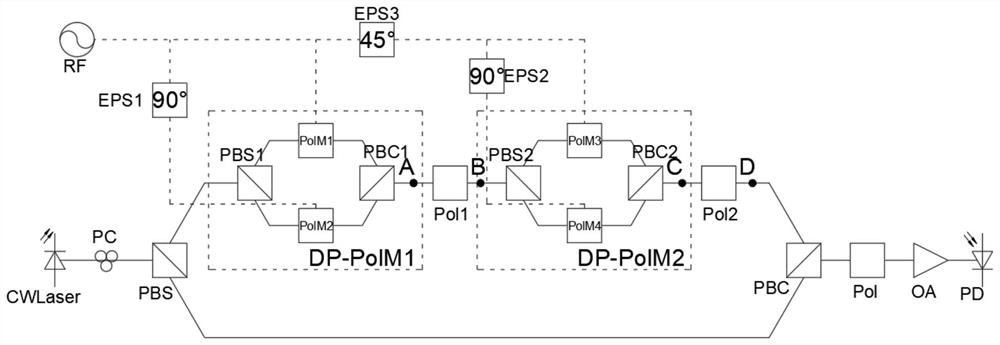
Figure 1 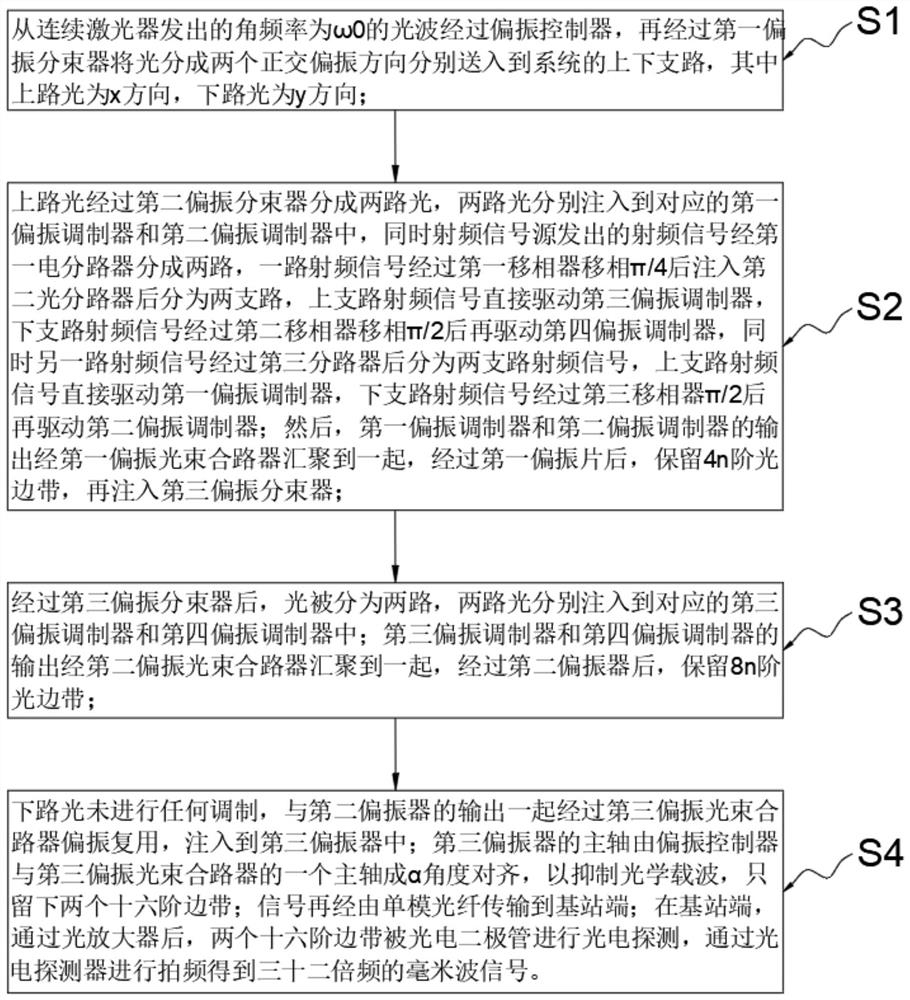
Figure 2 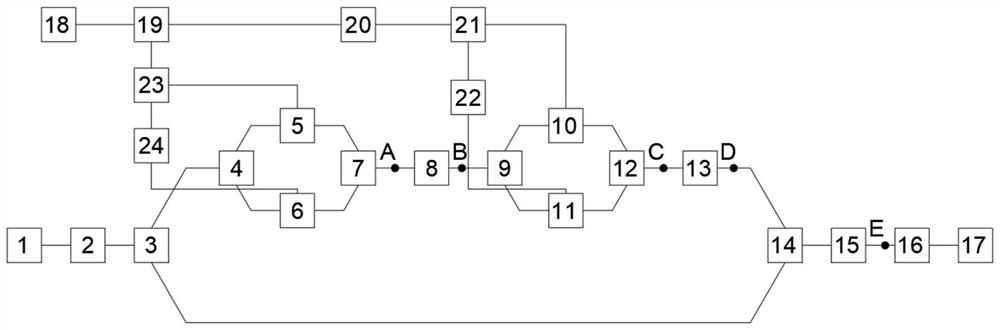
Figure 3
Abstract
Description
technical field
[0001] The invention relates to the technical field of radio frequency communication, in particular to a method and device for optically generating a 32-fold frequency millimeter wave signal. Background technique
[0002] The rise of mobile Internet, cloud computing, big data, cloud computing, blockchain, 5G and other informatization waves has brought about a huge demand for network capacity, and the sharp increase in business traffic has brought severe challenges to the access network. 6GHz The increasing scarcity of spectrum resources in the following low-frequency bands and the urgent need for ultra-high-speed and large broadband access have led researchers to turn their attention to high-frequency millimeter-wave frequency bands with more abundant spectrum resources. However, due to the constraints of electronic bottlenecks, it is difficult and expensive to generate millimeter-wave signals in the traditional electrical way; at the same time, the atmospher...
Examples
Embodiment 1
[0065] Such as Figure 1-Figure 2 As shown, this embodiment provides a method and device for optically generating a 32-fold frequency millimeter wave signal, including the following steps:
[0066] S1. The light wave with angular frequency ω0 emitted from the continuous laser passes through the polarization controller, and then the first polarization beam splitter divides the light into two orthogonal polarization directions and sends them to the upper and lower branches of the system respectively, where the upper light is x direction, the down-road light is in the y direction;
[0067] S2. The upper path light is divided into two paths by the second polarization beam splitter, and the two paths of light are respectively injected into the corresponding first polarization modulator and the second polarization modulator, and at the same time, the radio frequency signal sent by the radio frequency signal source passes through the first electrical splitter The splitter is divided...