

Preparation method of near-infrared fluorescent molecule with aggregation-induced emission characteristic
A technology of aggregation-induced luminescence and fluorescent molecules, applied in the field of organic photofunctional materials
Patent Information
- Authority / Receiving Office
- CN · China
- Current Assignee / Owner
- Publication Date
- 2022-04-12
Smart Images
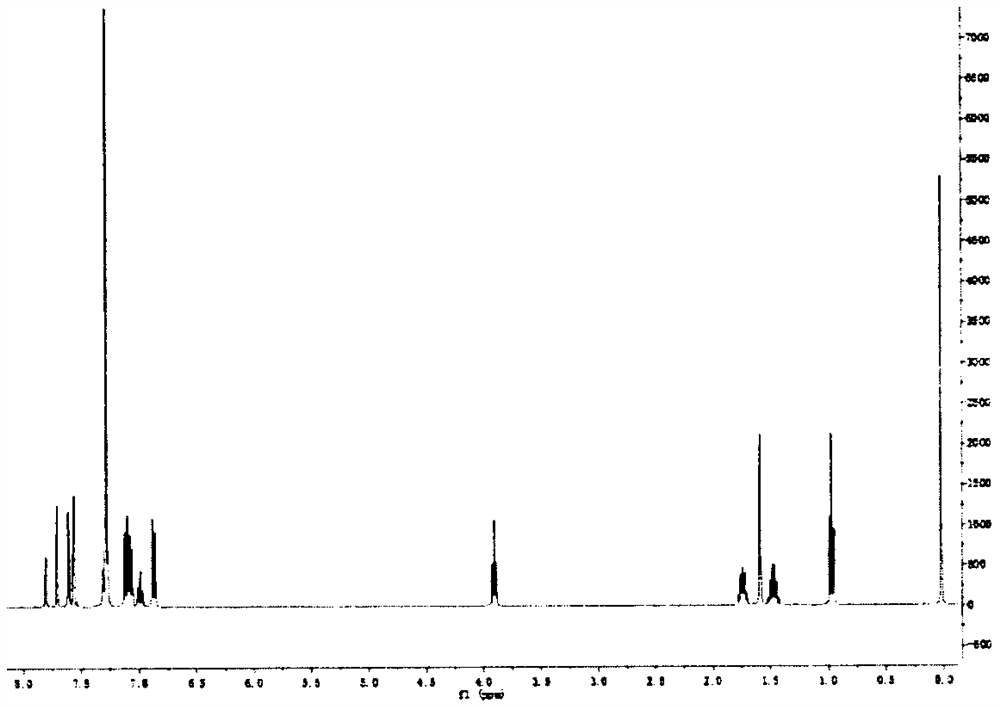
Figure 1 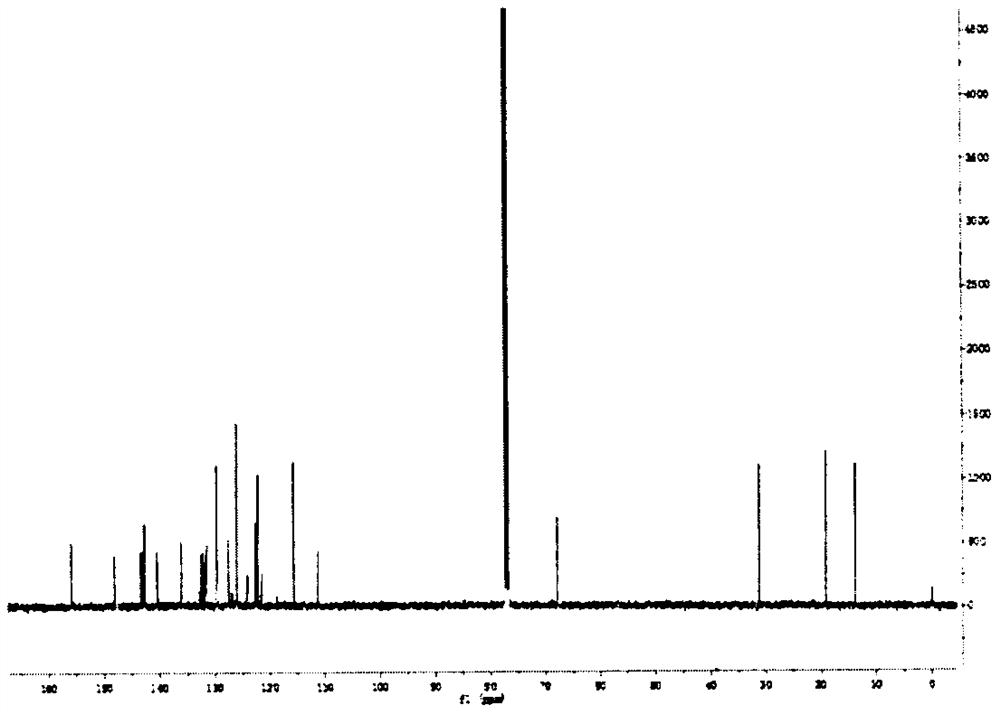
Figure 2 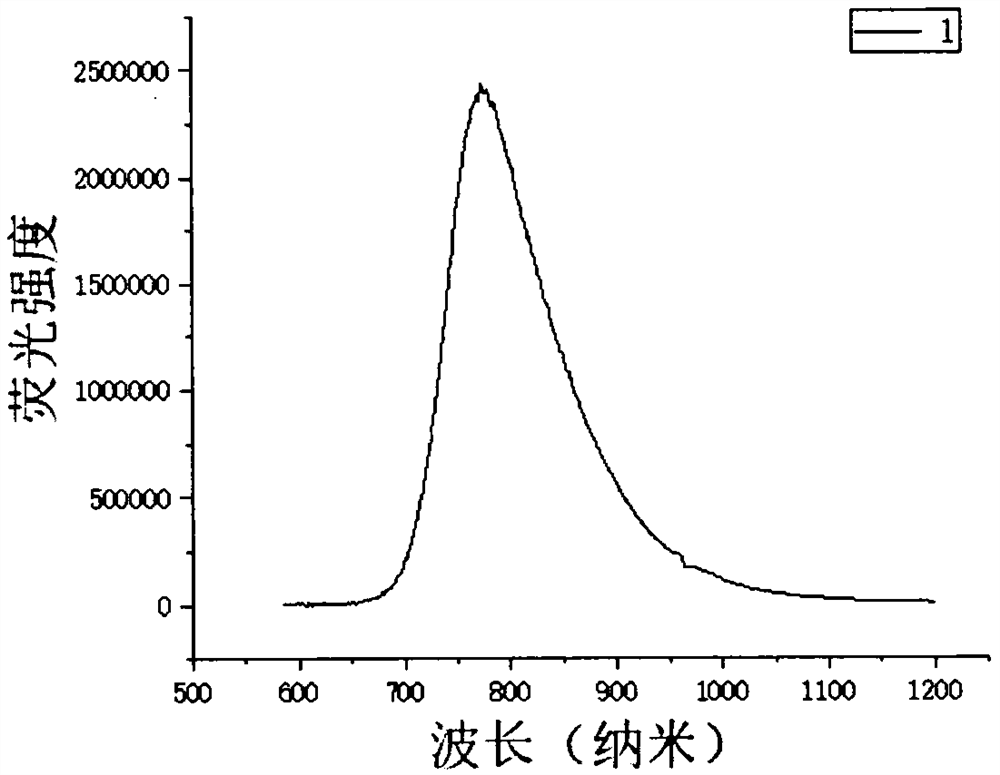
Figure 3
Abstract
Description
technical field
[0001] The invention relates to the field of organic optical functional materials, namely the preparation method and photophysical properties of near-infrared fluorescent compounds. Background technique
[0002] At present, the study of near-infrared fluorescent molecules is a challenging work. At the same time, near-infrared (NIR, 700-900nm) fluorescent molecules have potential applications in biology and other fields. Therefore, the synthesis of materials with near-infrared luminescence is urgently needed.
[0003] In 2001, the team of academician Tang Benzhong proposed the concept of aggregation-induced emission (AIE), that is, molecules do not emit in solution, but have high fluorescence intensity in the aggregated state. Currently, the mechanism of AIE is widely considered to be intramolecular motion-limited and energy-dissipative-limited. In applications such as biomedicine, molecules are mostly used in aggregated states. Therefore, the aggregation ...
Examples
Embodiment 1
[0020] The synthetic method of above-mentioned compound 1, comprises the following steps:
[0021] Compound 1, the molecular formula is C 60 h 46 f 15 N 3 o 2 , the chemical formula of compound 1 is as shown in formula (I):
[0022]
[0023] Its preparation method, the steps are as follows:
[0024] 1) Compound 1 (0.5mmol, 0.381g) and 4-butoxydiphenylamine (2.5mmol, 0.603g), three (dibenzylideneacetone) palladium (0.038mmol, 0.022g), 2-dicyclohexyl Ketone-2',6'-diisopropoxy-1,1'-biphenyl (0.15mmol, 0.070g) and tripotassium phosphate (5.0mmol, 1.061g) were placed in a 25mL two-necked bottle under nitrogen protection , add 2 mL of toluene. 2) Add 0.5ml triethylamine and react at 110°C for 6h;
[0025] 2) React at 110°C for 24 hours. After the system was cooled, dichloromethane (50 mL) was added and extracted three times with water.
[0026] 3) The organic phase was dried overnight with anhydrous magnesium sulfate. The crude product was recrystallized with chlorofor...
Embodiment 2
[0029] The synthetic method comprises the following steps:
[0030] 1) Compound 1 (0.5mmol, 0.381g) and 4-butoxydiphenylamine (2.5mmol, 0.724g), three (dibenzylideneacetone) palladium (0.038mmol, 0.022g), 2-dicyclohexyl Ketone-2',6'-diisopropoxy-1,1'-biphenyl (0.15mmol, 0.070g) and tripotassium phosphate (5.0mmol, 1.061g) were placed in a 25mL two-necked bottle under nitrogen protection , add 2 mL of toluene. 2) Add 0.5ml triethylamine and react at 110°C for 6h;
[0031] 2) React at 110°C for 24 hours. After the system was cooled, dichloromethane (50 mL) was added and extracted three times with water.
[0032] 3) The organic phase was dried overnight with anhydrous magnesium sulfate. The crude product was recrystallized with chloroform / ethanol to obtain the compound (yield 45%)
[0033] The molar ratio of compound 1 to 4-butoxydiphenylamine is 0.5 mmol: 3.0 mmol.
[0034] Characterization 1. Solid-state fluorescence spectrum of fluorescent molecules:
[0035] The fluore...