
Smoke desucfuration denitrification dedust process and device
A flue gas and process technology, which is applied in the field of industrial furnace flue gas desulfurization, denitrification and dust removal process and equipment, can solve the problems of complicated process, ineffective utilization, and expensive equipment investment, and achieve simple process flow, low power consumption, and low cost effect
Patent Information
- Authority / Receiving Office
- CN · China
- Patent Type
- Applications(China)
- Current Assignee / Owner
- Publication Date
- 2004-03-03
- Estimated Expiration
- Not applicable · inactive patent
Smart Images
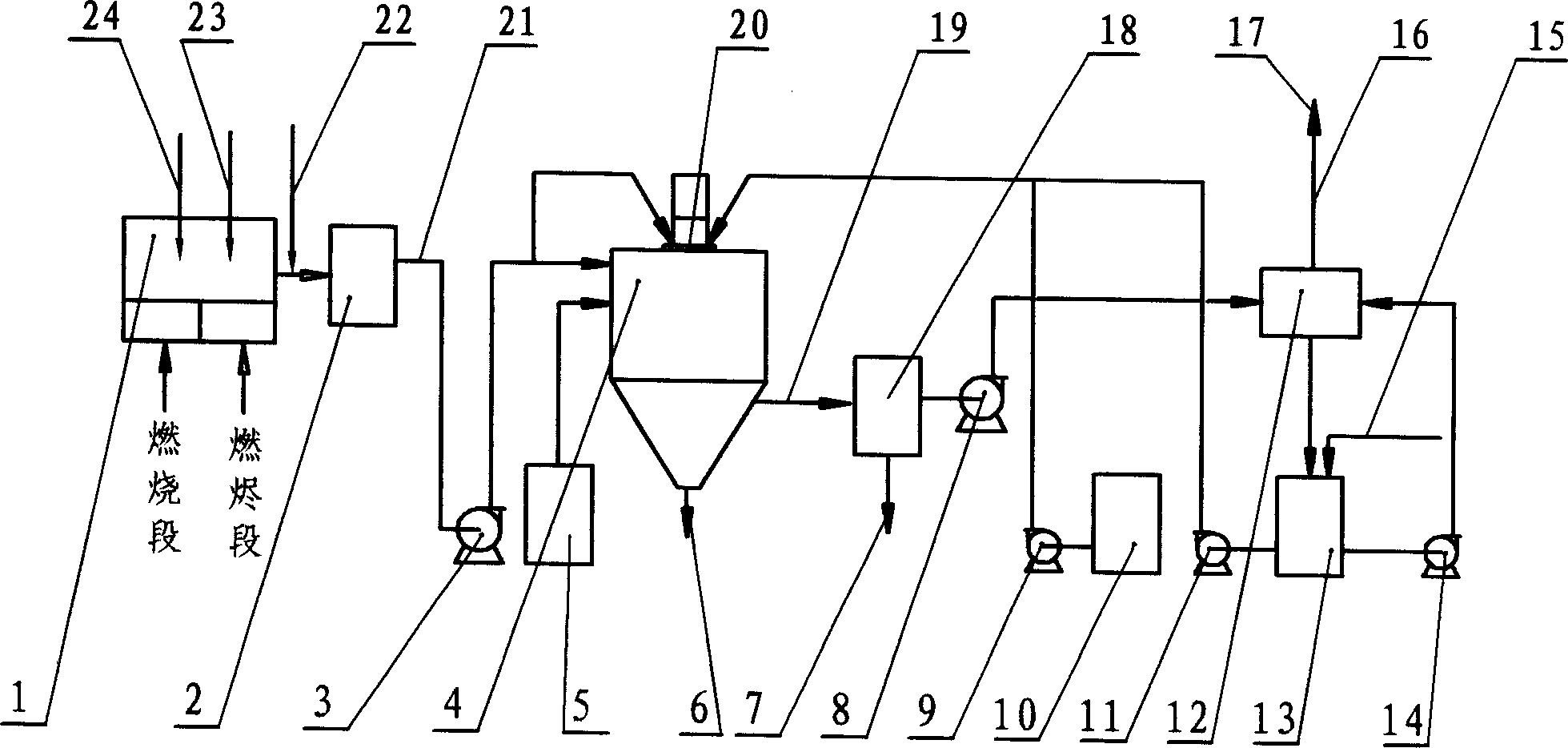
Figure 1 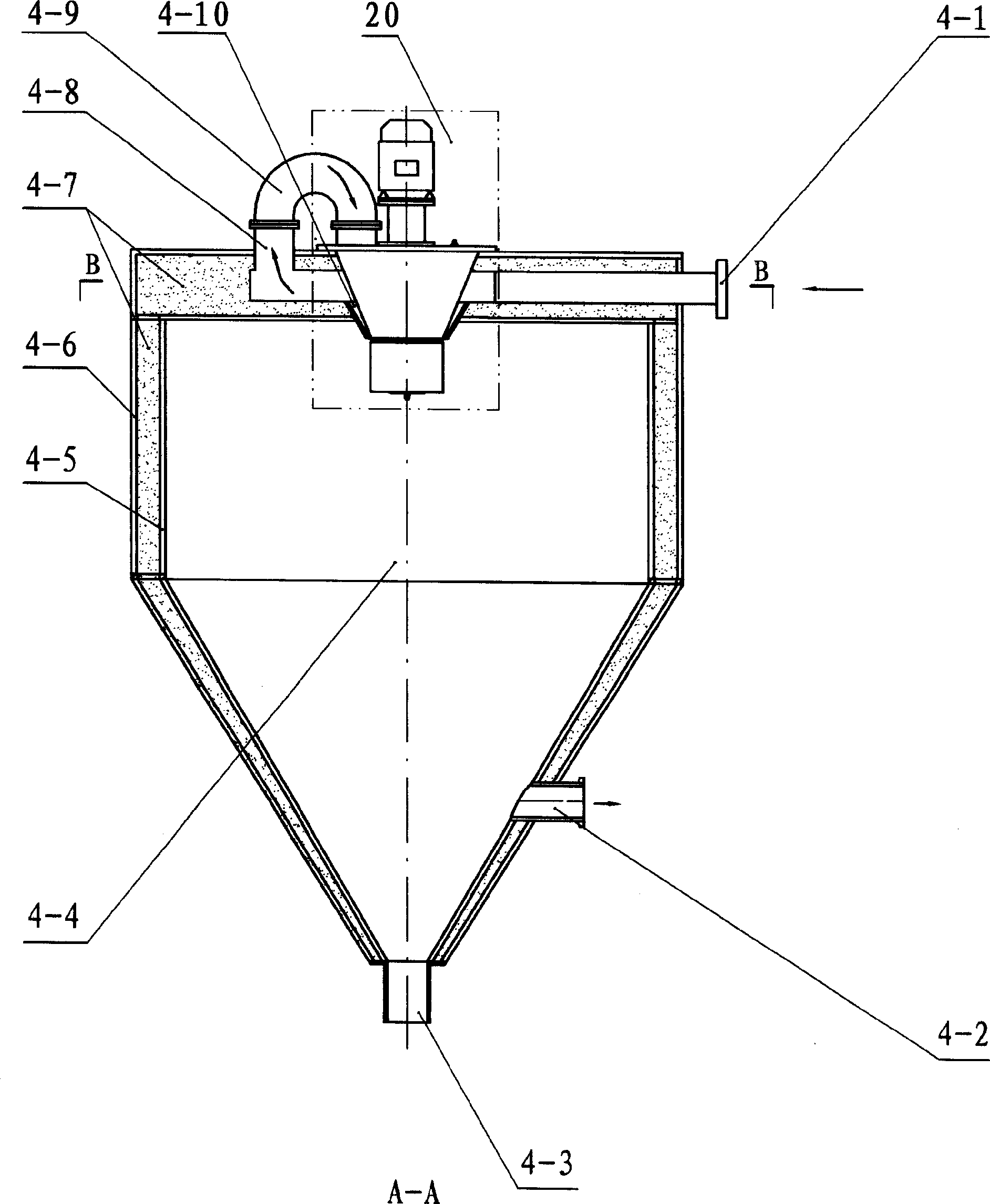
Figure 2 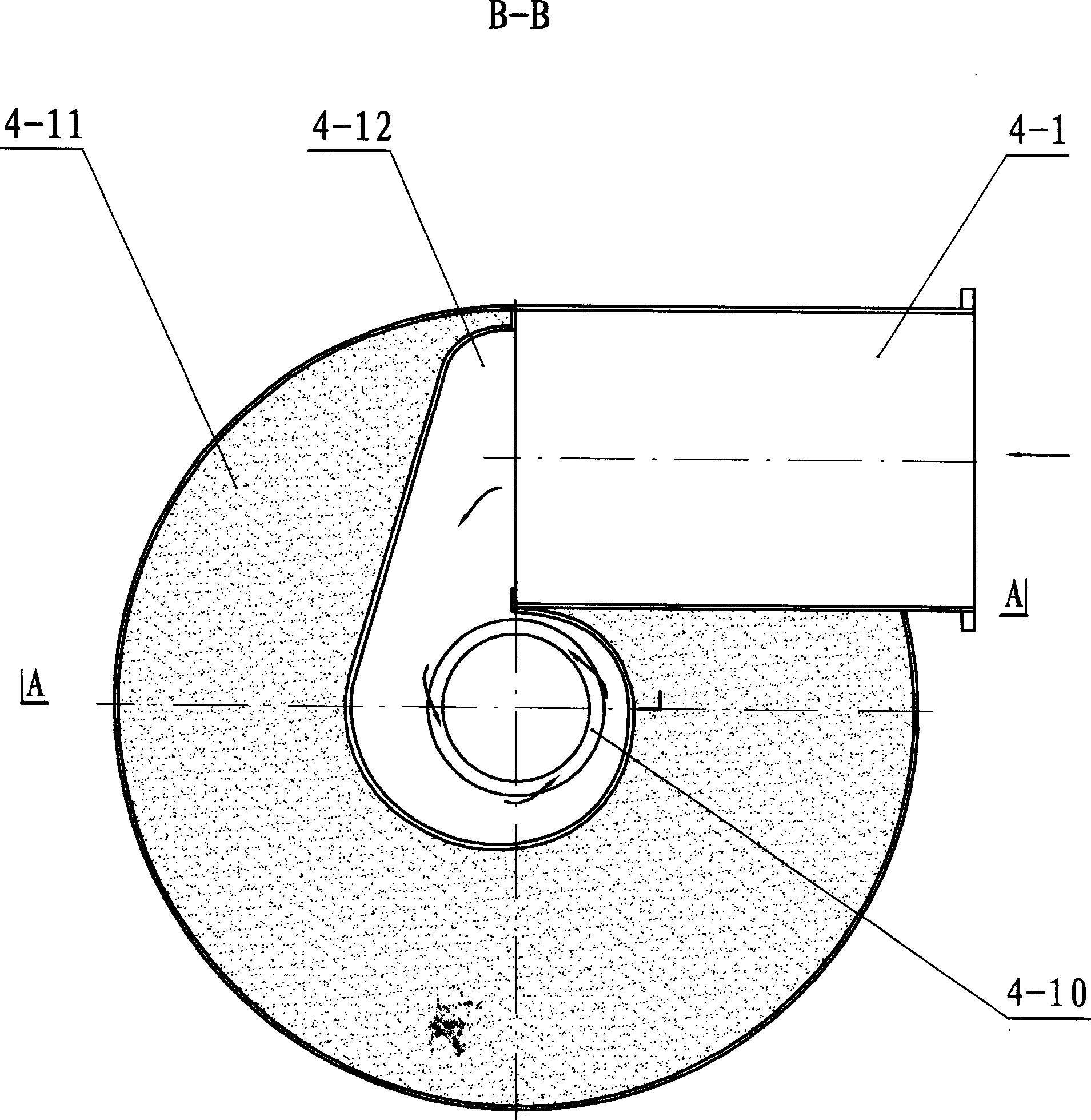
Figure 3
Abstract
Description
Technical field:
[0001] The invention relates to a process and device for desulfurization, denitrification and dust removal of industrial furnace flue gas, and can also be used for desulfurization, denitrification and dust removal of other flue gases. Background technique:
[0002] my country is the world's largest coal producer and consumer, and emits SO into the atmosphere every year. 2 There are 24 million tons, NO X There are 7 million tons, and a lot of soot. lots of SO 2 and NO X Pollution and the resulting acid precipitation pollution have caused serious harm to human health, agriculture, forests, fisheries, materials, etc. For this reason, the country has invested huge manpower and financial resources, but it still cannot be effectively treated; it costs a lot of money More than 20 sets of large-scale power plant flue gas treatment technologies have been introduced from abroad, but all of them cannot be popularized because of the huge investment, high operating c...
Examples
Embodiment 1
[0080] Tested on DZL4-1.25-AIII type boiler; SO in flue gas 2 The content is 1760mg / M 3 , close the air intake door of the combustion section to make the coal burn in an oxygen-poor state, test the oxygen content in the flue gas with a flue gas comprehensive tester, make the excess air coefficient α = 0.7, and open the air door of the ember section to fully burn the coal As far as possible, measure the oxygen content in the flue gas, so that the excess air coefficient α = 1.2, and there is no black carbon in the slag. An air inlet is opened at a height of 600mm above the blast furnace grate in the combustion section, and the secondary air is sent in. The secondary air volume is 25% of the total air volume, forming a wind on the fire, so that the unburned volatiles are burned out; at the furnace flue gas outlet, The temperature of the flue gas is introduced into a nozzle in the area of 900 ° C, and a small amount of ammonia water is injected, and the NO X The molar ratio of...
Embodiment 2
[0082] DZL4-1.25-AIII type boiler is used, when using Class III bituminous coal, under rated working conditions, SO in the flue gas 2 The content is 2840mg / M 3 , using the process of Example 1, the treated flue gas SO 2 The content is 70mg / M 3 . NO X The content is 170mg / M 3 Soot content is 35mg / M 3 (testing with flue gas composition tester) per hour ammonium sulfate output is 68.5kg, and ammonium sulfate water content and purity are with embodiment 1.
Embodiment 3
[0084] Still testing on the DZL4-1.25-AIII type boiler, when using Type III bituminous coal, under rated conditions, the SO in the flue gas 2 The content is 3410mg / M 3 The coal-fired, technological process is the same as embodiment 1, and the flue gas SO after treatment 2 The content is 80mg / M 3 ; The output of ammonium sulfate per hour is 82.5kg, NO X The content is 160mg / M 3 , soot content is 48mg / M 3 .