

Steam reforming of solid carbon in protonic ceramic fuel cells
Patent Information
- Authority / Receiving Office
- US · United States
- Current Assignee / Owner
- Publication Date
- 2005-01-27
Smart Images
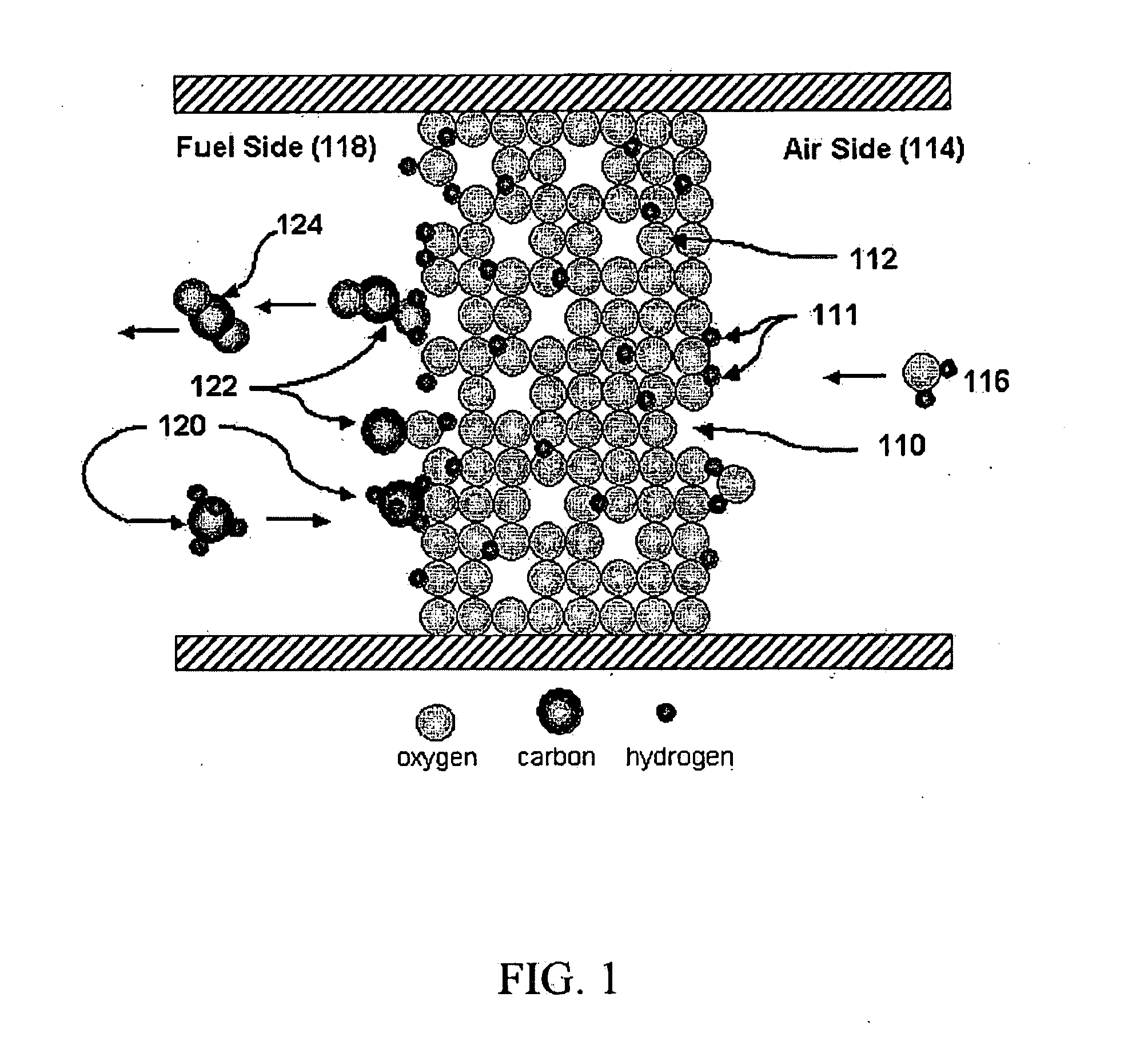
Figure 1 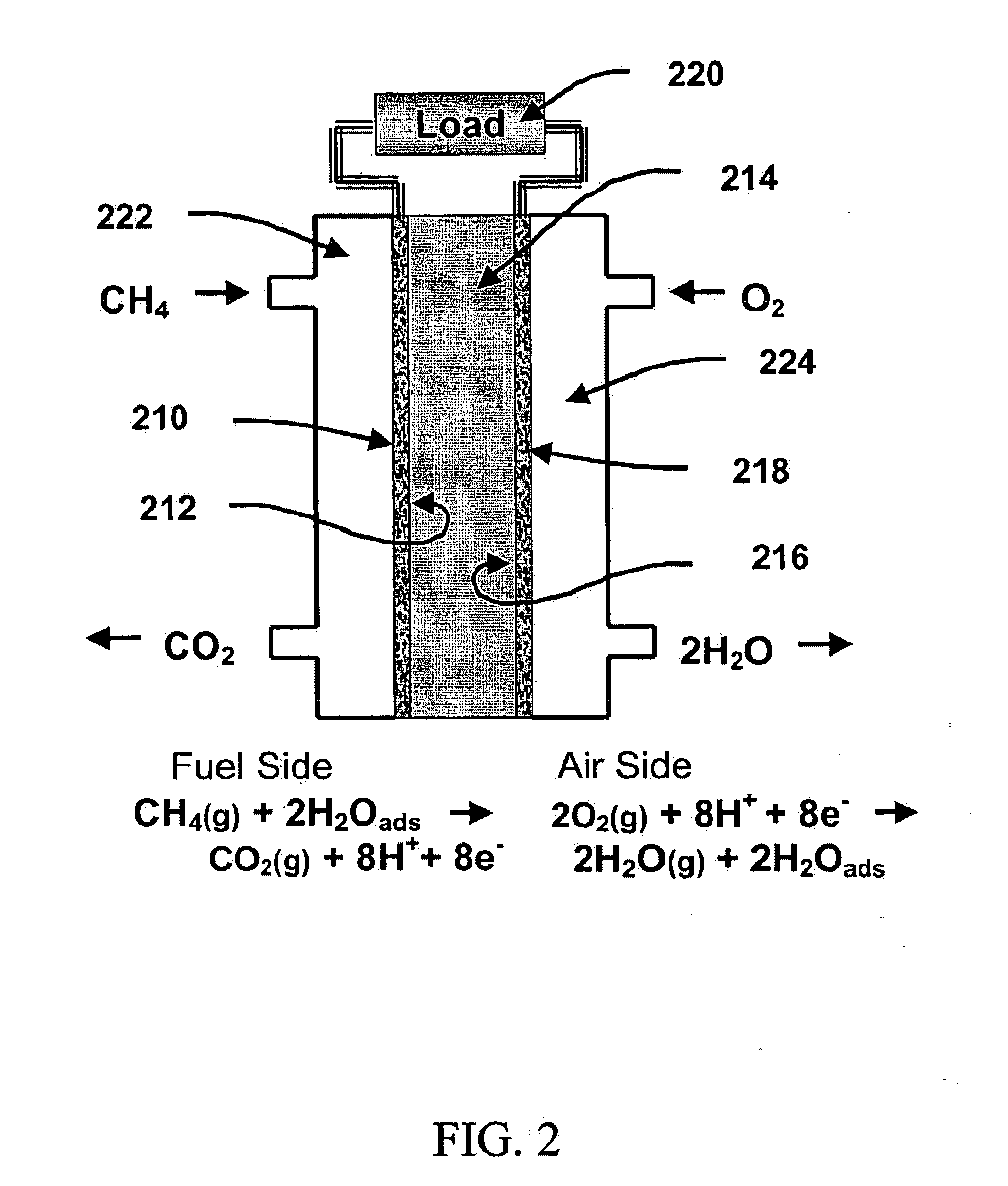
Figure 2 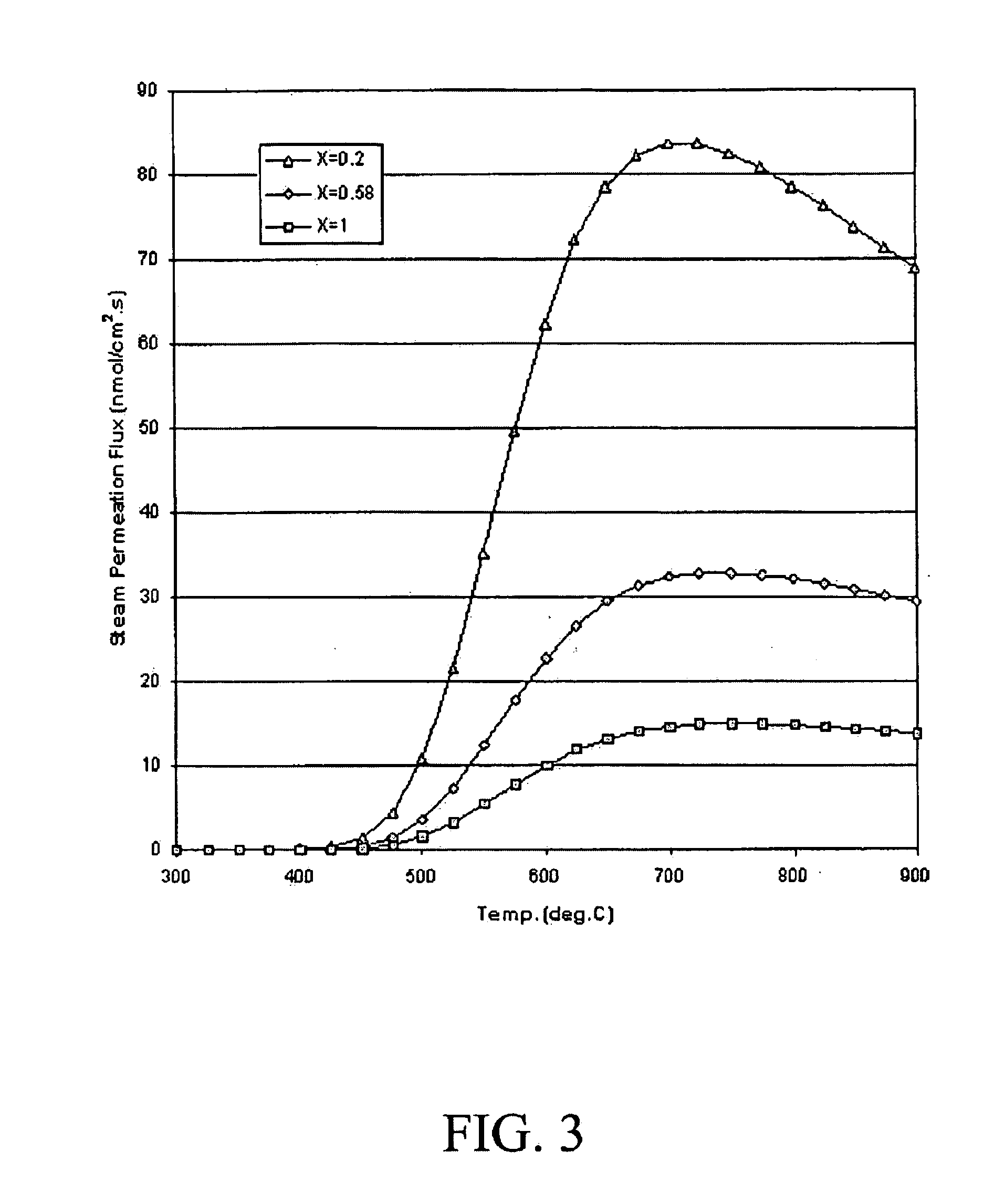
Figure 3
Abstract
Description
FIELD OF THE INVENTION This application relates generally to a process that uses solid state ambipolar diffusion of protons and oxygen ion vacancies in protonic ceramic membranees to reform hydrocarbon fuels, called “steam permeation reforming”, and more specifically to a protonic ceramic fuel cell that utilizes steam permeation reforming of hydrocarbon fuels to produce electric power. BACKGROUND OF THE INVENTION One of the advantages of fuel cells is that they can, in principle, convert the chemical energy of fuels directly into electrical energy at high efficiencies. In practice, however, some of the energy is always “lost” irreversibly as heat and unused fuel. Since the electric power is the most valuable output, one of the most important characteristics of a fuel cell design is the percentage of the available energy of the fuel that is converted into electricity. High electrical conversion efficiency requires that both the thermodynamic efficiency and fuel utilization be high....
Examples
examples
A series of experiments were performed that involved measuring the current and voltage of single cells as a function of temperature and elapsed time with various hydrocarbon fuels. The cells were typically operated at temperatures ranging from 600° C. to 850° C. Numerous cells were tested with different electrolyte thicknesses and electrode metals, but otherwise nearly identical construction. In all of the experiments, the cells consisted of an anode, a cathode, and a 23 millimeter diameter 10% yttrium-doped barium cerate, BCY10, ceramic electrolyte disc. The electrolyte thickness ranged from 0.2 millimeters to 1.0 millimeter. All of the cells tested were of the electrolyte-supported type.
A detailed description of one of the experiments, that is typical of many other experiments performed is as follows: A disc of BCY10 protonic ceramic electrolyte was prepared by the traditional powder compaction and sintering method, using powder obtained from Praxair Specialty Ceramics. The dis...