
Casting of aluminum based wrought alloys and aluminum based casting alloys
Patent Information
- Authority / Receiving Office
- US · United States
- Current Assignee / Owner
- Publication Date
- 2005-08-04
- Estimated Expiration
- Not applicable · inactive patent
Smart Images
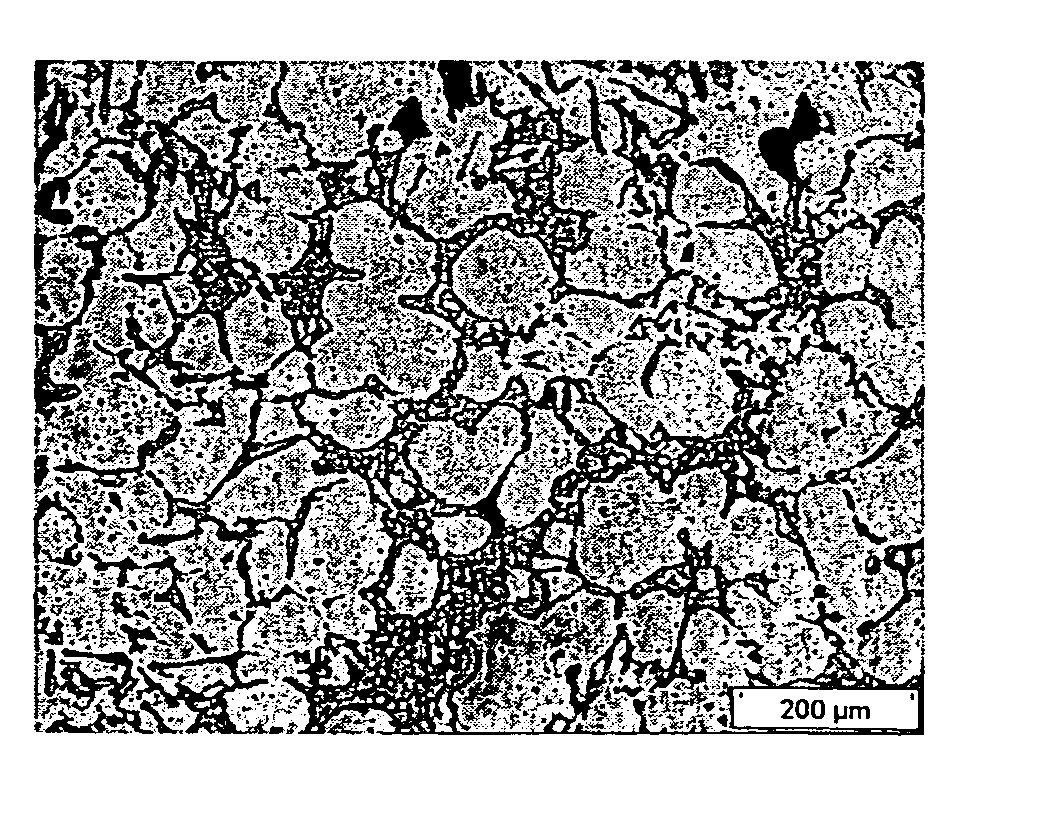
Figure 1 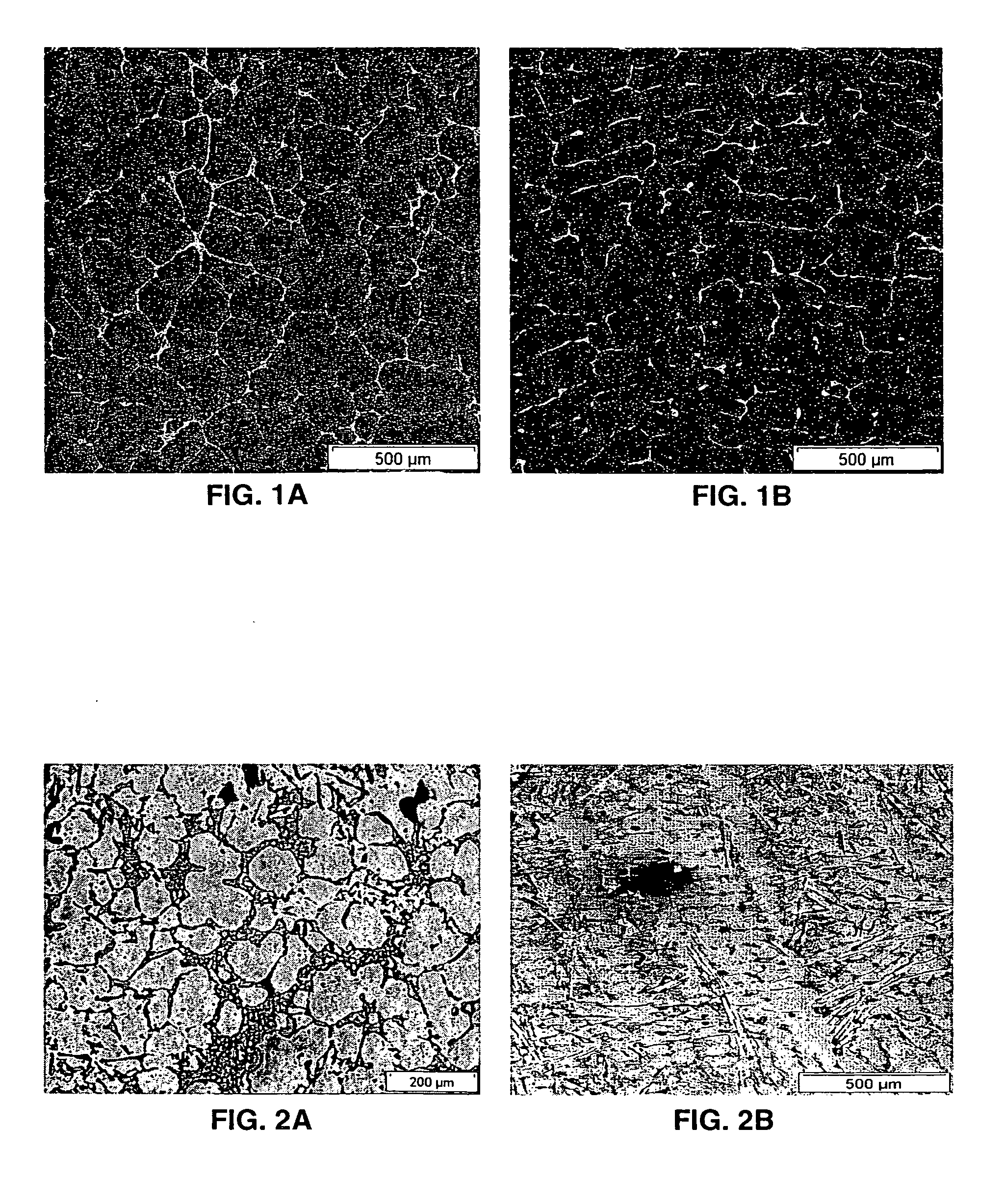
Figure 2 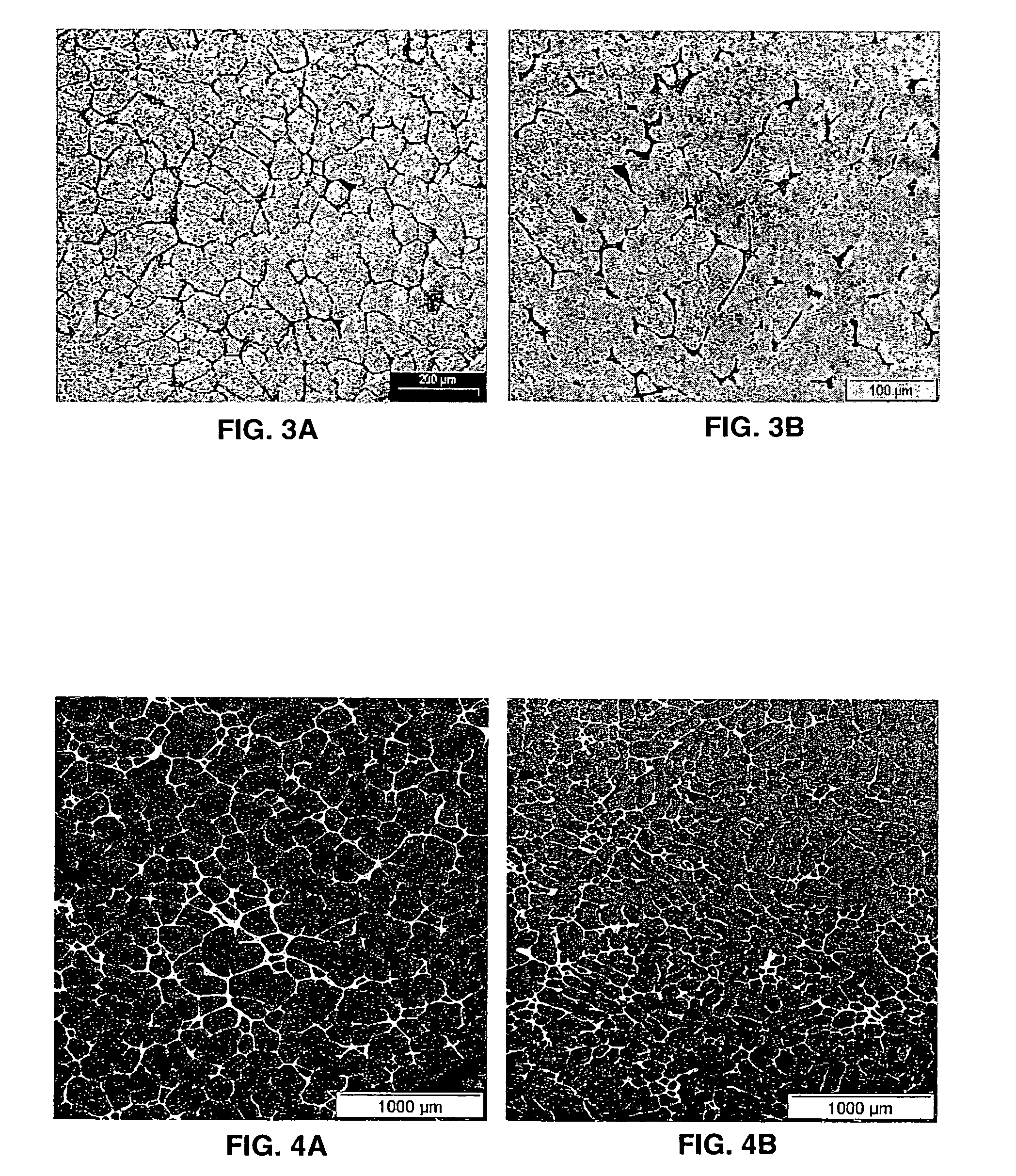
Figure 3
Abstract
Description
CROSS-REFERENCE TO RELATED APPLICATIONS
[0001] This application claims the benefit of U.S. Provisional Patent Application Ser. No. 60 / 526,221 filed Dec. 2, 2003, the entire contents of which is incorporated herein by reference.TECHNICAL FIELD
[0002] This invention relates generally to casting of wrought alloys and casting alloys. BACKGROUND
[0003] Aluminum-based alloys, for example alloys that belong to the 2xxx series, which contain primarily aluminum and copper, alloys that belong to the 3xxx series, which contain primarily aluminum and manganese, alloys that belong to the 4xxx series, which contain primarily aluminum and silicon, alloys that belong to the 5xxx series, which contain primarily aluminum and magnesium, alloys that belong to the 6xxx series, which contain primarily aluminum, magnesium, and silicon, and alloys that belong to the 7xxx series, which are complex alloys that contain primarily aluminum, zinc, copper, and magnesium, are used extensively in the aerospace indu...
Examples
example 1
[0034] A method of the present invention is used to produce a cast component with the composition of standard 2014 alloy; namely, aluminum, 3.9-5.0 weight percentage copper, 0.2-0.8 weight percentage magnesium, and 0.4-1.2 weight percentage manganese. Accordingly, 0.86 pounds of commercially pure aluminum is melted in a ceramic crucible and held at 665±5° C. Similarly, 0.14 pounds of a second alloy with the composition aluminum+33 weight percentage copper is melted in a second ceramic crucible and held at 551±5° C. The two alloys are mixed and the resultant alloy is immediately cast in a preheated metal mold. The chemistry of the resultant solidified alloy was measured using spark emission spectroscopy and the microstructure of polished metallographic samples taken from the solidified alloy was examined using optical and scanning electron microscopy. These characteristics of the resultant alloy are compared to the corresponding characteristics of standard 2014 aluminum alloy.
[0035]...
example 2
[0037] A method of the present invention is used to produce a cast component with the composition of standard 4145 alloy; namely, aluminum, 9.3-10.7 weight percentage silicon, 3.3-4.7 weight percentage copper, and 0.8 weight percentage maximum iron. Accordingly, 0.85 pounds of a first alloy with the composition aluminum, 12.7 weight percentage silicon, and 0.024 weight percentage strontium are melted in a ceramic crucible and held at 583±5° C. Similarly, 0.15 pounds of a second alloy with the composition aluminum and 33 weight percentage copper are melted in a ceramic crucible and held at 551±5° C. The two alloys are mixed and the resultant alloy is immediately cast in a preheated metal mold. The chemistry of the resultant solidified alloy was measured using spark emission spectroscopy and the microstructure of polished metallographic samples taken from the solidified alloy was examined using optical and scanning electron microscopy. These characteristics of the resultant alloy are ...
example 3
[0040] A method of the present invention is used to produce a cast component with the composition of standard 5056 alloy; namely, aluminum, 4.5-5.6 weight percentage magnesium and 0.05-0.2 weight percentage manganese. Accordingly, 0.14 pounds of a first alloy with the composition aluminum and 35 weight percentage magnesium are melted in a ceramic crucible and held at 455±5° C. Similarly, 0.86 pounds of commercially pure aluminum are melted in a ceramic crucible and held at 665±5° C. The two alloys are mixed and the resultant alloy is immediately cast in a preheated metal mold. The chemistry of the resultant solidified alloy was measured using spark emission spectroscopy and the microstructure of polished metallographic samples taken from the solidified alloy was examined using optical and scanning electron microscopy. These characteristics of the resultant alloy are compared to the corresponding characteristics of standard 5056 aluminum alloy.
[0041] The measured chemistry of the al...