
Organ preservation and/or perfusion
Patent Information
- Authority / Receiving Office
- US · United States
- Current Assignee / Owner
- Publication Date
- 2007-06-28
- Estimated Expiration
- Not applicable · inactive patent
Smart Images
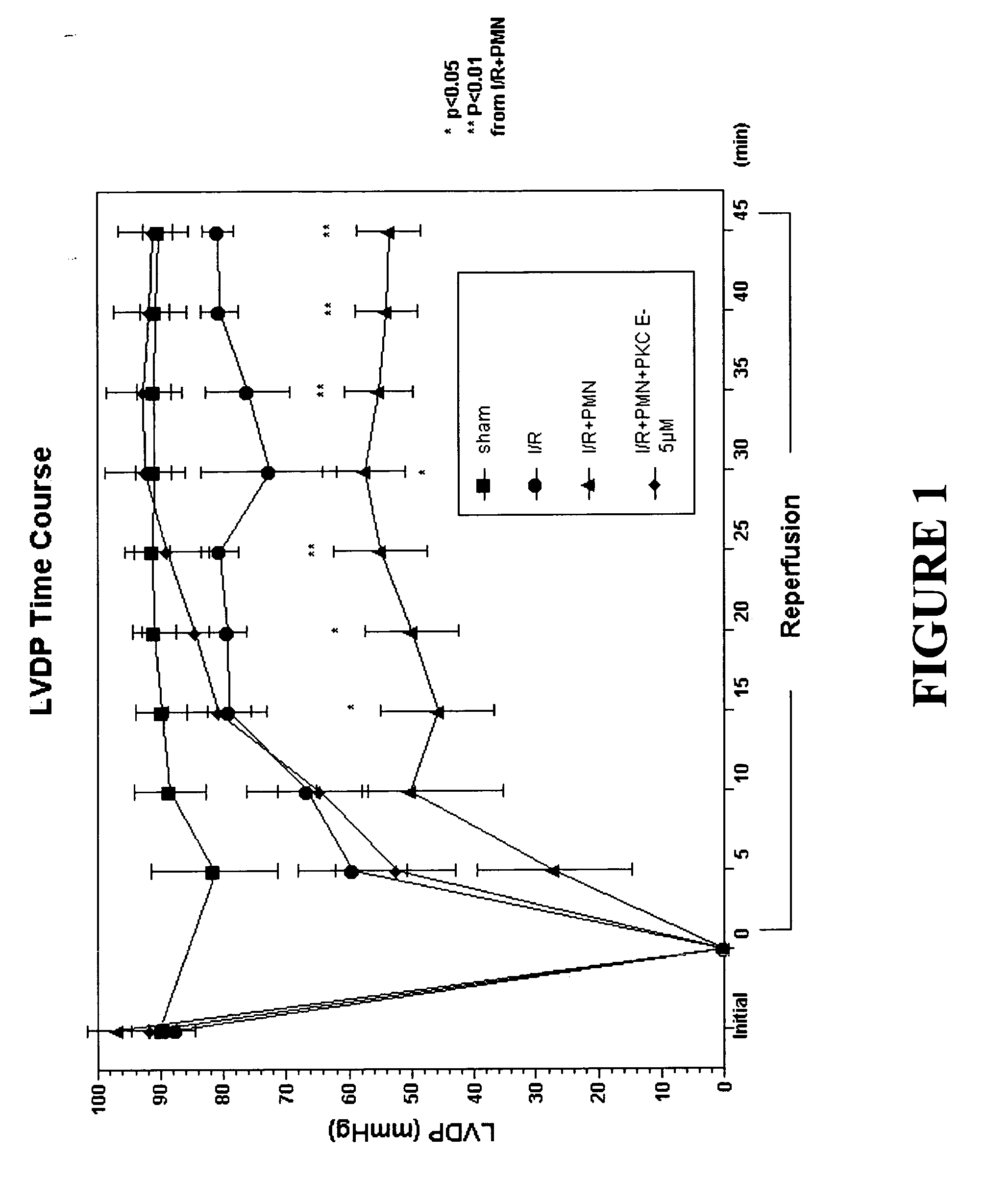
Figure 1 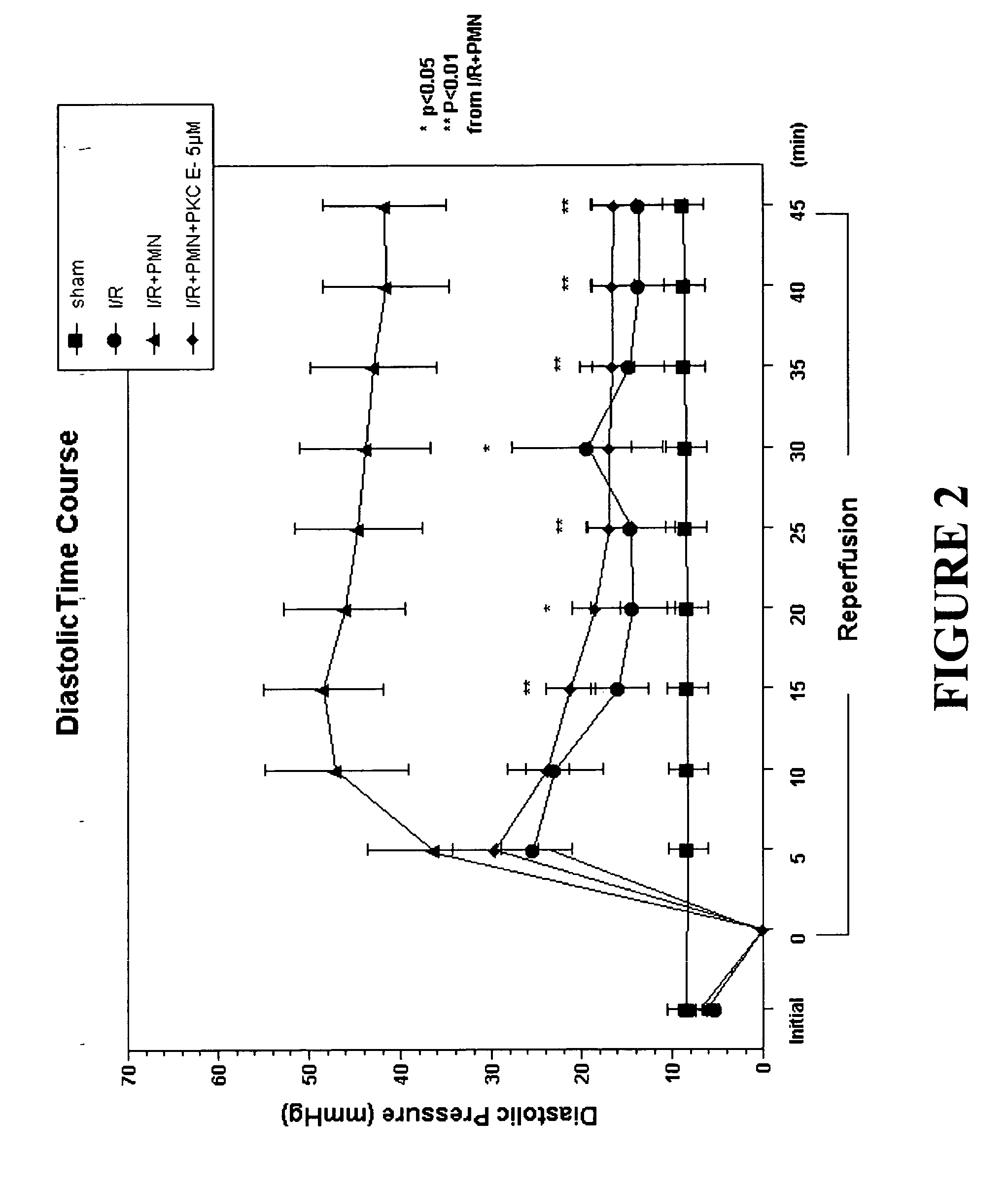
Figure 2 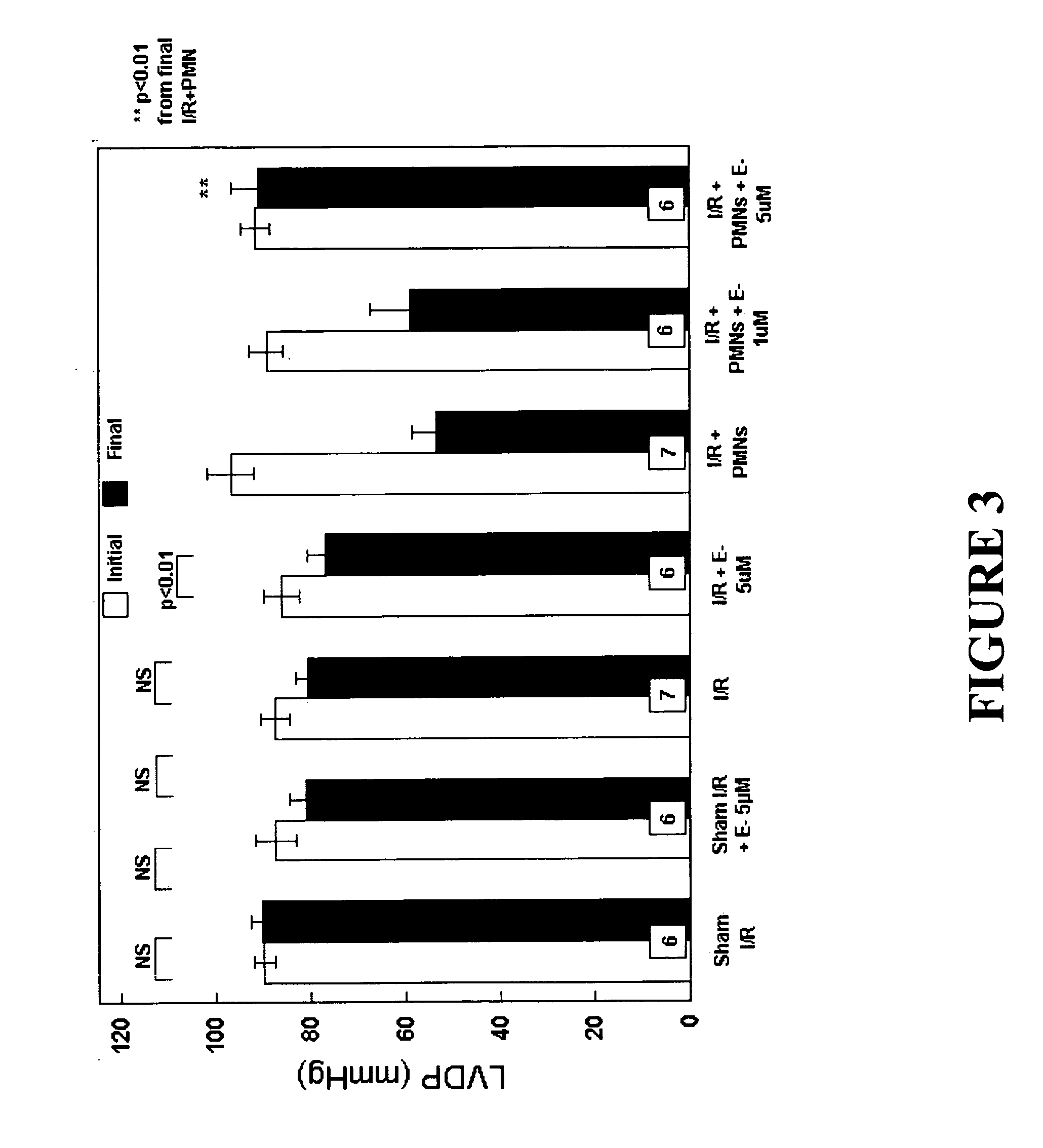
Figure 3
Abstract
Description
FIELD OF THE INVENTION
[0001] The present invention relates to a solution for preservation, perfusion, and / or reperfusion of an organ, especially the heart, for transplantation. The solution contains peptide inhibitor(s) of protein kinase C ε (PKC ε). BACKGROUND OF THE INVENTION
[0002] Successful organ transplantation is often limited due to ischemic / reperfusion injury. Isolated human hearts deprived of oxygen for more than four hours progressively loose vigor and often do not survive in recipient hosts. Other organs such as the kidney, liver, pancreas and lung are also subject to tissue and cellular damage when removed from their hosts prior to transplantation. This damage is due to hypoxic conditions and a lack of circulation, which normally delivers physiological concentrations of oxygen and nutrients, and removes toxic compounds produced by an organ's cells. Organ transplants have a higher frequency of success when performed immediately after excision from their hosts.
[0003] Re...
Examples
example
[0026] Male Sprague Dawley rats (275-325 g, Ace Animals, Boyertown, Pa.) were anesthetized with 60 mg / kg pentobarbital sodium intraperitoneally (i.p.). Sodium heparin (1,000 U) was also administered i.p. The hearts were rapidly excised, the ascending aortas were cannulated, and retrograde perfusion of the heart was initiated with a modified Krebs buffer maintained at 37° C. at a constant pressure of 80 mmHg. The Krebs buffer had the following composition (in mmol / l): 17 dextrose, 120 NaCl, 25 NaHCO3, 2.5 CaCl2, 0.5 EDTA, 5.9 KCl, and 1.2 MgCl2. The perfusate was aerated with 95% O2 and 5% CO2 and equilibrated at a pH of 7.3-7.4. The two side arms in the perfusion line proximal to the heart inflow cannula allowed PMNs, plasma without PKC ε peptide inhibitor (control hearts) or plasma containing different concentrations of PKC ε peptide inhibitor (1 or 5 μM) to be directly infused into the coronary inflow line. Coronary flow was monitored by a flow meter (Ti06, Transonic System, Inc.,...