

Nonaqueous electrolyte battery and battery pack
a technology of electrolyte battery and battery pack, which is applied in the direction of non-aqueous electrolyte cells, cell components, sustainable manufacturing/processing, etc., can solve the problems of deterioration in output performance, not being put to practical use, and remarkably reducing cycle life performan
Patent Information
- Authority / Receiving Office
- US · United States
- Patent Type
- Applications(United States)
- Current Assignee / Owner
- Publication Date
- 2009-01-29
Smart Images
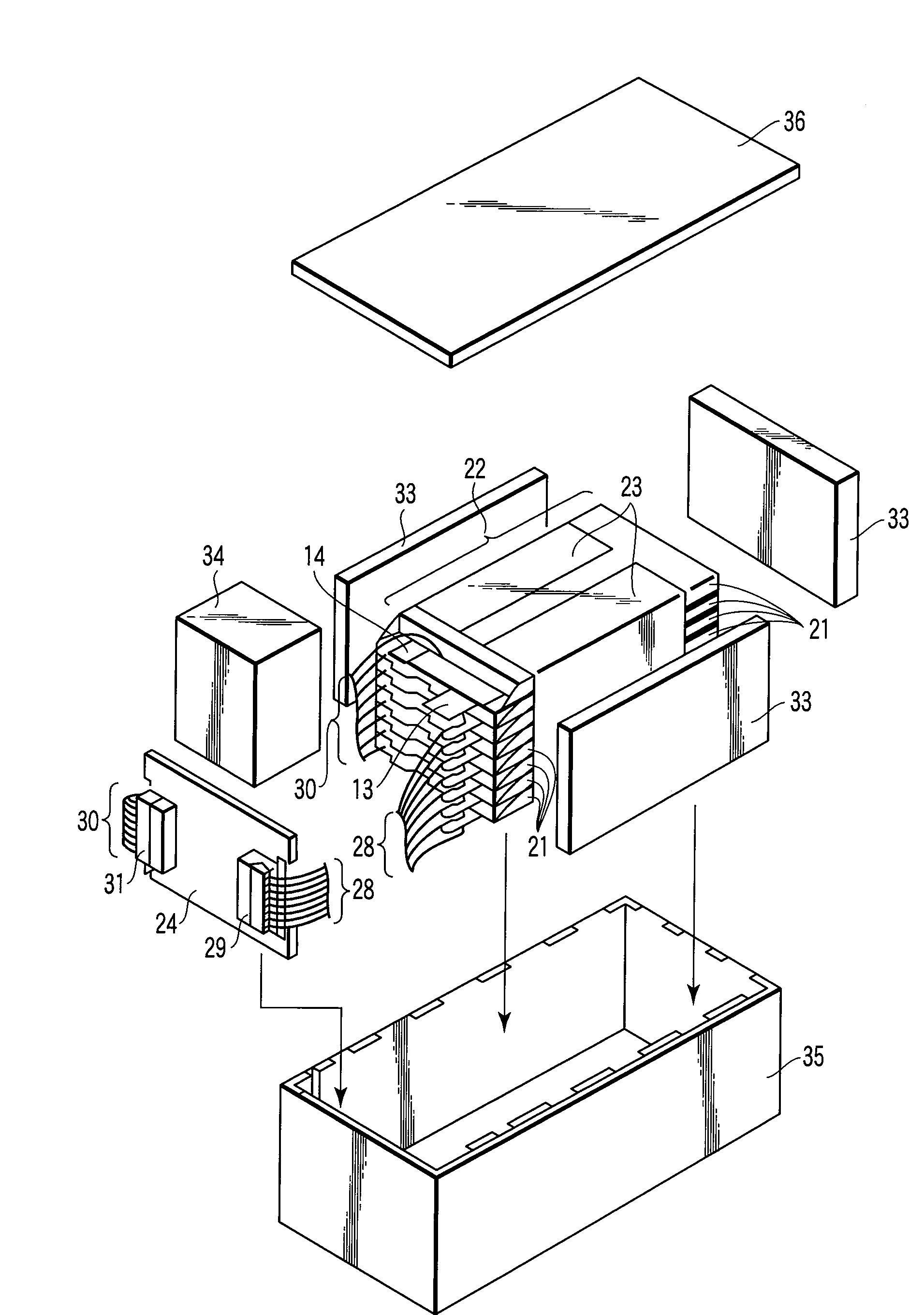
Figure 1 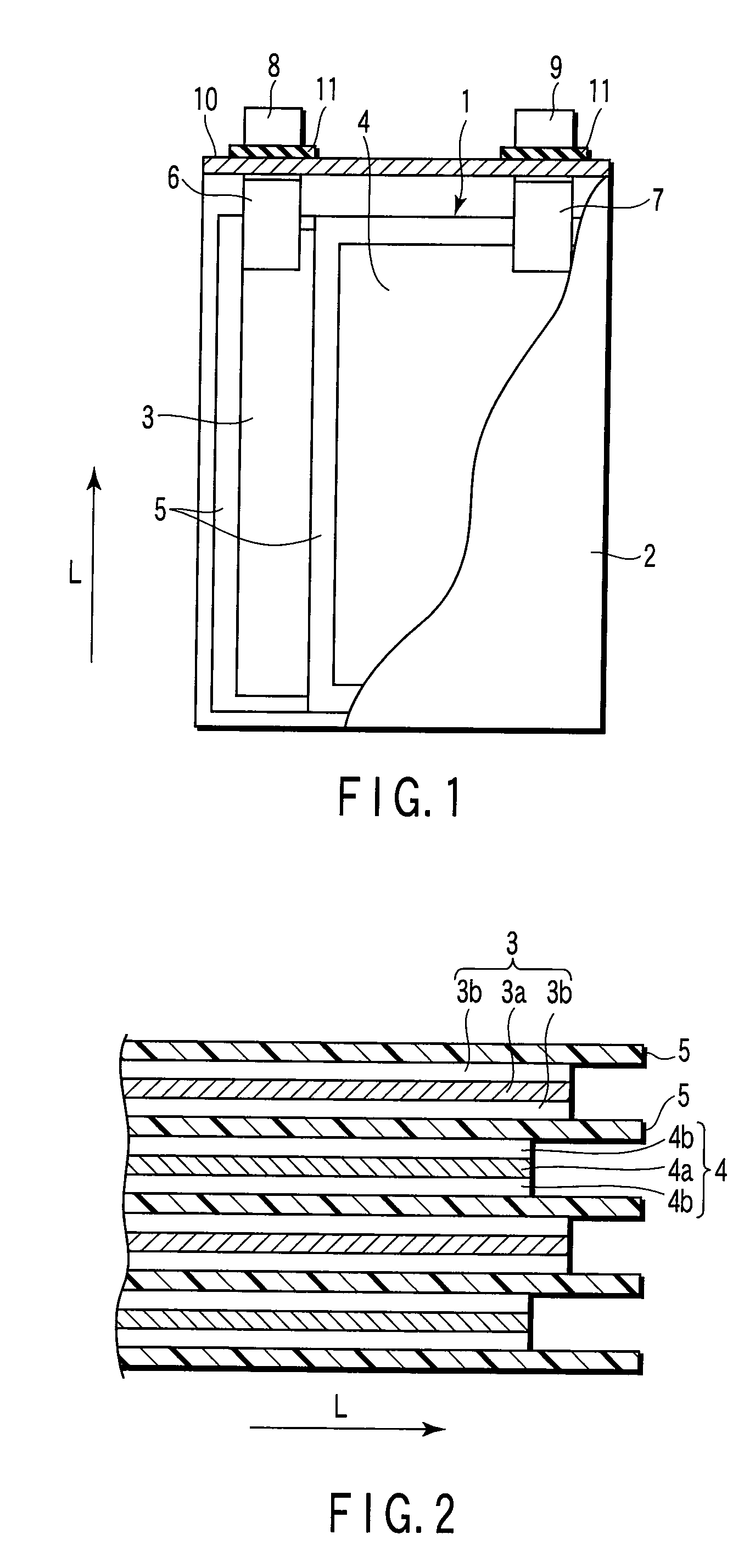
Figure 2 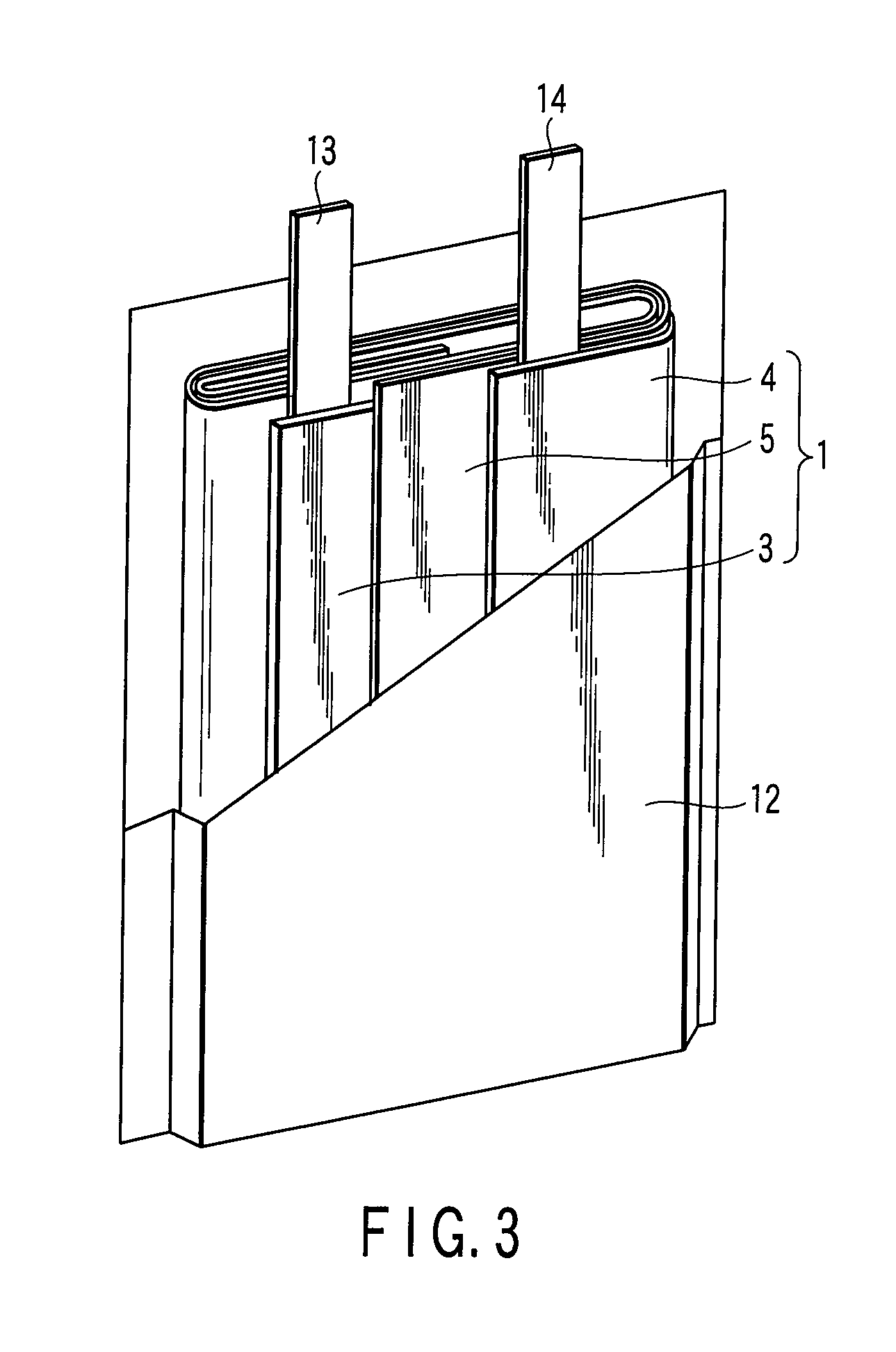
Figure 3
Abstract
Description
CROSS-REFERENCE TO RELATED APPLICATIONS
[0001] This application is based upon and claims the benefit of priority from prior Japanese Patent Application No. 2007-183564, filed Jul. 12, 2007, the entire contents of which are incorporated herein by reference.BACKGROUND OF THE INVENTION
[0002] 1. Field of the Invention
[0003] The present invention relates to a nonaqueous electrolyte battery and to a battery pack using a nonaqueous electrolyte battery.
[0004] 2. Description of the Related Art
[0005] Nonaqueous electrolyte batteries using a negative electrode containing a lithium metal, lithium alloy, lithium compound or carbonaceous material are expected as high-energy-density batteries and are being exhaustively researched and developed. Lithium ion batteries provided with a positive electrode containing LiCoO2 or LiMn2O4 as an active material and with a negative electrode containing a carbonaceous material which absorbs and releases lithium have been widely put to practical use so far. Also, wit...
Examples
first embodiment
[0025]A nonaqueous electrolyte battery according to this embodiment comprises the structures shown in the following (A) to (C).
[0026](A) The nonaqueous electrolyte contains a mixture solvent and a lithium salt to be dissolved in the mixture solvent. This mixture solvent contains a first nonaqueous solvent constituted of one or more of propylene carbonate (PC) and ethylene carbonate (EC) and a second nonaqueous solvent constituted of one or more of γ-butyrolactone and a nonaqueous solvent having a molecular weight of 40 to 100 and a nitrile group. The content of the second nonaqueous solvent in the mixture solvent is 10 to 70% by volume.
[0027](B) The positive electrode contains active material particles and a coating material which exists on the surface of each of the active material particles. The active material particles are represented by any one of the following formulae (1) to (3) and have an average particle diameter of 0.1 to 10 μm. The coating material can be made of particl...
second embodiment
[0094]The battery pack according to the second embodiment comprises the nonaqueous electrolyte battery according to the first embodiment. The number of nonaqueous electrolytes may be two or more. It is desirable that the nonaqueous electrolyte battery according to the first embodiment be used as a unit cell and each unit cell be connected electrically in series or in parallel to constitute a battery module. An example of the battery pack according to the second embodiment is shown in FIGS. 4 and 5.
[0095]A unit cell 21 in a battery pack shown in FIG. 4 is constituted from, for example, a flat type nonaqueous electrolyte battery shown in FIG. 3. However, the unit cell 21 is not limited to this flat type nonaqueous electrolyte battery. A flat type nonaqueous electrolyte battery as shown in FIG. 1 may be used.
[0096]The plural unit cells 21 are stacked one upon the other in the thickness direction in a manner to align the protruding directions of the positive electrode terminals 13 and t...
example 1
[0108]Lithium-nickel-cobalt-manganese composite active material particles which had an average particle diameter shown in the following Table 1 and a layer structure and is represented by the formula, LiNi1 / 3Co1 / 3Mn1 / 3O2 were prepared as active material particles. These active material particles were dispersed in an ethanol solution in which magnesium acetate (CH3COO)2Mg4H2O was dissolved, and then dried. The dried dispersion was baked at the temperature shown in Table 1, to thereby prepare a positive electrode active material having a structure in which magnesium oxide (represented by, for example, MgOx, 0x particles and amount of MgOx particles to be stuck are shown in the following Table 1. An electron microphotograph obtained when the positive electrode active material was observed using TEM-EDX is shown in FIG. 6. It can be confirmed from FIG. 6 that Mg oxide was stuck granularly to the surface of the active material particles.
[0109]To the obtained positive electrode material w...