
Negative electrode for alkaline storage battery and alkaline storage battery
a technology negative electrodes, which is applied in the direction of active material electrodes, non-aqueous electrolyte accumulator electrodes, cell components, etc., can solve the problems of difficult to increase the capacity of alkaline storage batteries further, corrosion resistance deterioration, and generally not having sufficient hydrogen absorption capability of absorbing alloys, so as to suppress the decrease of discharge capacity, prevent the reduction of alkaline electrolyte in the separator, suppress the decrease of internal resistan
Patent Information
- Authority / Receiving Office
- US · United States
- Patent Type
- Applications(United States)
- Current Assignee / Owner
- Publication Date
- 2009-03-05
- Estimated Expiration
- Not applicable · inactive patent
Smart Images
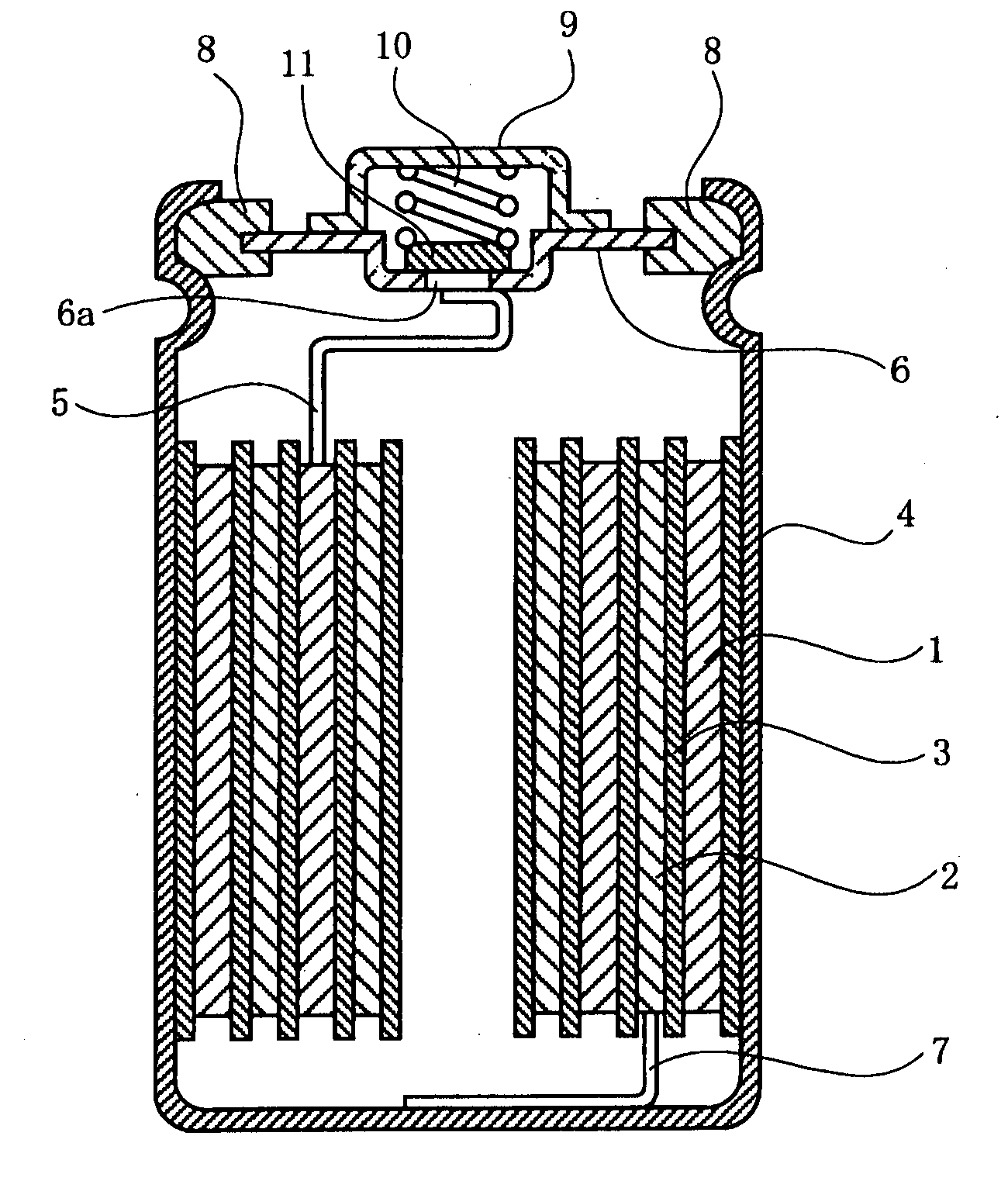
Figure 1 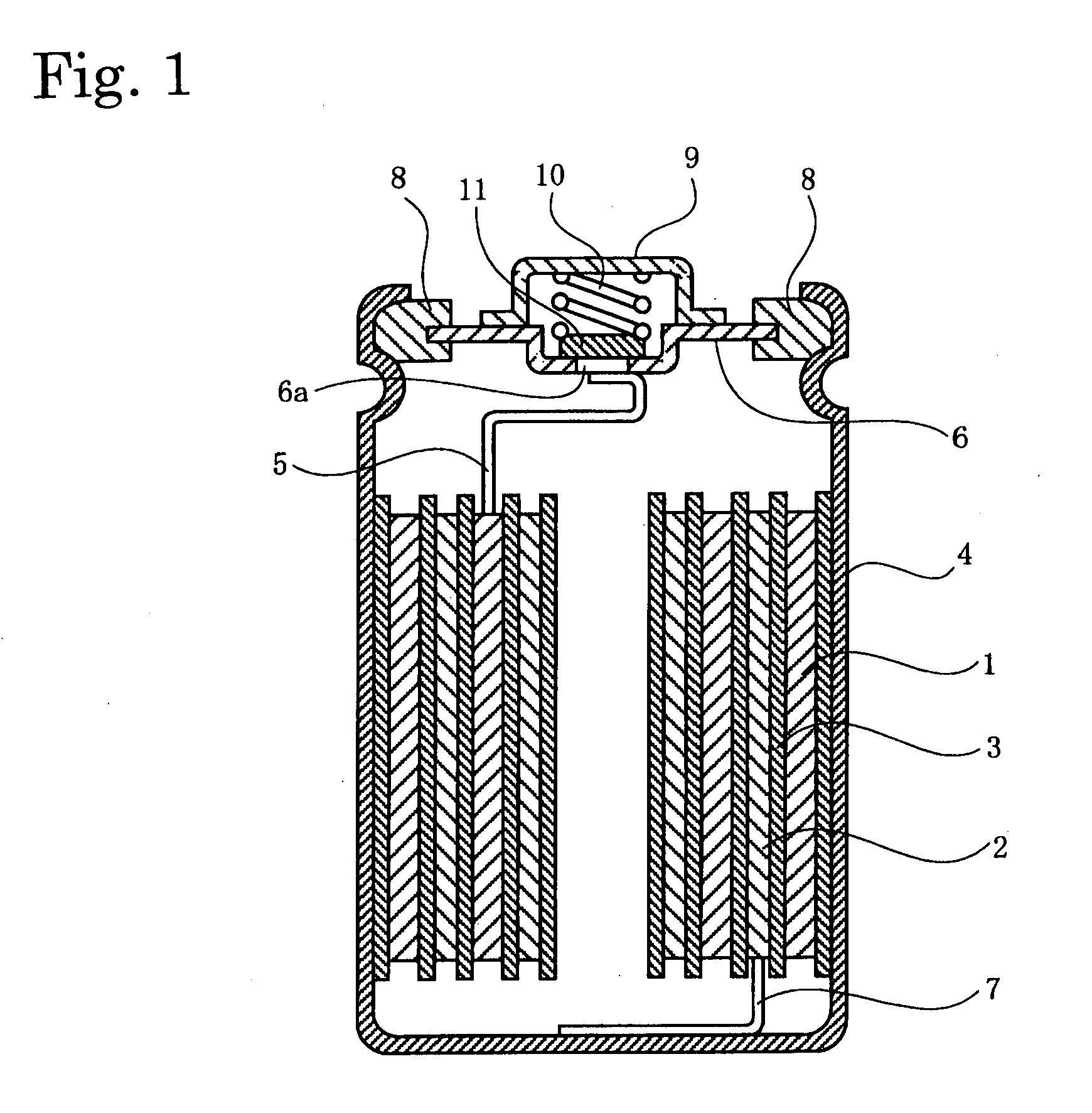
Figure 2
Abstract
Description
RELATED APPLICATIONS
[0001] This application claims priority from Japanese Patent Application Nos. 2007-220591 and 2007-329538, which is hereby incorporated by reference.BACKGROUND OF THE INVENTION
[0002] 1. Field of the Invention
[0003] This invention relates to alkaline storage batteries employing positive electrodes, negative electrodes utilizing hydrogen-absorbing alloy, and alkaline electrolytes, and negative electrodes for alkaline storage batteries used in such alkaline storage batteries. More particularly, in an alkaline storage battery using a negative electrode for alkaline storage battery comprising Mg—Ni-rare-earth hydrogen-absorbing alloy and fluorine resins, a feature of the invention is an improvement in the negative electrode for alkaline storage battery for the purpose of suppressing a decrease of discharge capacity or discharge voltage in the case of being left as it is in charged state, and for obtaining an alkaline storage battery with excellent preservation characteri...
Examples
example 1
[0027]In fabrication of an alkaline storage battery of Example 1, a negative electrode and a positive electrode fabricated in the following manner were used.
Fabrication of Negative Electrode
[0028]A negative electrode was fabricated in the following manner. Nd, Mg, Ni and Al were mixed together to produce a predetermined alloy composition, and the mixture was melted in a high frequency induction melting furnace in argon gas atmosphere and then cooled to prepare hydrogen-absorbing alloy ingots.
[0029]Next, the hydrogen-absorbing alloy ingots thus prepared were subjected to a heat treatment in an inert atmosphere for homogenization. Then, the hydrogen-absorbing alloy ingots were mechanically pulverized in the inert atmosphere and classified to obtain a hydrogen-absorbing alloy powder having the composition of Nd0.90Mg0.10Ni3.33Al0.17. This composition of the resultant hydrogen-absorbing alloy powder was analyzed by induction coupling plasma emission spectroanalysis device (ICP). Subsequ...
examples 2 to 4
[0040]In Examples 2 to 4, alkaline storage batteries of Examples 2 to 4 were fabricated in the same manner as in Example 1 except that the amounts of the solid component of FEP in the aqueous dispersion of FEP to be mixed with 100 parts by weight of the hydrogen-absorbing alloy powder were changed. The weights of solid component FEP to the hydrogen-absorbing alloy powder were as follows; 0.50 weight % in Example 2, 0.25 weight % in Example 3, and 0.10 weight % in Example 4.
example 5
[0041]In Example 5, the aqueous dispersion of FEP was not used for mixing with 100 parts by weight of the hydrogen-absorbing alloy powder in preparation of a negative electrode. Further, the aqueous dispersion of FEP with 0.60 weight % of solid component FEP mixed with 100 parts by weight of the hydrogen-absorbing alloy powder was applied on the surface of the negative electrode and dried. Except for the above, an alkaline storage battery of Example 5 was fabricated in the same manner as in Example 1.
[0042]In Example 6, LDW-410 (made by DAIKIN IND LTD), an aqueous dispersion of polytetrafluoroethylene having an average molecular weight of 1,000,000 or less was used as fluorine resins for preparation of the negative electrode in Example 1.
[0043]The aqueous dispersion of polytetrafluoroethylene (abbreviated to PTFE in the following) with 1.0 weight % of solid component PTFE were mixed with 100 parts by weight of the hydrogen-absorbing alloy powder. Except for the above, an alkaline st...