
Nucleic acid molecules that confer resistance to coleopteran pests
Patent Information
- Authority / Receiving Office
- US · United States
- Current Assignee / Owner
- Publication Date
- 2012-07-05
Smart Images
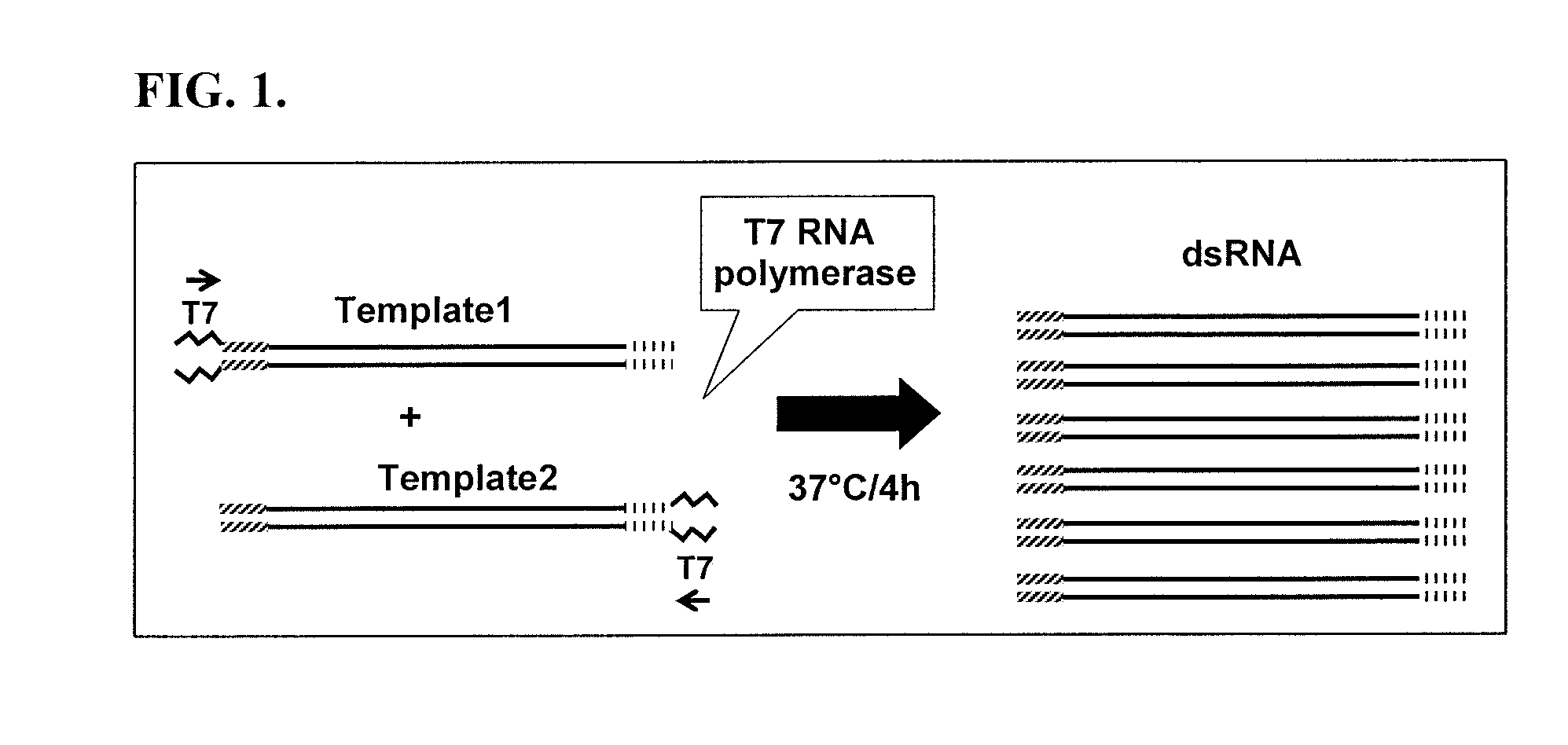
Figure 1 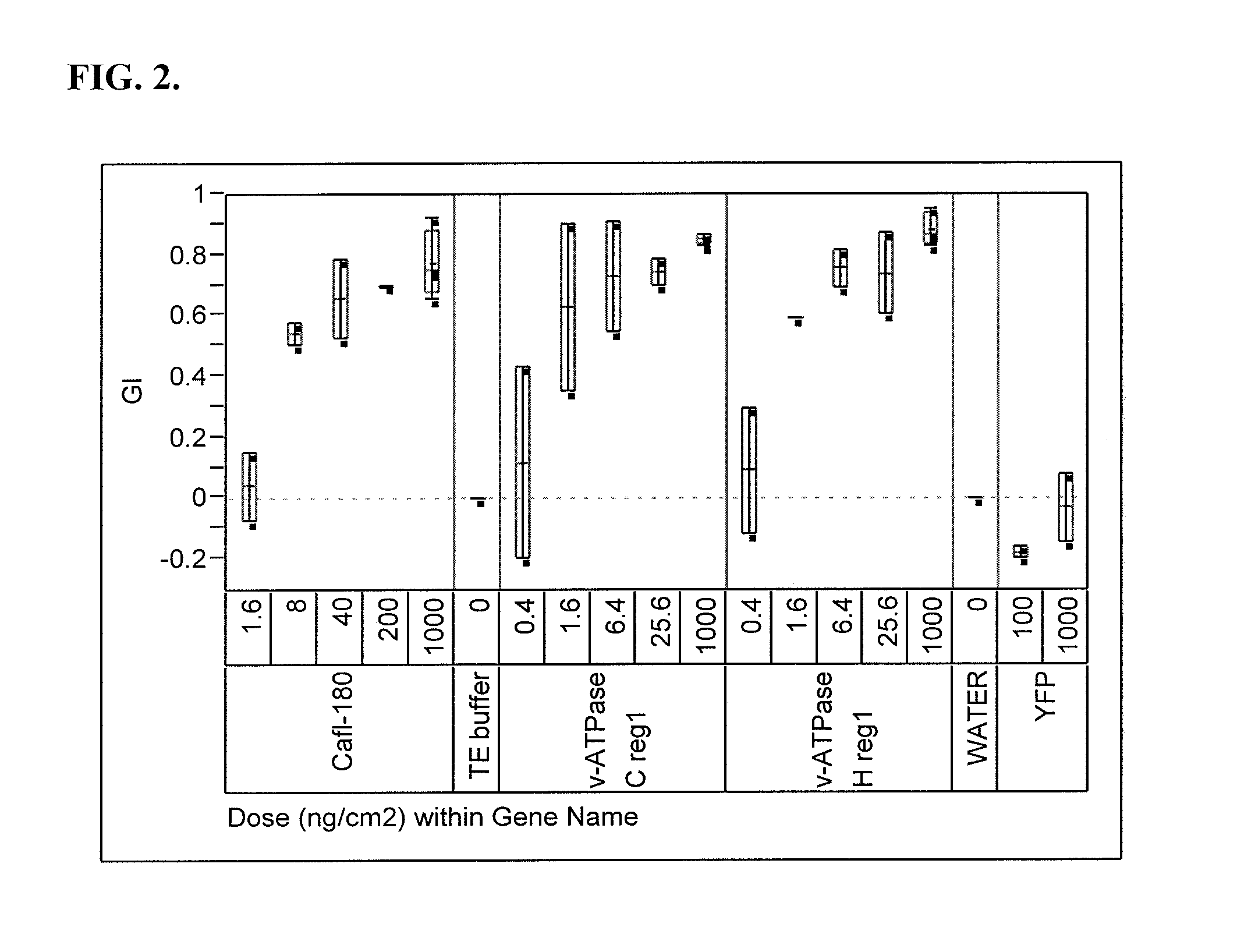
Figure 2 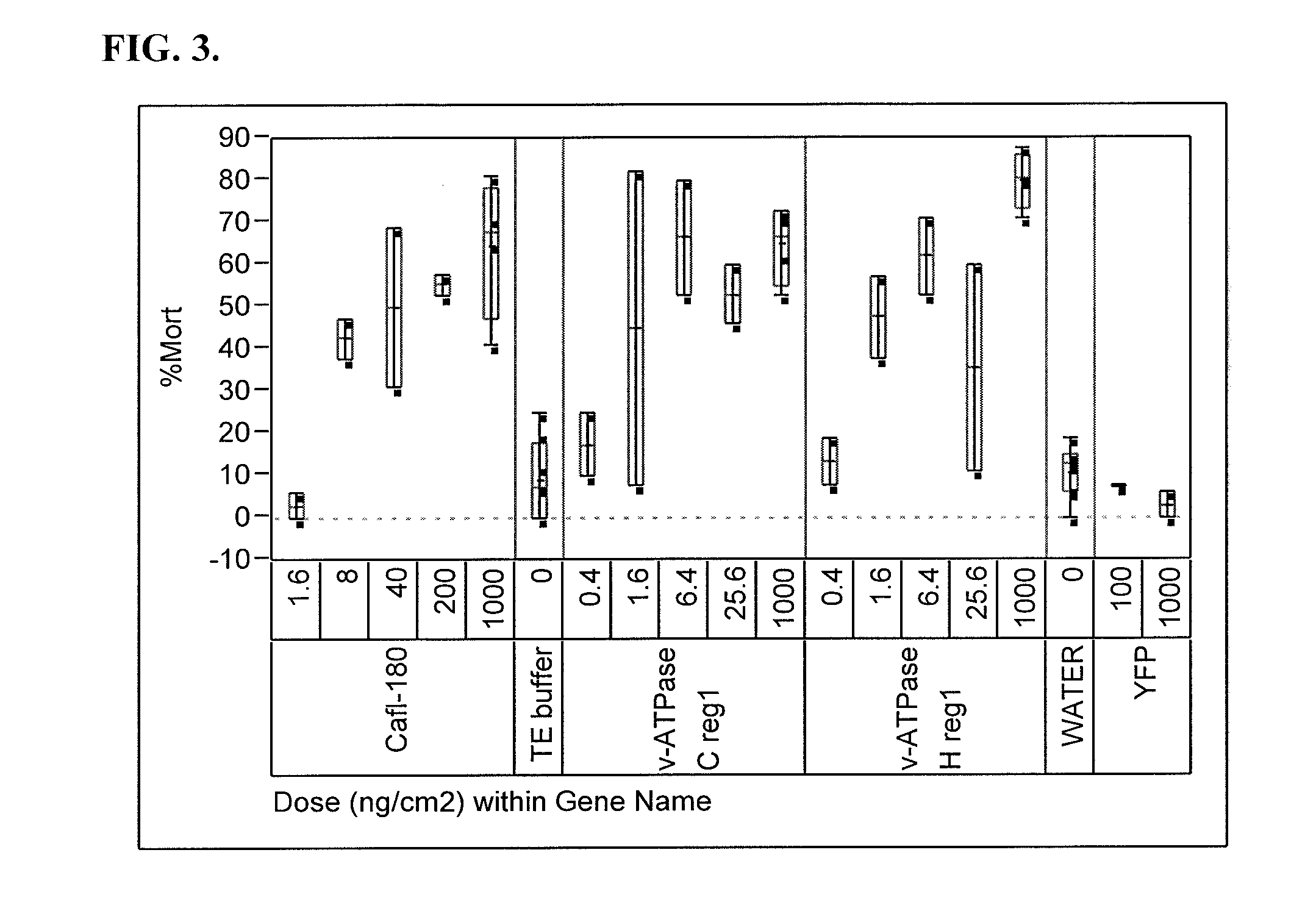
Figure 3
Abstract
Description
PRIORITY CLAIM
[0001] This application claims the benefit of the filing date of U.S. Provisional Patent Application Ser. No. 61 / 428,592, filed Dec. 30, 2010, for “Nucleic Acid Molecules That Confer Resistance to Coleopteran Pests.”FIELD OF THE DISCLOSURE
[0002] The present invention relates generally to genetic control of plant damage caused by coleopteran pests. In particular embodiments, the present invention relates to identification of target coding and non-coding sequences, and the use of recombinant DNA technologies for post-transcriptionally repressing or inhibiting expression of target coding and non-coding sequences in the cells of a coleopteran pest to provide a plant protective effect.BACKGROUND
[0003] The western corn rootworm (WCR), Diabrotica virgifera virgifera LeConte, is one of the most devastating corn rootworm species in North America and is a particular concern in corn-growing areas of the Midwestern United States. The northern corn rootworm (NCR), Diabrotica barberi S...
Examples
example 1
Materials and Methods
Sample Preparation and Bioassays.
[0247]A number of dsRNA molecules (including Caf1-180; vacuolar-ATPase (v-ATPase) subunit C region 1; v-ATPase subunit C region 2; v-ATPase subunit H region 1; v-ATPase subunit H region 2; and Rho1) were synthesized and purified using a MEGAscript® RNAi kit (AMBION, Foster City, Calif.). The purified dsRNA molecules were prepared in TE buffer, and all bioassays contained a control treatment consisting of this buffer, which served as a background check for mortality or growth inhibition of WCR. The concentrations of dsRNA molecules in the bioassay buffer were measured using a NanoDrop™ 8000 spectrophotometer (Thermo Scientific, Wilmington, Del.).
[0248]Samples were tested for insect activity in bioassays conducted with neonate insect larvae on artificial insect diet. WCR eggs were obtained from Crop Characteristics, Inc. (Farmington, Minn.).
[0249]The bioassays were conducted in 128-well plastic trays specifically designed for insec...
example 2
Identification of Candidate Target Genes
[0257]First-instar WCR larvae were selected for transcriptome analysis because control at this growth stage by transgenic insect resistance technology would be advantageous.
[0258]Total RNA was isolated from about 0.9 gm whole first-instar WCR larvae (Diabrotica virgifera virgifera LeConte; 4 to 5 days post-hatch, held at 16° C.) and purified using the following phenol / TRI REAGENT®-based method (Molecular Research Center, Cincinnati, Ohio; Cat. No. TR 118):
[0259]Larvae were homogenized at room temperature in a 15 mL homogenizer with 10 mL of TRI REAGENT® until a homogenous suspension was obtained. Following 5 min. incubation at room temperature, the homogenate was dispensed into 1.5 mL microfuge tubes (1 mL per tube), 200 μL of chloroform was added, and the mixture was vigorously shaken for 15 seconds. After allowing the extraction to sit at room temperature for 10 min, the phases were separated by centrifugation at 12,000×g at 4° C. The upper ...
example 3
Amplification of Target Genes
[0272]Primers were designed to amplify portions of coding regions of each target gene by PCR. See Table 1. Where appropriate, a T7 phage promoter sequence (TTAATACGACTCACTATAGGGAGA (SEQ ID NO:12)) was incorporated into the 5′ end of the amplified sense or antisense strands. See Table 1. Genomic DNA was extracted from WCR, and the PCR primers were used to amplify all or part of the native target gene sequence from the genomic DNA via a PCR reaction.
TABLE 1Sequences and pairings of PCR primers used to prepare templates fordsRNA production.Gene(Region)Primer IDSEQ ID NO:SequencePair 1Caf1-180 (1)Caf-FT7SEQ ID NO: 13TTAATACGACTCACTATAGGGAGATTCGGAAGCTTCATATTTAAAAGATCCaf1-180 (1)Caf-RSEQ ID NO: 14TATCTTCAGCCAAAGGTTTTCTTGPair 2Caf1-180 (1)Caf-FSEQ ID NO: 15TTCGGAAGCTTCATATTTAAAAGATCCaf1-180 (1)Caf-RT7SEQ ID NO: 16TTAATACGACTCACTATAGGGAGATATCTTCAGCCAAAGGTTTTCTTGPair 3VatpaseC (1)Atp.C-F1T7SEQ ID NO: 17TTAATACGACTCACTATAGGGAGAAGAAGAAATGACTGAGTATTGGVatpaseC (1)Atp...