
Non-invasive systems, devices, and methods for selective brain cooling
Patent Information
- Authority / Receiving Office
- US · United States
- Current Assignee / Owner
- Publication Date
- 2013-01-31
Smart Images
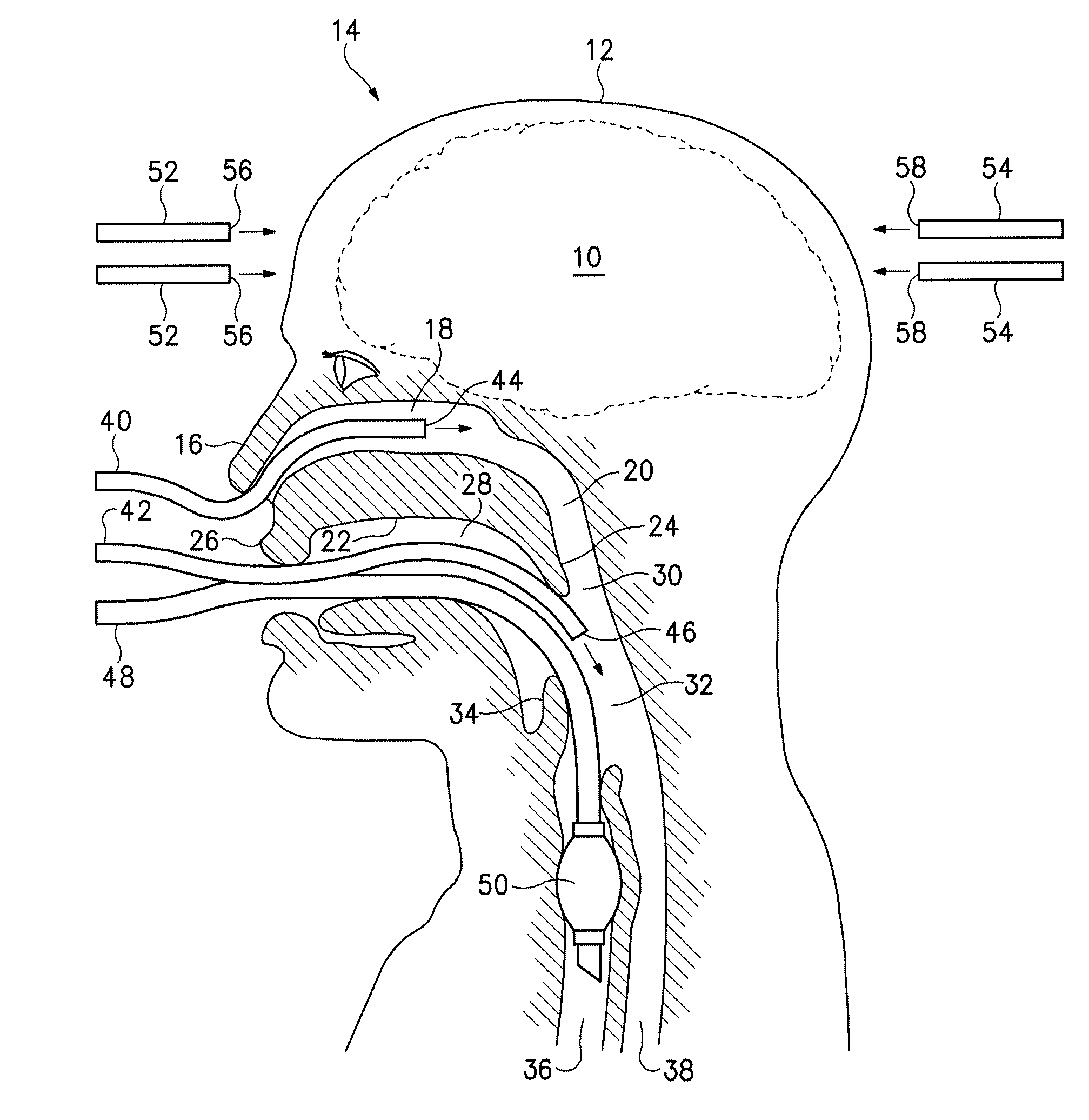
Figure 1 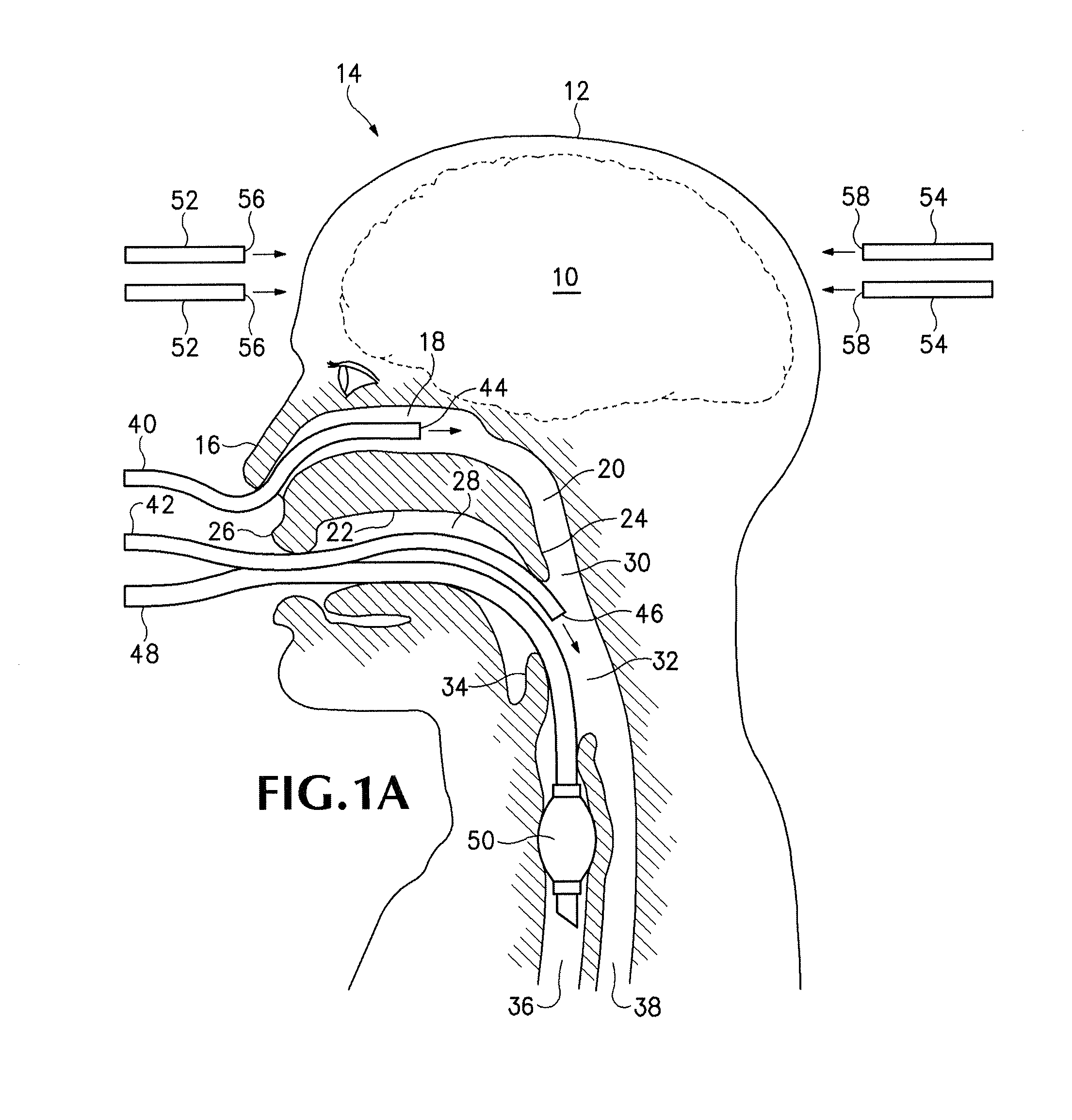
Figure 2 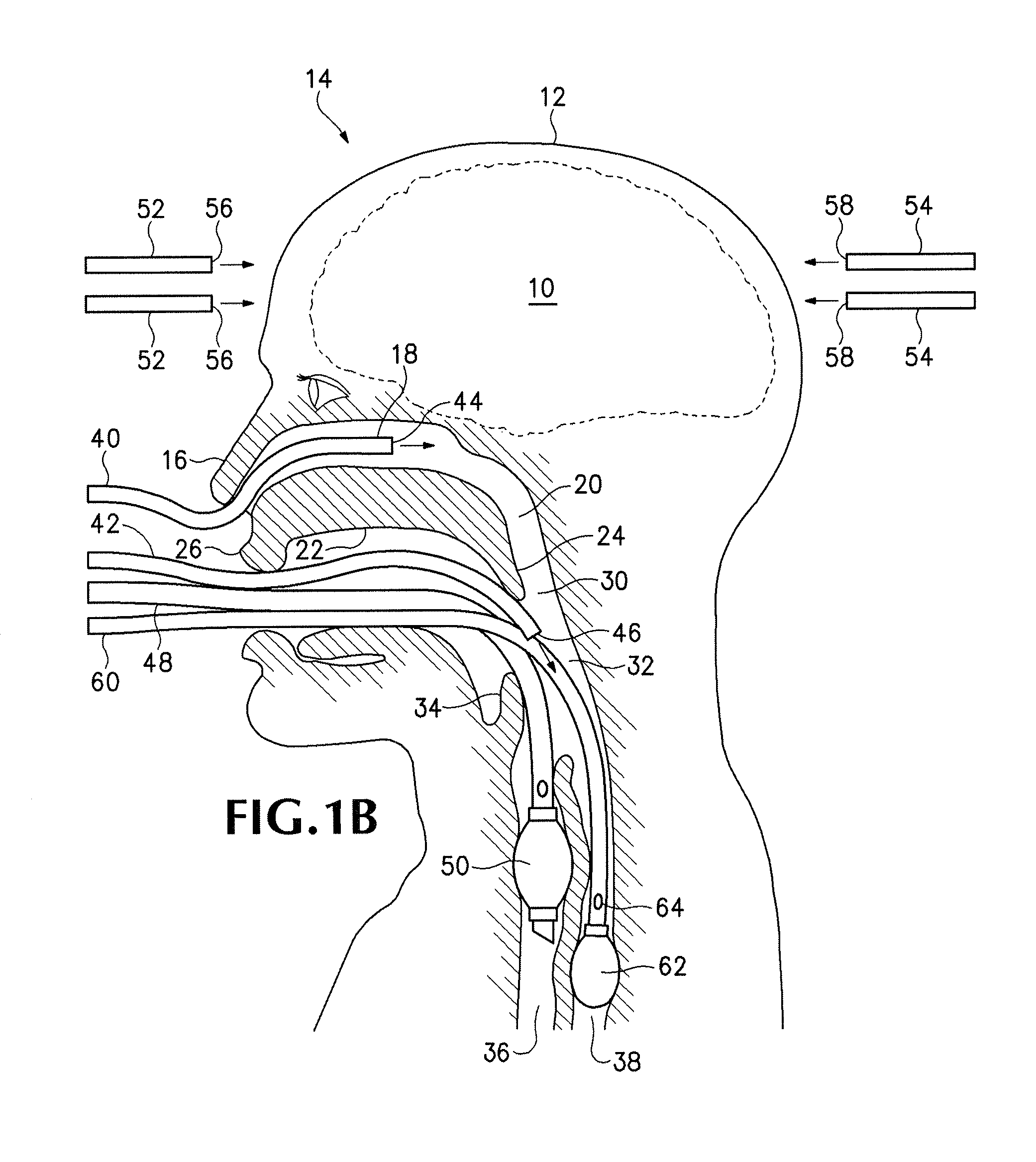
Figure 3
Abstract
Description
[0001] This application claims priority to U.S. Provisional Patent Application No. 61 / 511,409 filed Jul. 25, 2011, which is incorporated herein by reference in its entirety.BACKGROUND
[0002] 1. Field of the Invention
[0003] A device, system, and method are disclosed for controlling and / or regulating temperatures of the brain and / or body in a subject.
[0004] 2. Description of Related Art
[0005] Brain injury is common, devastating, and often very expensive to treat. Management of patient temperature by either induction of hypothermia or aggressive treatment of fever has been recommended by the American Heart Association (AHA) as the standard of care for cardiac arrest. Brain temperature management has also been used to treat birth-related cerebral damage and has been FDA approved therapy during cardiac and neurosurgery. Temperature management has been investigated for a variety of central nervous system conditions, including stroke, mechanical brain trauma, and spinal cord injury. A variety of...
Examples
example 1
[0524]A 76 kg pig was placed supine and was systemically warmed using a small Gaymar circulating water blanket and forced hot air.
[0525]Four temperature probes were active. A needle probe was inserted into the animal's brain. Two catheter probes were inserted into the aorta and inferior vena cava, respectively. Also, a rectal temperature probe was used to monitor core temperature. Temperature probes were controlled using LabView, and pumps were controlled manually (i.e., the system was run in “open loop” mode). A fluid schematic of the system used is depicted in FIG. 23A, and an electrical schematic is depicted in FIG. 23B. After a series of set-up tests, the pig was rewarmed, and the cooling fluid was refilled. Pumps were set to 300 RPM, and cool fluid was pumped through catheters for approximately 120 minutes. The pig's initial temperatures were: Brain—38.0° C.; Aorta—38.3° C.; Vena Cava—38.4° C.; and Rectal—38.3° C. A graphical representation of results is depicted in FIG. 23C, a...
example 2
[0529]In Example 2, a pig of similar size was used. The cooling apparatus was similar to that used in the previous example; however, flow meters and a vacuum regulator were included. A schematic representation of the fluid system of Example 2 is depicted in FIG. 24A. The electrical system did not change from that in Example 1. A graphical representation of results of Example 2 are depicted in FIG. 24B.
[0530]As depicted at minutes 120 to 180 of FIG. 24B, body core temperature was substantially maintained and / or increased with a counter warming device, while brain temperature decreased (e.g., increasing a brain to body core temperature gradient). A maximum brain to body core temperature gradient of approximately 10.8° C. was achieved. Addition of propofol as an anesthetic assisted in decreasing brain temperature by, for example, decreasing blood flow to the brain and / or allowing deeper equilibration of blood in the large arteries of the neck (e.g., by decreasing flow rate and velocity...