
Ground referenced single-ended signaling
Patent Information
- Authority / Receiving Office
- US · United States
- Current Assignee / Owner
- Publication Date
- 2013-08-01
Smart Images
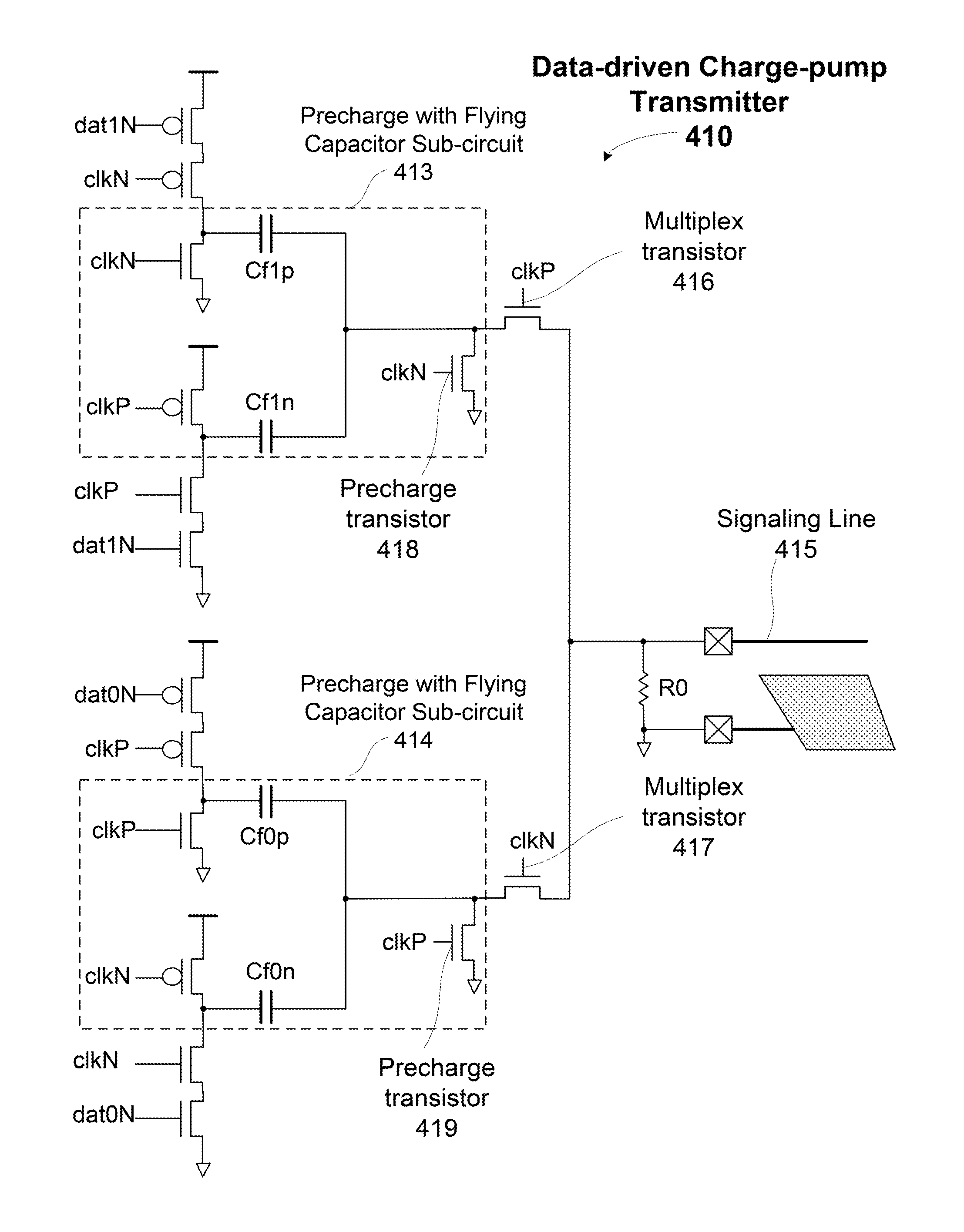
Figure 1 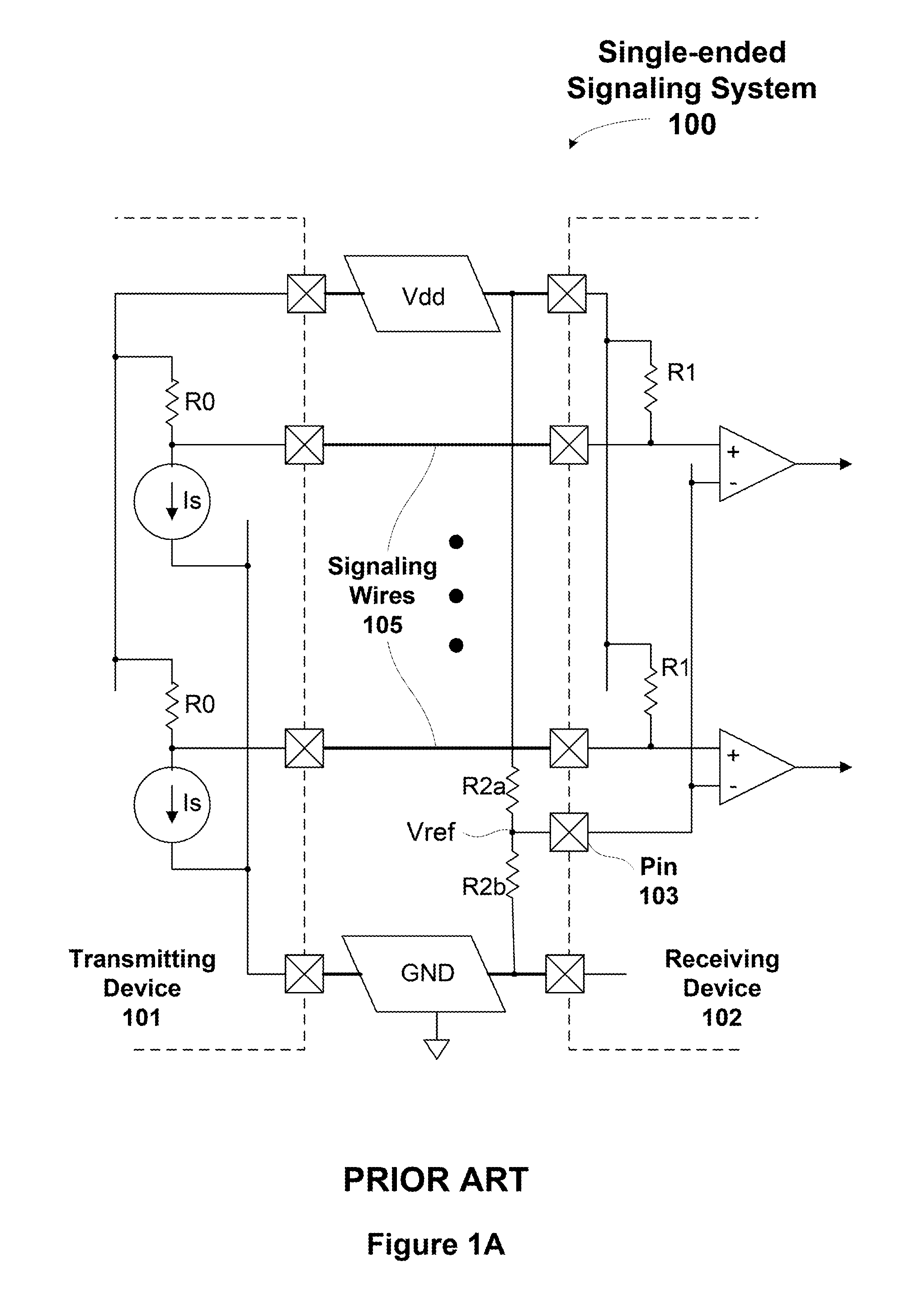
Figure 2 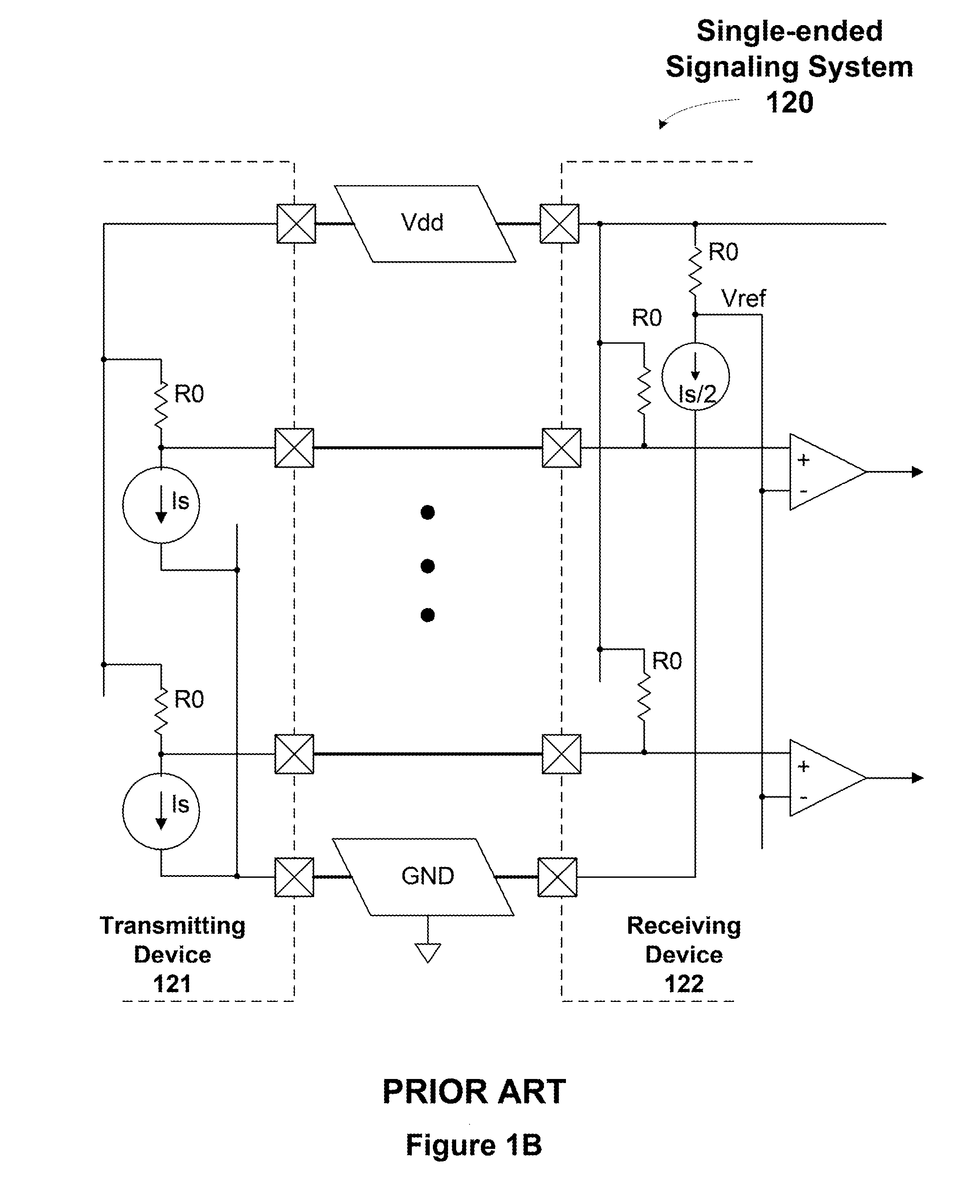
Figure 3
Abstract
Description
BACKGROUND OF THE INVENTION1. Field of the Invention
[0001] The present invention generally relates to transmitting signals between discrete integrated circuit devices and more specifically to single-ended signaling techniques.
[0002] 2. Description of the Related Art
[0003] Single-ended signaling systems employ a single signal conductor per bit stream to be transmitted from one integrated circuit device (chip) to another chip. By way of contrast, differential signaling systems explicitly require two signal conductors, so single-ended signaling is often assumed to be an advantage in cases where the number of off-chip pins and signal conductors is limited by packaging constraints.
[0004] However, single-ended signaling systems actually require more circuitry per channel than just one signal conductor. The current that flows from transmitter to receiver must be returned to the transmitter to form a complete electrical circuit, and in single-ended signaling systems the current that is returned...
Examples
Embodiment Construction
[0063]In the following description, numerous specific details are set forth to provide a more thorough understanding of the present invention. However, it will be apparent to one of skill in the art that the present invention may be practiced without one or more of these specific details. In other instances, well-known features have not been described in order to avoid obscuring the present invention.
[0064]A single-ended signaling system may be constructed that uses one of the power supply networks as both the common signal return conductor and the common reference voltage. While either power supply, or even a network at a voltage level that is not used as a power supply, can be made to function as the common signal return conductor and the common reference voltage, the ground terminal is preferred, as explained further herein. Therefore, although ground-referenced signaling is described in the following paragraphs and illustrated in the Figures, the same techniques also apply to a ...