
Peg-based adhesive phenylic derivatives and methods of synthesis and use
a technology of phenylic derivatives and adhesives, applied in the field of medical adhesives, can solve the problems of poor tissue adhesion characteristics, poor mechanical properties, and limited application prospects of adhesives, and achieve the effect of inhibiting or reducing the growth of biofilms (bacteria)
Patent Information
- Authority / Receiving Office
- US · United States
- Patent Type
- Applications(United States)
- Current Assignee / Owner
- Publication Date
- 2016-02-04
- Estimated Expiration
- Not applicable · inactive patent
Smart Images
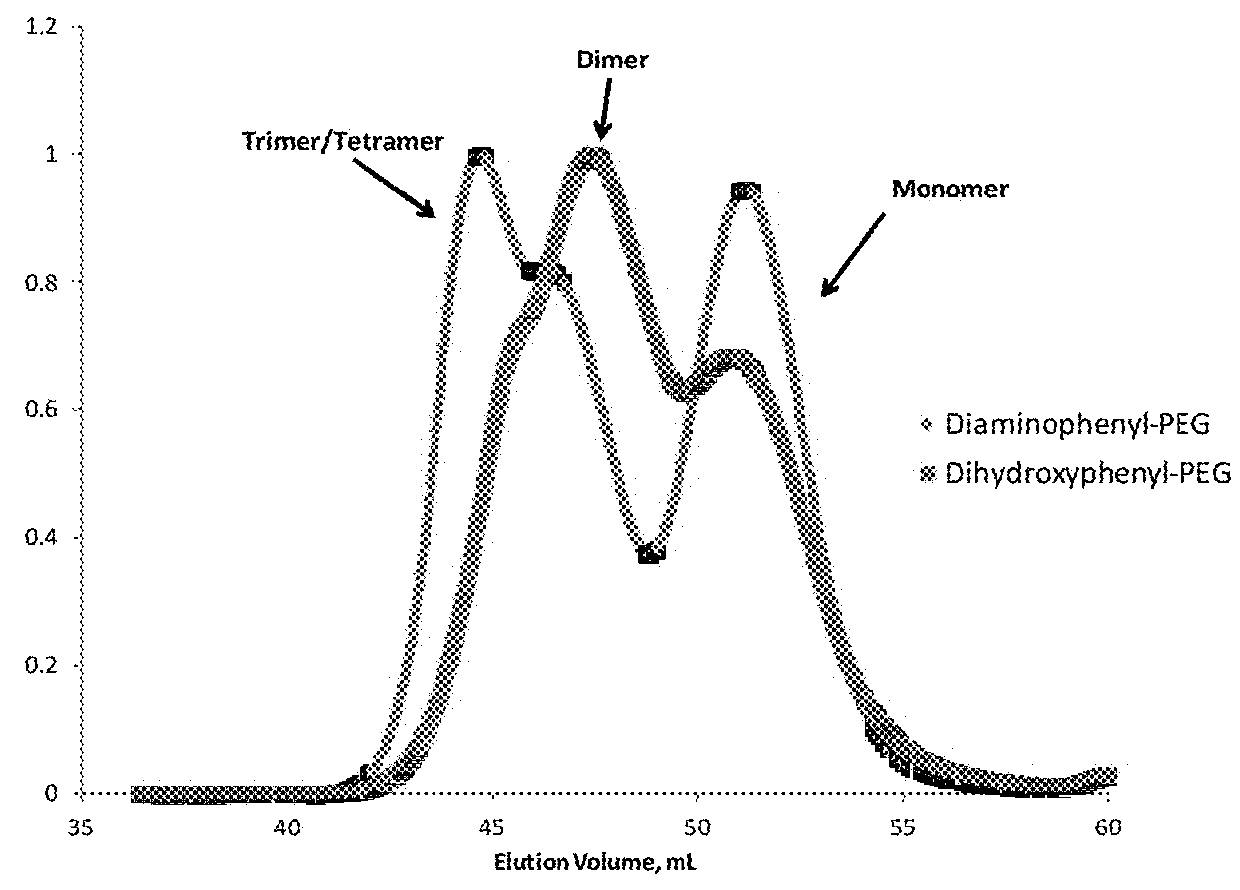
Figure 1 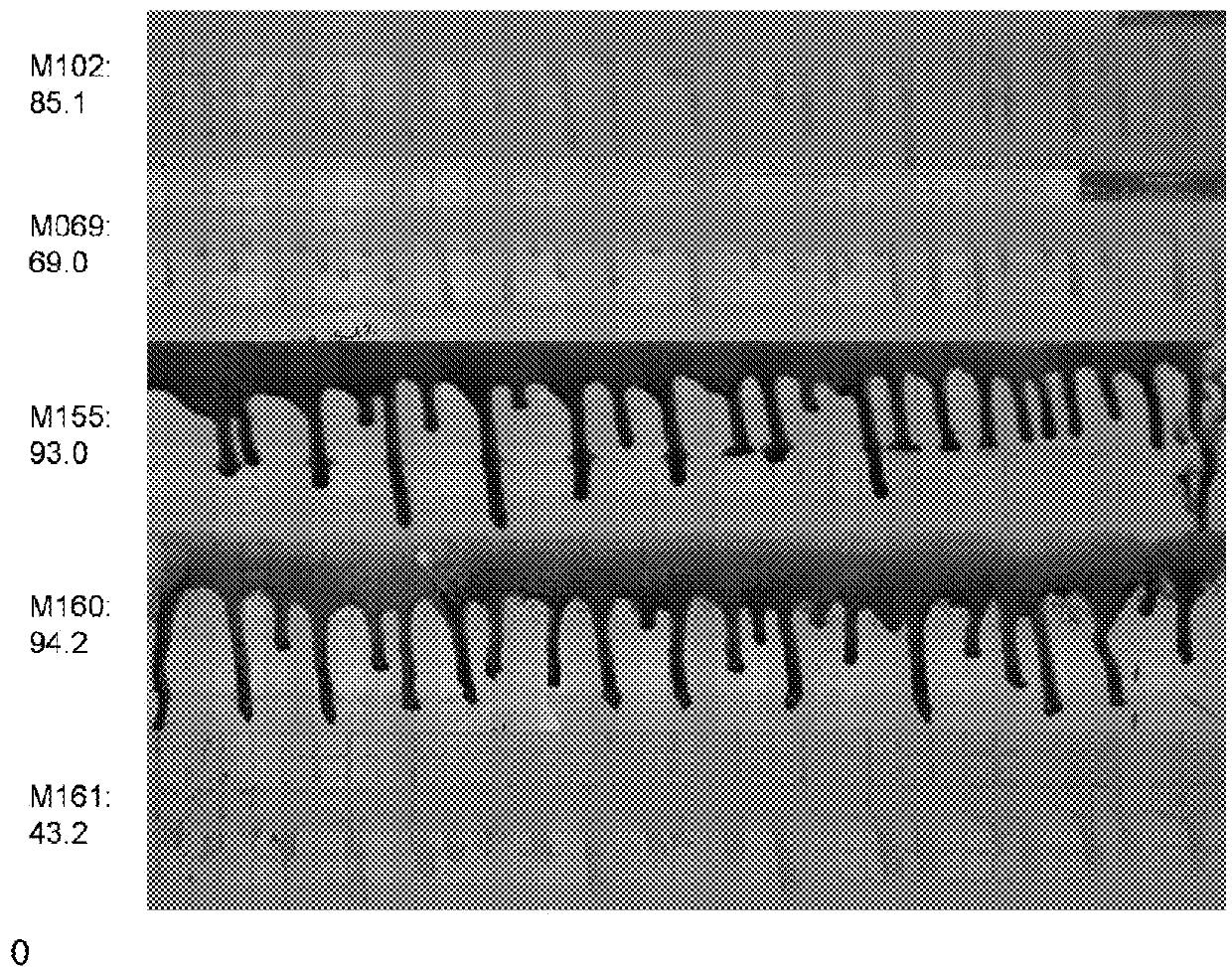
Figure 2 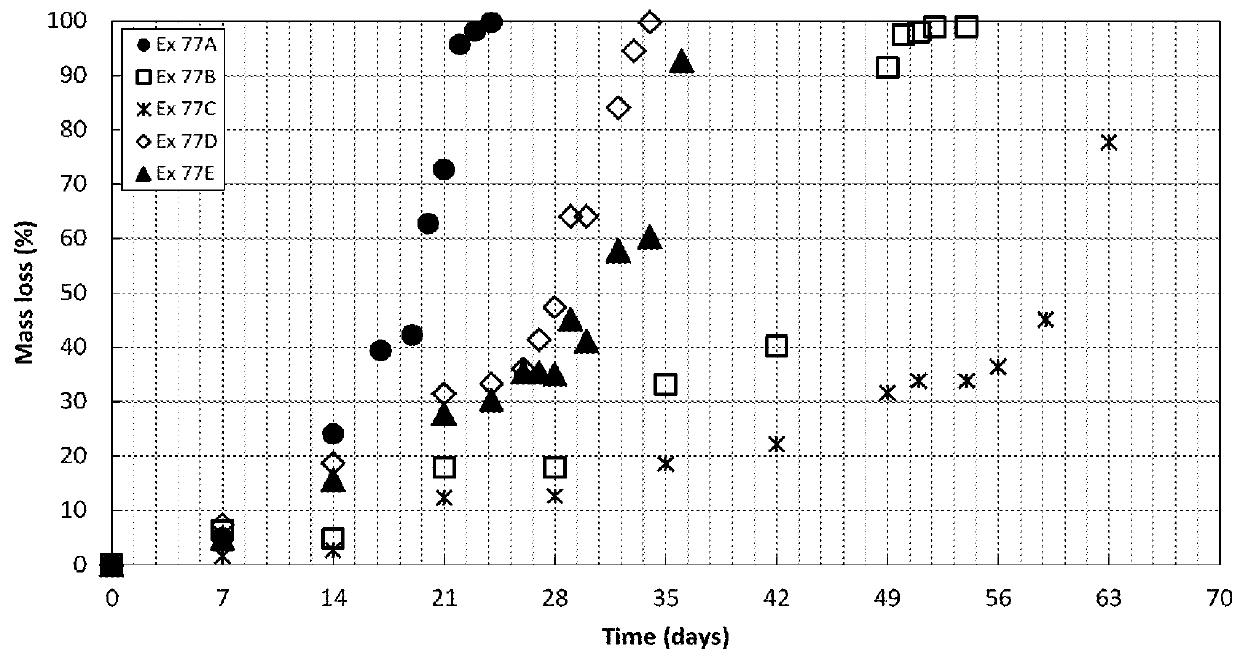
Figure 3
Abstract
Description
[0001] This project was funded in part by NIH (2R44DK080547-02 and 2R44DK083199-02). 1H NMR was performed at National Magnetic Resonance Facility at Madison, Wis., which is supported by NIH (2R44DK080547-02 and 2R44DK083199-02), the University of Wisconsin, and the USDA. The government has certain rights in the invention.FIELD OF THE INVENTION
[0002] The invention relates generally to medical adhesives with components often found in plant life, and their structural analogues, to adhere to biologic and synthetic surfaces. Modification of polymers with these components allows for cohesive and adhesive crosslinking under oxidative conditions.BACKGROUND OF THE INVENTION
[0003] Phenolic derivatives such as catechol and guaiacol derivatives are naturally occurring compounds found in nature. Catechol moieties may be associated with mussel adhesive proteins (MAPs) that use this derivative to form tenacious bonds in aqueous solutions. Alternatively, guaiacol derivatives are often associated with ...
Examples
experimental examples
Example 1
Synthesis of Acetyl Vanillic Acid
[0204]20.04 g (112 mmol) of vanillic acid was dissolved in 50 mL (618 mmol) of pyridine and 50 mL (529 mmol) of acetic anhydride and allowed to stir for 2 hour. The solution was poured into 1200 mL of nanopure water and the pH was adjusted to 2 using concentrated HCl. The solution was extracted twice with a total of 700 mL of ethyl acetate and dried with anhydrous magnesium sulfate. The magnesium sulfate was suction filtered off and the organic solvent was evaporated off. The compound was dried for ˜23 hours under vacuum. The compound was recrystallized in 400 mL of a 1:1 mixture of water:methanol. The precipitate was suction filtered and placed under vacuum. 21.58 g of material was obtained. 1H NMR (400 MHz, DMSO / TMS): δ 13.08 (s, 1H, —COOH—), 7.59 (d, 1H, —C6H3—), 7.55 (s, 1H, —C6H3—), 7.20 (d, 1H, —C6H3—), 6.55 (d, 1H, —CH═CH—COOH), 3.81 (s, 3H, —CH3—O—C6H3—), 2.27 (s, 3H, CH3—COO—C6H3—).
example 2
Synthesis of Acetyl Ferulic Acid
[0205]20.0 g (103 mmol) of ferulic acid was dissolved in 50 mL (618 mmol) of pyridine and 50 mL (529 mmol) of acetic anhydride and allowed to stir for 90 minutes. The solution was poured into 1200 mL of nanopure water and the pH was adjusted to 2 using concentrated HCl. The solution was extracted twice with a total of 800 mL of ethyl acetate. The insoluble material from the aqueous layer was suction filtered. The insoluble material was dried for ˜20 hours and sonicated in 400 mL nanopure water for 45 minutes. The material was suction filtered, washed with 100 mL nanopure water and dried under vacuum for ˜23 hours. 14.1 g of material was heated and stirred in 500 mL of methanol and placed at ˜15° C. for ˜22 hours. The methanol was decanted off and 200 mL of methanol was added and stirred for ˜15 minutes. The precipitate was suction filtered and placed under vacuum until dry. 11.49 g of material was obtained. 1H NMR (400 MHz, DMSO / TMS): δ 12.37 (s, 1H,...
example 3
Synthesis of Boc-4-amino-3-Acetoxybenzoic acid
[0206]300 mL of 0.4M NaHCO3 was added to 10.1 g (65.3 mmol) of 4-amino-3-hydroxybenzoic acid. The reaction was purged with argon for 20 minutes. 14.97 g (68.6 mmol) of Boc-Anhydride was dissolved in 150 mL of THF. The THF / Boc-Anhydride solution was added to the aqueous solution and bubbled with argon while stirring for 20 hours. The solution was suction filtered and the THF was roto evaporated off. The aqueous mixture was acidified to a pH of 2 with concentrated HC (11 mL). The mixture was washed 3 times with a total of 1200 mL of ethyl acetate. The ethyl acetate was roto evaporated off and the compound was then dried for 2 hours under vacuum. The compound was then heated at 72° C. with agitation in 150 mL of ethyl acetate. The solution was placed at −15° C. for 1 hour and the precipitate was washed with 100 mL of ethyl acetate. The insoluble material was suction filtered off and placed under vacuum until dry (called LN011055A). The mate...