
Methods for treatment of wound healing utilizing chemically modified oligonucleotides
Patent Information
- Authority / Receiving Office
- US · United States
- Current Assignee / Owner
- Publication Date
- 2016-10-20
- Estimated Expiration
- Not applicable · inactive patent
Smart Images
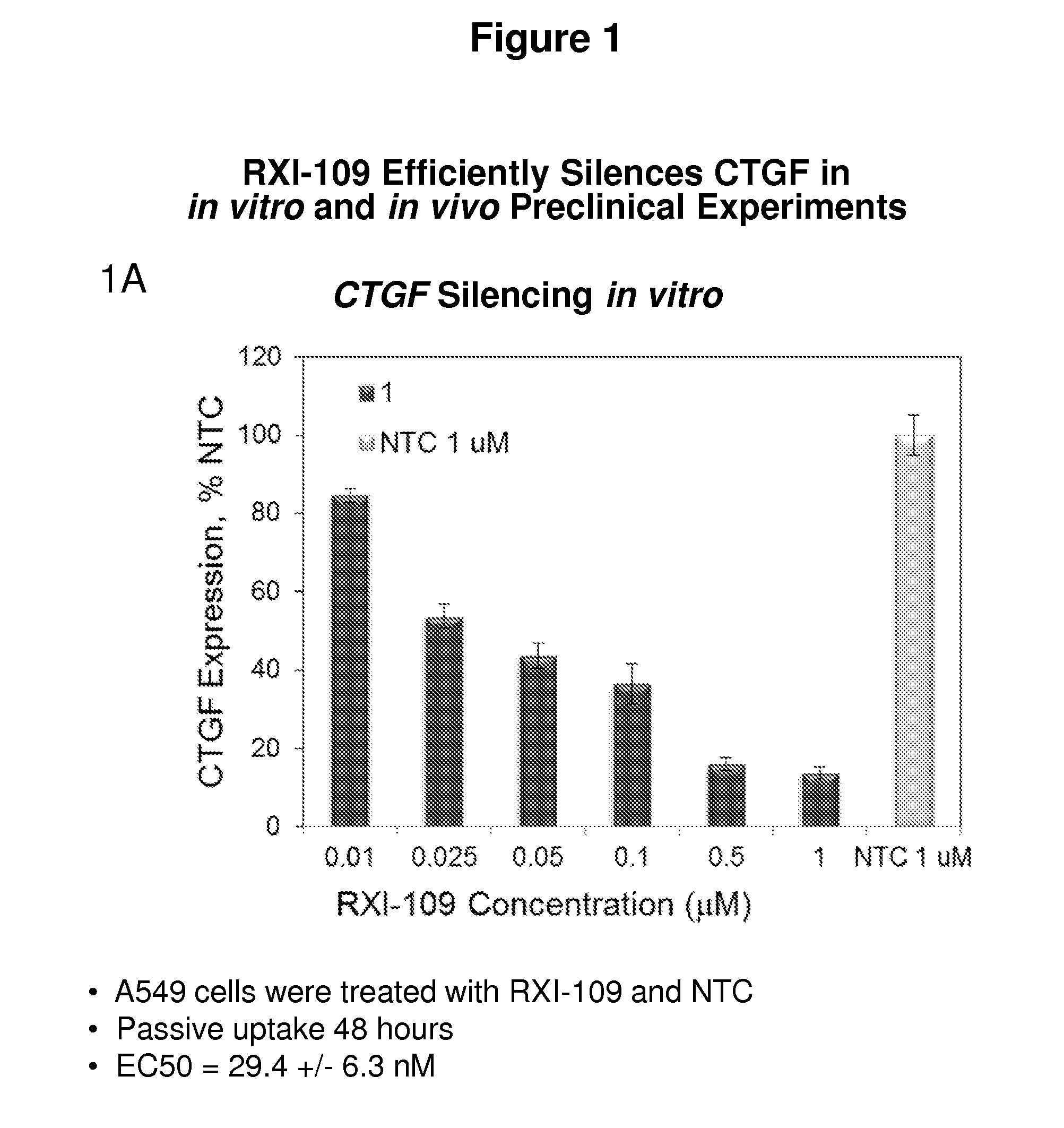
Figure 1 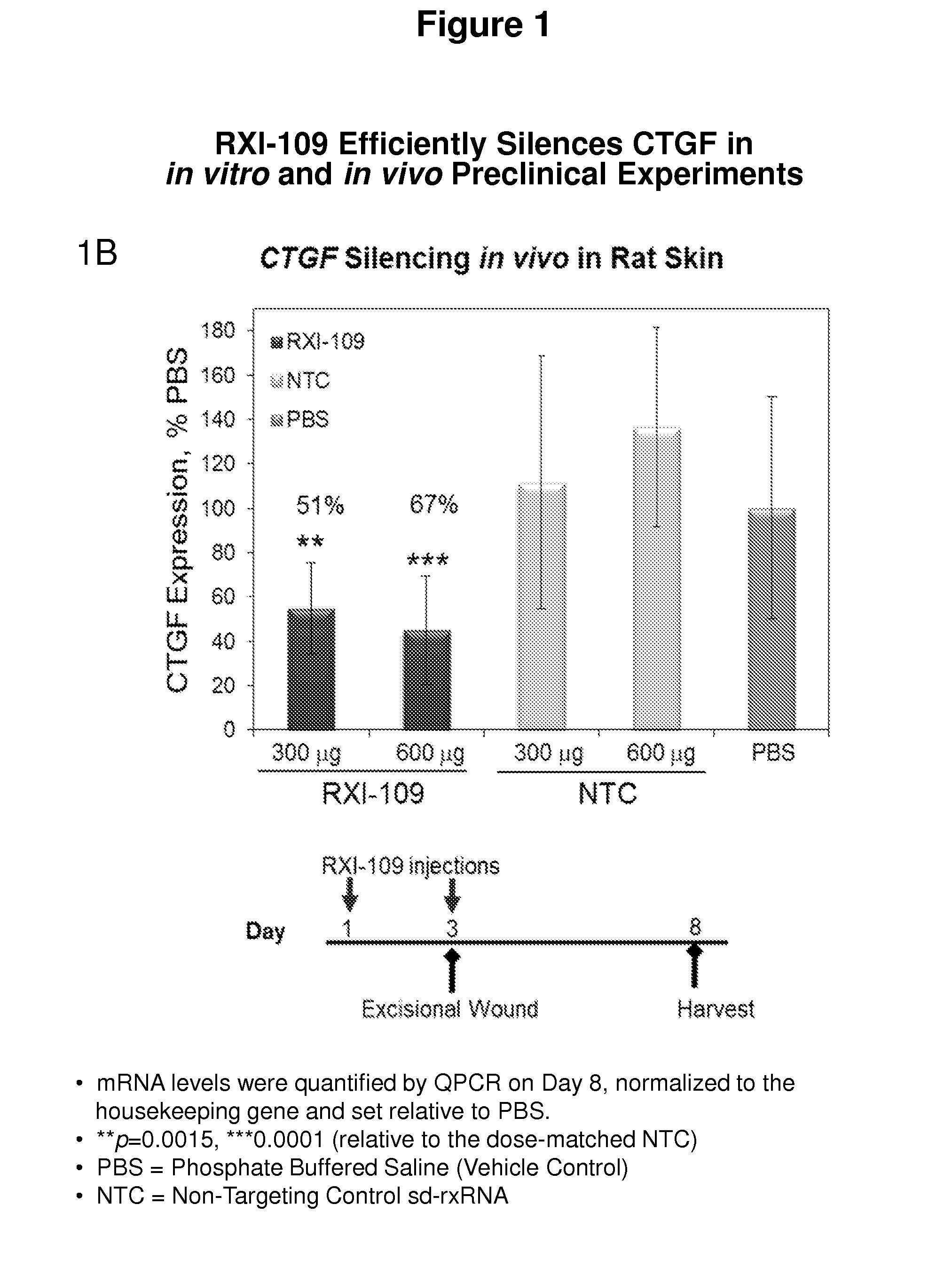
Figure 2 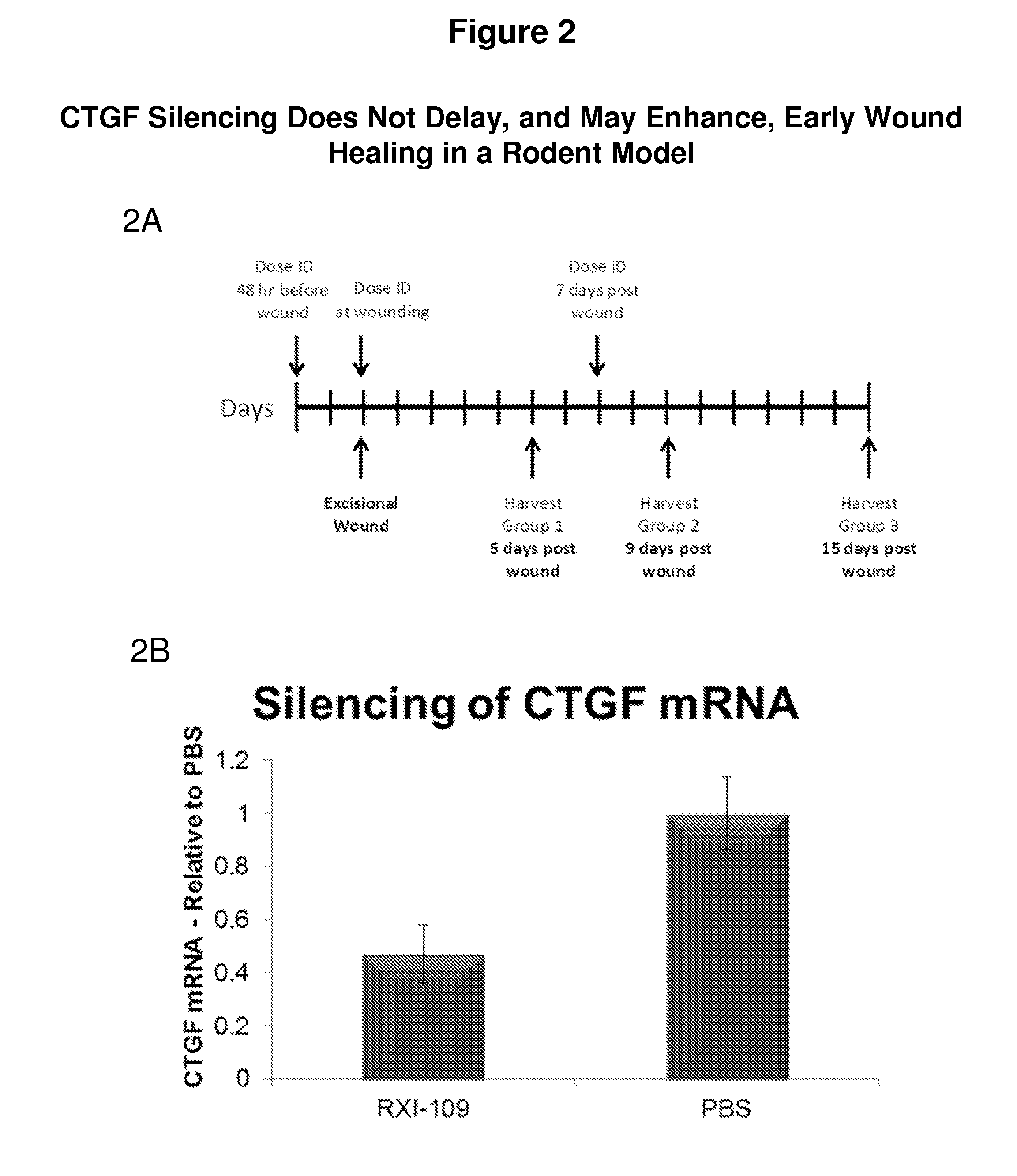
Figure 3
Abstract
Description
RELATED APPLICATIONS
[0001] This application claims the benefit under 35 U.S.C. §119(e) of U.S. Provisional Application Ser. No. U.S. 61 / 911,991, entitled “METHODS FOR EARLY TREATMENT OF WOUND HEALING UTILIZING CHEMICALLY MODIFIED OLIGONUCLEOTIDES,” filed on Dec. 4, 2013, U.S. Provisional Application Ser. No. 61 / 911,993, entitled “METHODS FOR ACCELERATING WOUND HEALING UTILIZING CHEMICALLY MODIFIED OLIGONUCLEOTIDES,” filed on Dec. 4, 2013 and U.S. Provisional Application Ser. No. US 62 / 049,299, entitled “METHODS FOR TREATMENT OF WOUND HEALING UTILIZING CHEMICALLY MODIFIED OLIGONUCLEOTIDES,” filed on Sep. 11, 2014, the entire disclosures of each of which are herein incorporated by reference in their entireties.FIELD OF INVENTION
[0002] The invention pertains to the reduction of fibrosis during wound healing. The invention more specifically relates to nucleic acid molecules with improved in vivo delivery properties and their use for reduction of dermal scarring.BACKGROUND OF INVENTION[000...
Examples
example 1
RXI-109 Efficiently Silences CTGF in In Vitro and In Vivo Preclinical Experiments
[0493]FIG. 1A demonstrates the in vitro efficacy of RXI-109. RXI-109 was tested for activity in A549 (human adenocarcinoma alveolar basal epithelial) cells (10,000 cells / well, 96 well plate). A549 cells were treated with varying concentrations of RXI-109 or non-targeting control (#21803) in serum-free media (Accell siRNA delivery media, ThermoFisher). Concentrations tested were 1, 0.5, 0.1, 0.05, 0.025 and 0.01 μM. The non-targeting control sd-rxRNA (#21803) is of identical structure to RXI-109 and contains similar stabilizing modifications throughout both strands. Forty eight hours post administration, cells were lysed and mRNA levels determined by the Quantigene branched DNA assay according to manufacturer's protocol using gene-specific probes (Affymetrix). Data are normalized to a house keeping gene (PPIB) and graphed with respect to the non-targeting control. Error bars represent the standard deviat...
example 2
CTGF Silencing Does Not Delay, and May Enhance, Early Wound Healing in a Rodent Model
[0496]FIG. 2 demonstrates that CTGF silcencing does not delay, and may enhance, early wound healing in a rodent model. FIG. 2A depicts an outline of a large wound-healing study that includes prophylactic dosing in rats: Methods: Four groups containing 12 rats each received a 200 μl intradermal injection of 600 μg of RXI-109 at each of two sites on the back. Forty-eight hours later the rats received a second injection at each site followed by a 4 mm excisional wound 15 minutes following the injections. Four rats were sacrificed on day 5 post wounding. Seven days post-wounding, the remaining rats received an additional 200 μl dose of RXI-109 divided into 4×50 μl injections surrounding the wound. Four rats per group were sacrificed on 9 and 15 days post wounding. Wound width and visual severity were assessed daily on unanesthetized animals throughout the study. At the time of sacrifice, the wound sites...
example 3
RXI-109 Phase 1 Clinical Trials
[0501]FIG. 3 depicts an overview of RXI-109 Phase I clinical trials: Study 1201 and 1202. Study 1201 consisted of the following: Phase 1 single center, randomized, single-dose, double-blind, ascending dose, and within-subject controlled study of RXI-109 for the treatment of incision scars. Study 1202 consisted of the following: Phase 1 single center, randomized, multi-dose double-blind, ascending dose, and within-subject controlled study of RXI-109 for the treatment of incision scars. Multiple parameters were evaluated including: safety & side effect assessment versus vehicle, photographic comparison versus vehicle, histological comparison of the scar sites versus vehicle, and pharmacokinetic parameters after local intradermal injection.