
High performance turbo-hydraulic compressor
Patent Information
- Authority / Receiving Office
- US · United States
- Current Assignee / Owner
- Publication Date
- 2020-02-27
Smart Images
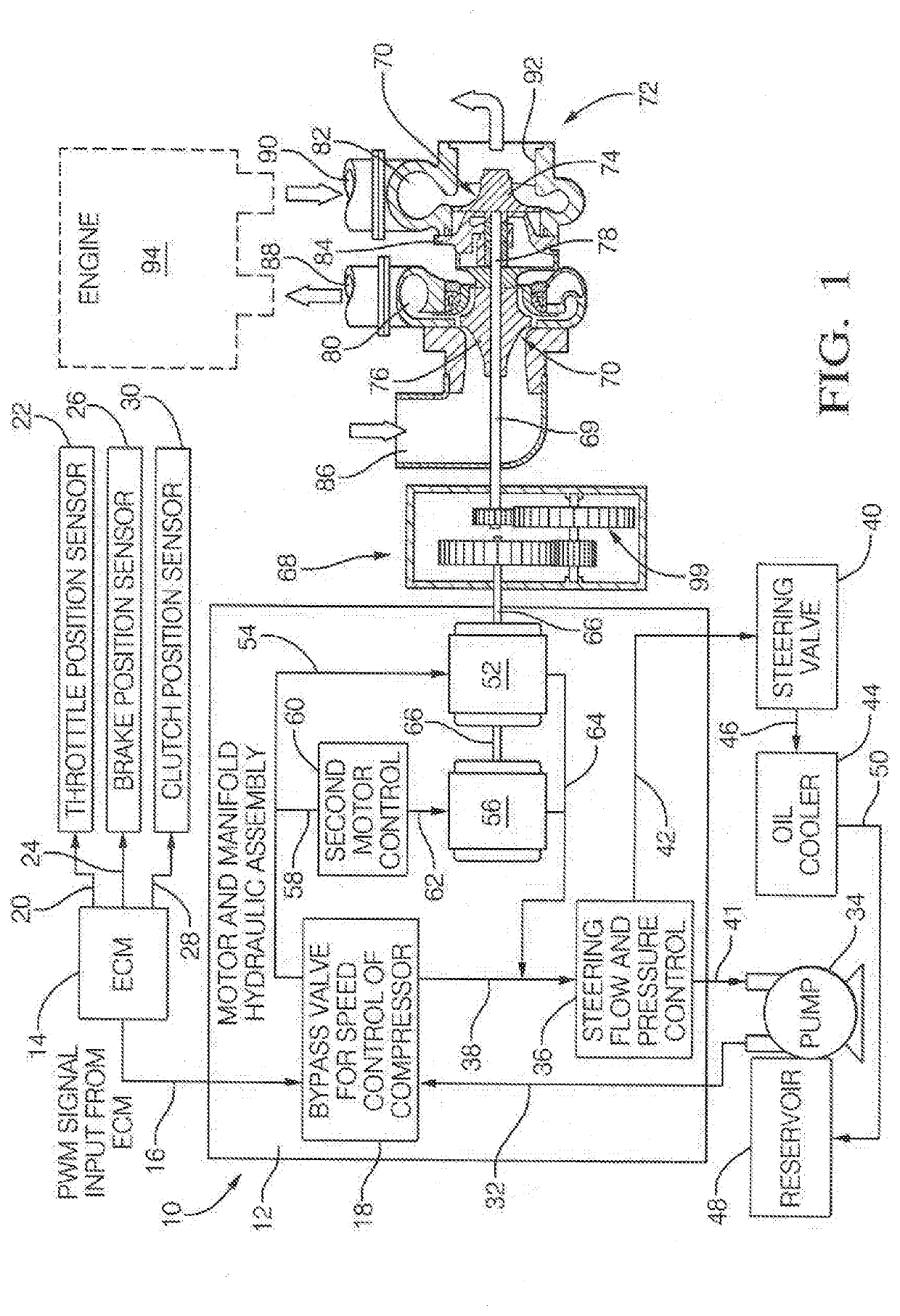
Figure 1 
Figure 2 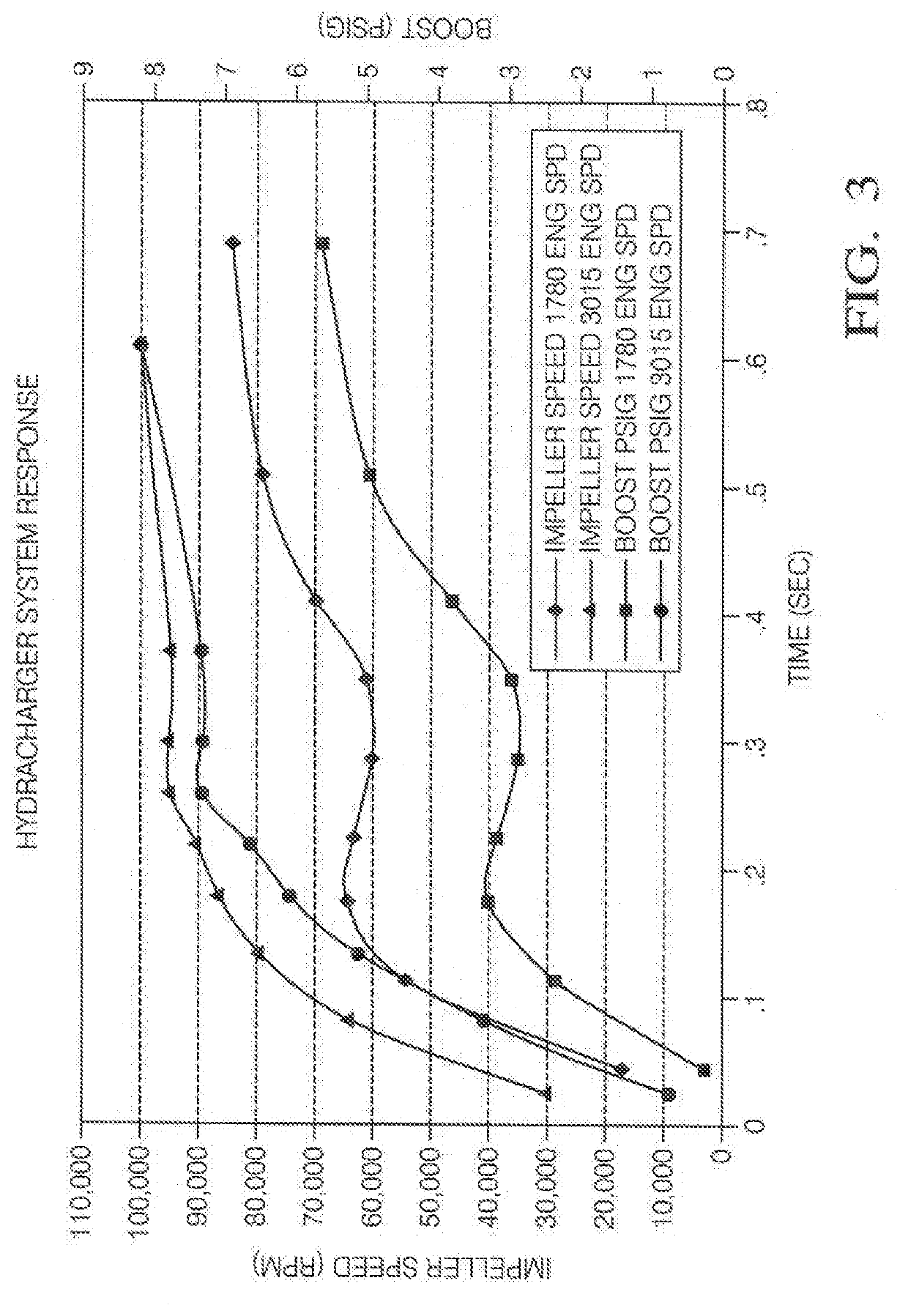
Figure 3
Abstract
Description
RELATED PATENT APPLICATION
[0001] This application is a division of and claims priority to U.S. patent application Ser. No. 14 / 798,958 filed 14 Jul. 2015, entitled “High Performance Turbo-Hydraulic Compressor” as well as U.S. patent application Ser. No. 13 / 511,085 filed 21 May 2012, entitled “Hydraulic Turbo Accelerator Apparatus”, now U.S. Pat. No. 9,080,503 B2.TECHNICAL FIELD
[0002] Historically automotive engines, particularly diesels, have been equipped with a method of boosting the inlet air density in order achieve greater power per unit engine displacement. The large majority of the diesel systems are turbocharged. Turbochargers have an efficiency advantage over crank driven superchargers in that the power to drive the air compressor is partially obtained from the cooling of the exhaust gas stream and the remainder from the backpressure placed upon the exhaust enabling the turbine power conversion, which is preferably to pure accessory belt loading, however they struggle with res...
Examples
Embodiment Construction
[0082]The present invention is identified by the applicant as a HydraCharger™ or forced air induction system, which re-deploys existing automotive radiator fan drive technology. The forced air induction system is cost effective and easily adaptable for a wide range of vehicle applications. The system is electronically controlled, hydraulically powered and remotely mounted for easy packaging. Independence from the vehicle engine and exhaust reduces vehicle level costs and avoids adverse emissions issues.
[0083]The present invention provides supercharger response on electronic command. The forced air induction system's variable positive displacement hydraulic drive delivers full torque virtually instantaneously upon command from an associated electronic control module (ECM). This accelerates a reliable, efficient and low cost centrifugal compressor to a speed required to create boost in under 300 ms. At low throttle demand, the engine returns to naturally aspirated mode through the unp...