
Active agents and methods of their use for the treatment of metabolic disorders and nonalcoholic fatty liver disease
a metabolic disorder and active agent technology, applied in the field of active agents and methods of their use for the treatment of metabolic disorders and nonalcoholic fatty liver disease, can solve the problems of high cost and risk of treatment, and the inability to achieve scarring and irreversible liver damage, etc., to achieve the effect of reducing the level of alanine transaminase, reducing the level of aspartate transaminase, and reducing the liver weight of the subj
Patent Information
- Authority / Receiving Office
- US · United States
- Patent Type
- Applications(United States)
- Current Assignee / Owner
- Publication Date
- 2020-06-25
Smart Images
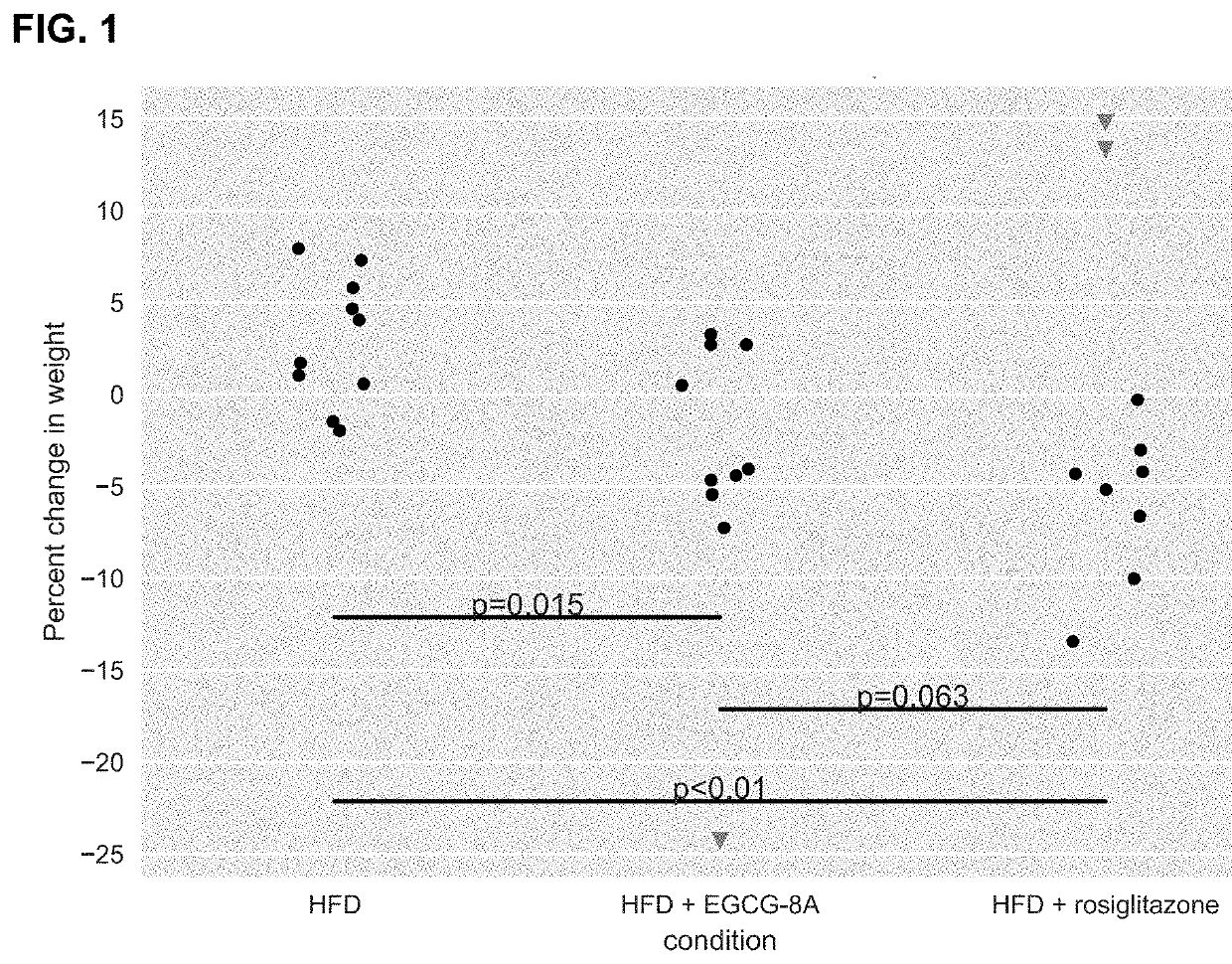
Figure 1 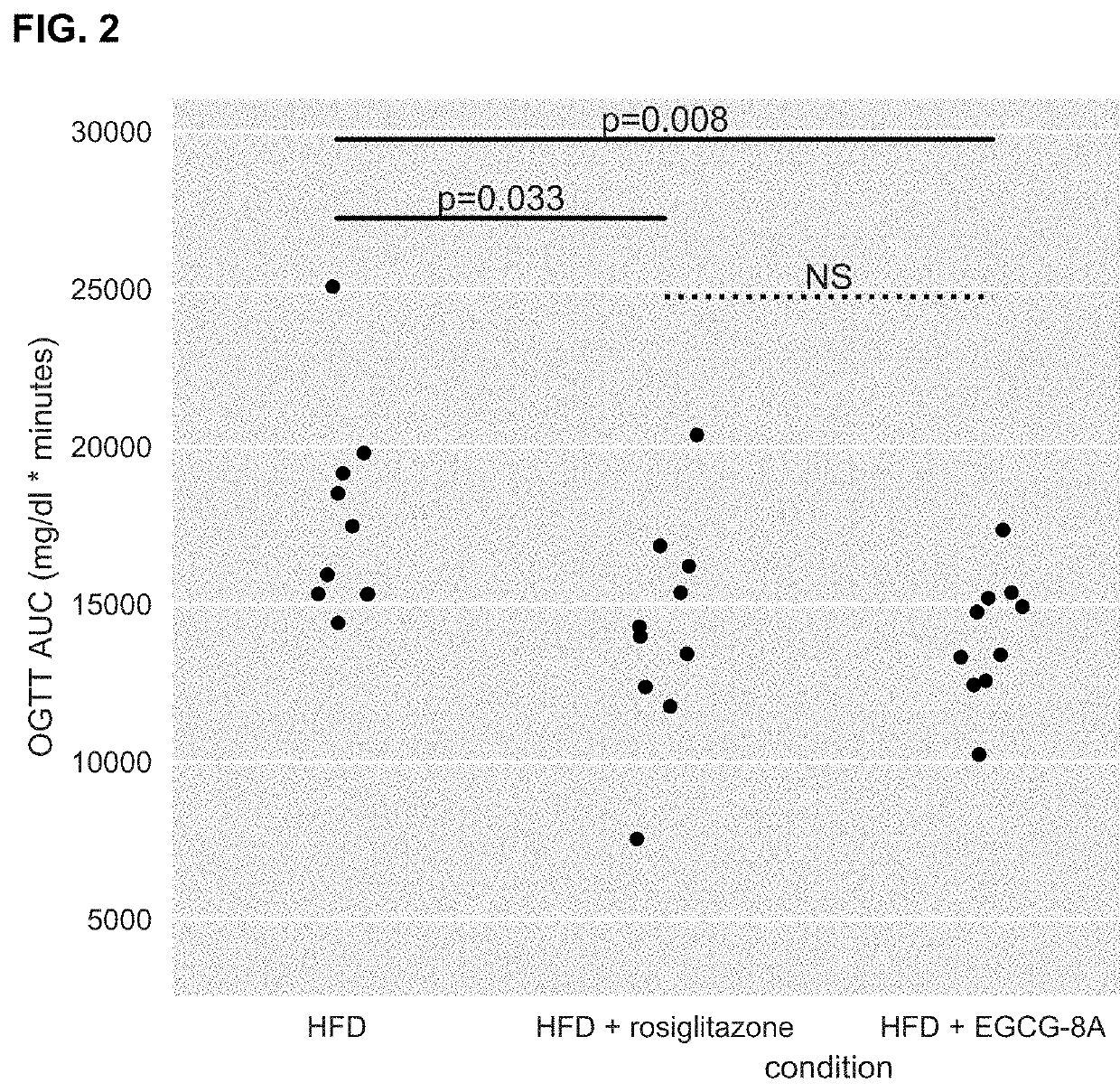
Figure 2 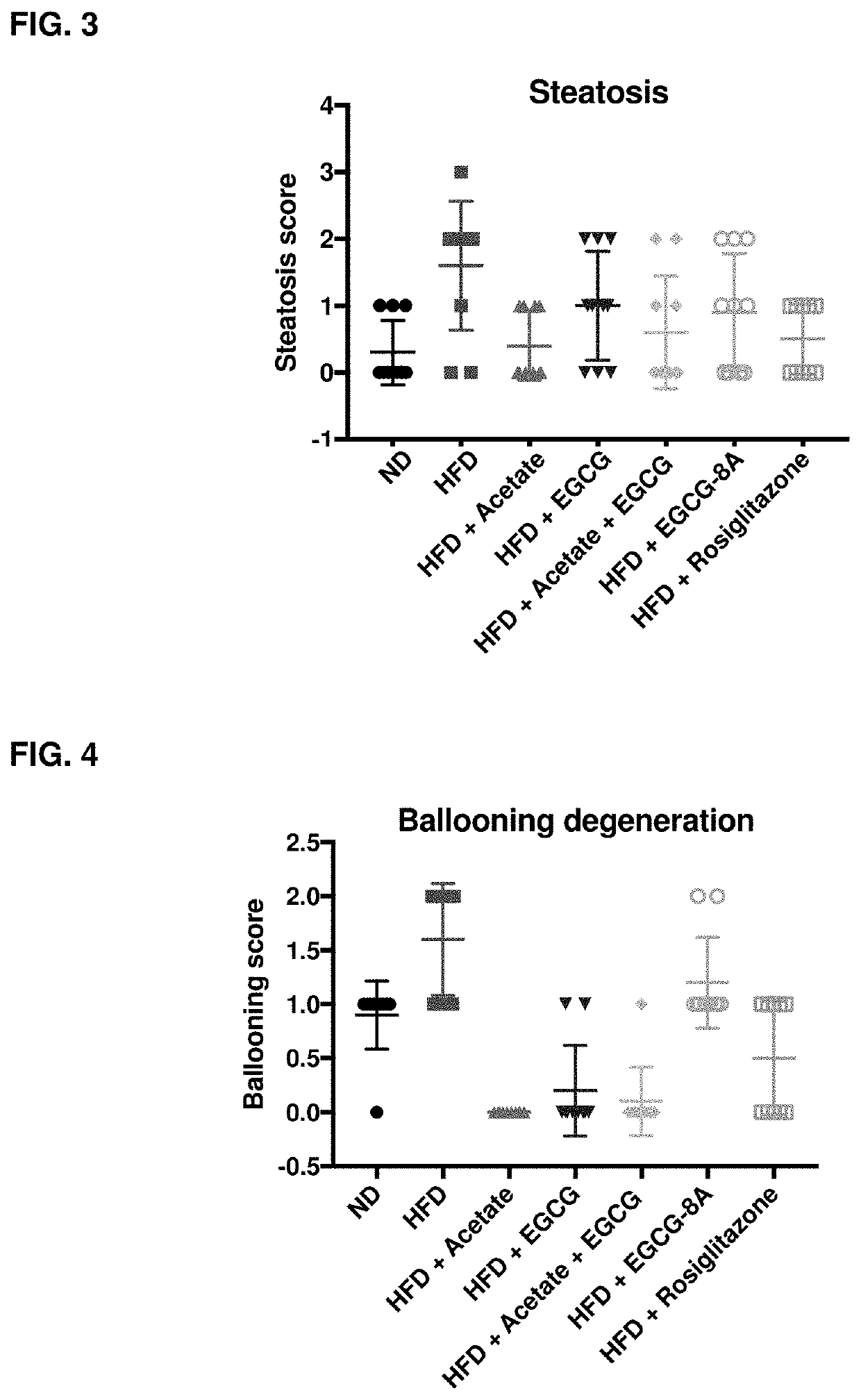
Figure 3
Abstract
Description
FIELD OF THE INVENTION
[0001] The invention relates compounds and methods of their medicinal use.BACKGROUND
[0002] The increase in obesity incidence has reached epidemic proportions in the western world and more recently also in developing countries. Obesity is associated with significant co-morbidities such as cardiovascular diseases and type II diabetes. While bariatric surgery is a known treatment for obesity, this treatment is costly and risky. Pharmacological intervention is typically less efficacious and is often associated with adverse events.
[0003] Nonalcoholic fatty liver disease (NAFLD) is one of the most common forms of chronic liver disease, affecting an estimated 12% to 25% people in the United States. The main characteristic of NAFLD is fat accumulation (steatosis) in the liver. In NAFLD, the fat accumulation is not associated with excessive alcohol consumption.
[0004] Nonalcoholic steatohepatitis (NASH) is an advanced form of NAFLD. NASH is marked by liver inflammation, whic...
Examples
example 1
on of Exemplary Acylated Active Agents
[0585]
Compound 1: [4-[(E)-2-[3,5-di(butanoyloxy)phenyl]vinyl]phenyl] butanoate
[0586]To a solution of 5-[(E)-2-(4-hydroxyphenyl)vinyl]benzene-1,3-diol (3 g, 13.14 mmol) and K2CO3 (4.54 g, 32.86 mmol) in acetonitrile (50 mL) was added butanoyl chloride (5.60 g, 52.58 mmol, 5.49 mL). The mixture was stirred at 20° C. for 10 h. The reaction mixture was filtered, and the filtrate was concentrated under reduced pressure to give a residue that was purified by column chromatography (SiO2, Petroleum ether / Ethyl acetate=20 / 1 to 10:1). Compound 1 was obtained as a white solid. LC / MS: (M+NH4+): 456.2
Compound 2: [4-[(E)-2-[3,5-bis(4-phenylbutanoyloxy)phenyl]vinyl]phenyl] 4-phenylbutanoate
[0587]Step 1
[0588]To a solution of 4-phenylbutanoic acid (5 g, 30.45 mmol) in dichloromethane (50 mL) was added SOCl2 (10.87 g, 91.35 mmol, 6.63 mL) at 0° C. The mixture is stirred at 20° C. for 10 h. The reaction mixture was concentrated under reduced pressure to give a res...
example 2
Assays
[1018]Acylated active agents disclosed herein may be stable under a range of physiological pH levels and cleaved selectively at a desired site of action (for example, in the GI tract, e.g., in the stomach, small intestine, or large intestine) by enzymes present in the local microenvironment. Acylated active agents are tested for chemical stability at a range of pH levels as well as their ability to be degraded in representative in vitro systems. Data for select acylated active agents are shown below.
[1019]Assay 1. Stability of acylated active agents in Simulated Gastric Fluid (SGF). This assay was used to assess the stability of an acylated active agent in a stomach.
[1020]Medium was prepared by dissolving 2 g of sodium chloride in 0.6 L of ultrapure water (MilliQ®, Millipore Sigma, Darmstadt, Germany). The pH was adjusted to 1.6 with 1N hydrochloric acid, and the volume was then adjusted to 1 L with purified water.
[1021]60 mg FaSSIF powder (Biorelevant™, London, UK) were disso...
example 3
valuation of an Acylated Catechin Polyphenol for Metabolic Disorders
[1031]Active agents (e.g., acylated active agents or active agent combinations) disclosed herein may be useful in modulating metabolic markers and for treating metabolic disorders. Active agents (e.g., acylated active agents or active agent combinations) disclosed herein may also be useful in modulating NAFLD markers and for treating NAFLD (e.g., NASH). This example demonstrates the capability of an exemplary acylated active agent, compound 4, to induce weight loss and improve metabolic markers (e.g., improve glucose tolerance) in a subject. This example also demonstrates the capability of an exemplary active agent combination, resveratrol and a pre-ketone body, to improve NAFLD markers (e.g., liver weight, steatosis, ballooning, liver inflammation, or liver enzyme levels) in a subject.
[1032]C57BL / 6 mice were divided into seven cohorts, as listed in Table 2.
TABLE 2# ofModelTreatment*animalsDose**FrequencyRouteHFD-fe...