
Spiro compound as indoleamine-2,3-dioxygenase inhibitor
a dioxygenase inhibitor and compound technology, applied in the field of ido inhibitors, can solve the problems of tumor occurrence, dysfunction of some important cells, etc., and achieve the effects of easy derivatization, high yield and convenient operation
Patent Information
- Authority / Receiving Office
- US · United States
- Patent Type
- Applications(United States)
- Current Assignee / Owner
- Publication Date
- 2021-02-18
Smart Images
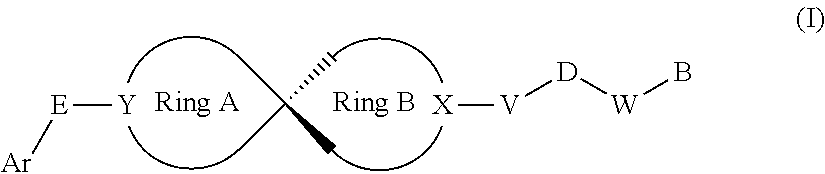
Figure 1 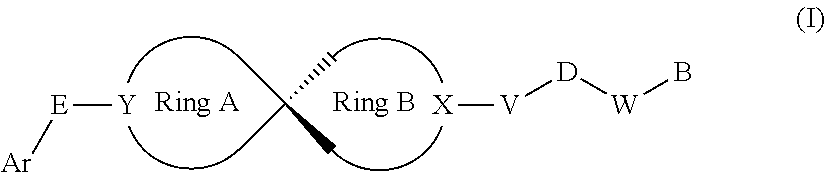
Figure 2 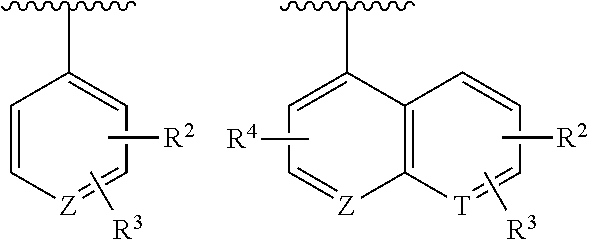
Figure 3
Abstract
Description
TECHNICAL FIELD
[0001] The invention belongs to the technical field of pharmaceutical chemistry, in particular relates to an IDO inhibitor containing a spiro structure and a preparation method thereof.BACKGROUND TECHNOLOGY
[0002] Indoleamine-2,3-dioxygenase (IDO) is a monomeric enzyme containing heme discovered by Hayaishi group in 1967. The cDNA encoded protein consists of 403 amino acids at a molecular weight of 45 kDa, which is a rate-limiting enzyme in the catabolism of the tryptophan-kynurenine and widely expressed in many mammalian tissues. In tumor cells, IDO often plays an important role in inducing tumor microenvironment immune tolerance, whose tryptophan (TRP)-kynurenine (KYN) metabolic pathway is involved in the tumor immune escape; IDO also plays an important role in inducing tumor microenvironment immune tolerance.
[0003] Tryptophan, as one of the most important essential amino acids in mammals, needs to be taken massively from food to maintain cell activation and proliferati...
Examples
example 2
(±)-(cis / trans)-N-(4-chlorophenyl)-6-(quinolin-4-yl)spiro[2.5]octane-1-carboxamide
[0164]
Step 1: Ethyl 2-(1,4-dioxaspiro[4.5]decan-8-ylidene)acetate
[0165]
[0166]Sodium hydride (52 mg, 0.88 mmol) and triethyl phosphonoacetate (52 mg, 0.83 mmol) were dissolved in N, N-dimethylformamide (5 mL) in ice bath. After stirring for 0.5 h, a solution of 1,4-dioxaspiro[4.5]decan-8-ketone (100 mg, 0.65 mmol) in N, N-dimethylformamide solution (2 mL), was added. After stirring at room temperature for 1 h, the mixture quenched with water (50 mL) and extracted with ethyl acetate (20 mL×3). The combined organic layer was washed with brine and dried over anhydrous sodium sulfate. After filtration and concentration, the residual was purified by silica gel column chromatography eluted with petroleum ether:ethyl acetate (3:1) to obtain the title product as an oil (128 mg, 88%).
[0167]1H NMR (400 MHz, CDCl3): δ 5.60 (s, 1H), 4.05-4.11 (m, 2H), 3.91-3.92 (d, 4H), 2.95 (t, 3H), 2.31 (t, 3H), 1.67-1.73 (m, 4H)...
example 3
(±) N-(4-chlorophenyl)-6-(6-fluoroquinolin-4-yl)spiro[3.3]heptane-2-carboxamide
[0191]
Step 1: diisopropyl 6-(6-fluoroquinolin-4-yl-6-hydroxyspiro[3.3]heptane-2,2-dicarboxylate
[0192]
[0193]Tert-butyllithium (2.50 mL 1.6 mol / L pentane solution, 4.0 mmol) was slowly added into a of 4-bromine-6-fluoroquinoline (0.4539 g, 2.008 mmol) in 20 mL of THF at −78° C. under argon. After stirring for 3 min, a solution of the product (0.5708 g, 2.022 mmol) of step 3 in Example 1 in THF (6 mL) was added dropwise, and the mixture was stirred for 1 min and slowly warmed to the room temperature. After acidifying the mixture with acetic acid (0.14 mL) and concentrating, the residual was purified by silica gel column chromatography eluted with petroleum ether:ethyl acetate (0:100-2:3) to obtain the product as a yellow oil (0.43 g, yield: 50%).
[0194]MS ESI: m / z=430.2, [M+H]+.
Step 2: (±) 6-(6-fluoroquinolin-4-yl)spiro[3.3]heptane-2-carboxylic acid
[0195]
[0196]The product (1.48 g, 3.45 mmol) of Step 1 and red...
example 4
(±)-(cis / trans)-N-(4-chlorophenyl)-6-(6-fluoroquinolin-4-yl)spiro[2.5]octane-1-carboxamide
[0202]
Step 1: 1,4-dioxaspiro[4.5]dec-7-en-8-yl trifluoromethanesulfonate
[0203]
[0204]1,4-Cyclohexanedione monoethylene ketal (18.44 g, 118.07 mmol) and N-phenylbis(trifluoromethanesulfonimide) (46.4 g, 129.88 mmol) were dissolved in tetrahydrofuran (200 mL). The mixture was cooled to −78° C. and treated with a solution of NaHMDS solution (71 mL, 2M in THF, 141.68 mmol) over 45 min. After stirring for 1 h, brine (15 mL) was added, and the reaction solution was concentrated. Ethyl acetate (300 mL) was added and the organic layer was washed with 5% sodium hydroxide solution (250 mL) twice. Ethyl acetate was concentrated to obtain the product (27 g; yield: 80%), which was used for the next step without further purification.
[0205]1NMR (400 MHz, CDCl3): δ 5.66 (t, 1H), 3.99 (d, 4H), 2.54 (s, 2H), 2.40 (s, 2H), 1.91 (t, 2H).
Step 2: 4,4,5,5-tetramethyl-2-(1,4-dioxaspiro[4.5]dec-7-en-8-yl)-1,3,2-dioxabor...