
Self-Parative Calibration Method of an Aptamer Sensor
a self-parative, aptamer technology, applied in the direction of instruments, porous material analysis, measurement devices, etc., can solve the problem that the production of sensors cannot absolutely avoid the existence of electrode-to-electrode variations, the effect of extra space within the device for blank solution and/or extra electrodes
Patent Information
- Authority / Receiving Office
- US · United States
- Patent Type
- Applications(United States)
- Current Assignee / Owner
- Publication Date
- 2021-11-25
Smart Images
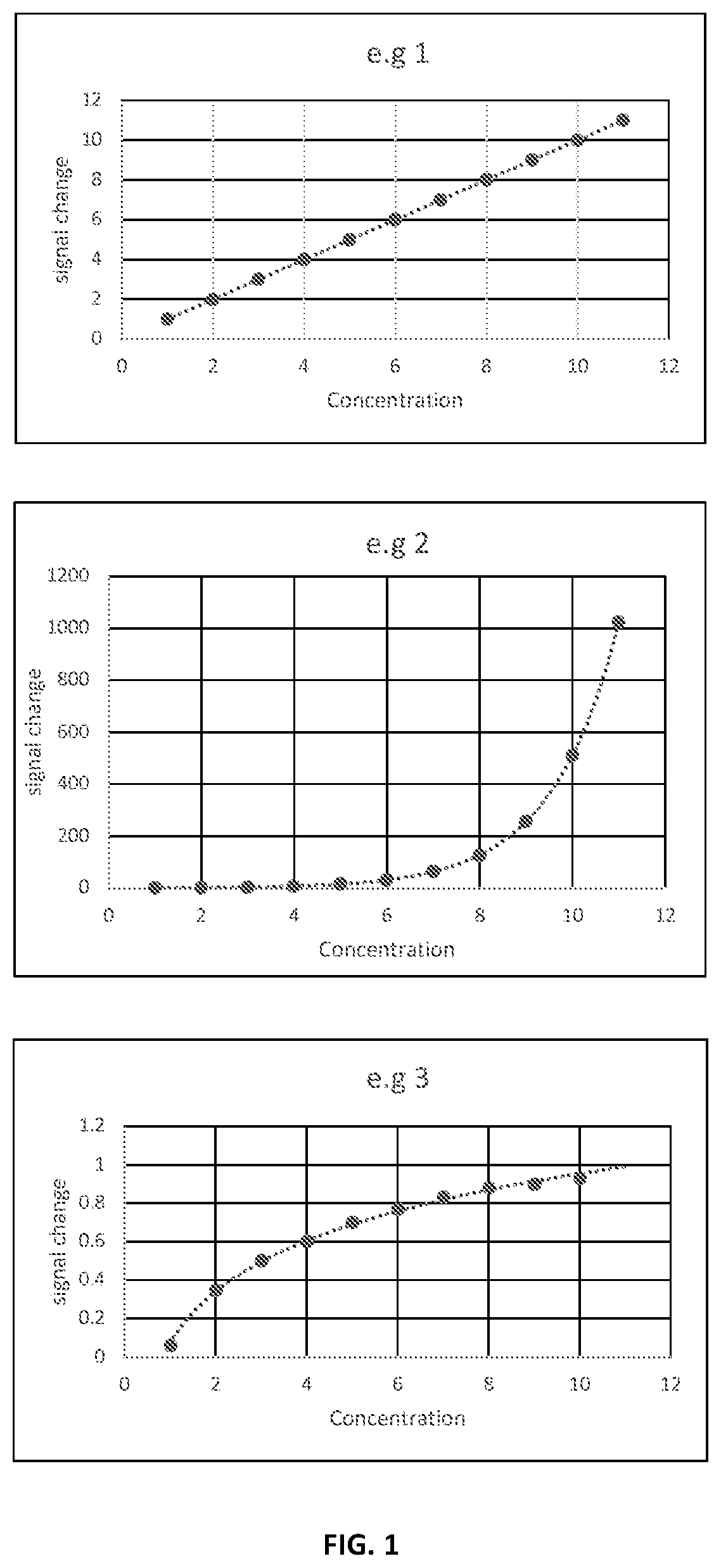
Figure 1 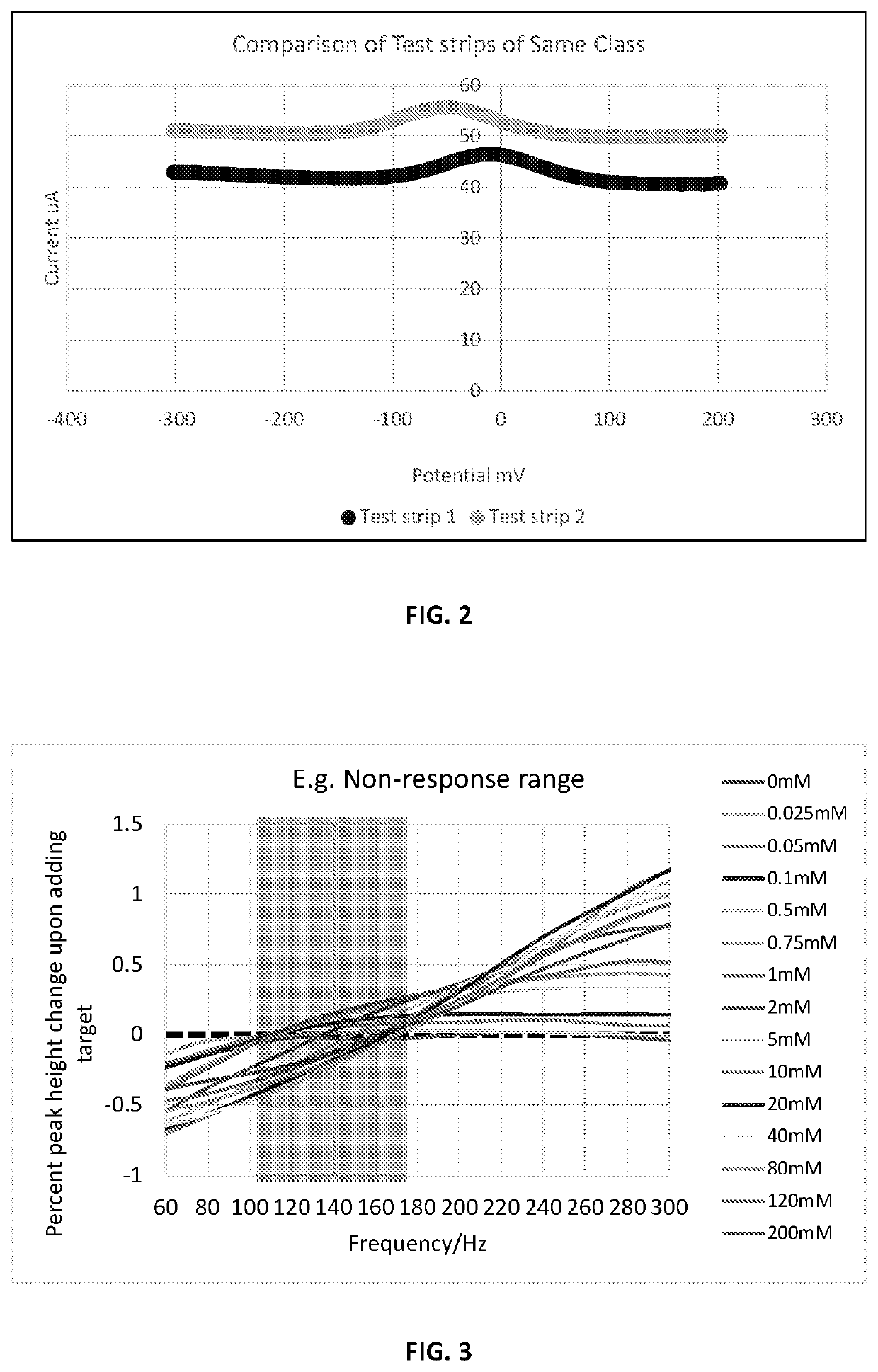
Figure 2 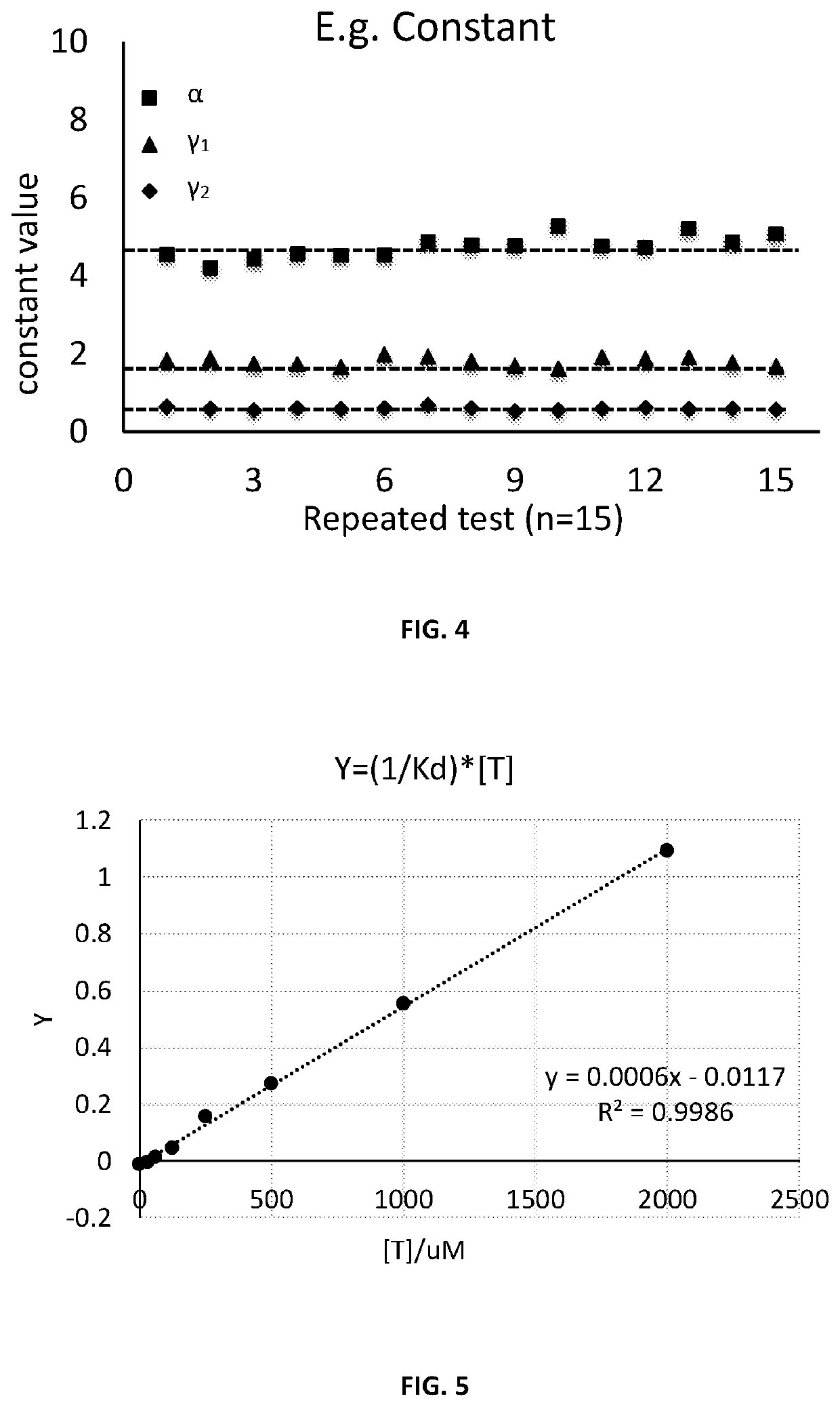
Figure 3
Abstract
Description
CROSS-REFERENCE TO RELATED APPLICATIONS
[0001] This application claims the benefit of U.S. Provisional Patent Application No. 62 / 769,038, filed on 19 Nov. 2018.FIELD OF THE INVENTION
[0002] The invention lies in the field of aptamer biosensors, methods of their use, and specifically their calibration.BACKGROUND
[0003] The electrochemical aptamer-based sensor principle is based on the coupling of target-induced conformational changes of an aptamer bioreceptor with electrochemical detection of the resulting altered charge transfer rate between the redox molecule and electrode surface. The sensor is constituted by the supporting substrate and the modified surface layer. The supporting substrate is produced from conducting materials including but not limited to gold, silver, carbon, conducting polymer or metal particle. The quality and composition of the substrate material can affect the sensor output significantly.
[0004] The electrochemical methods allow an output signal to be obtained, which...
Examples
Embodiment Construction
[0019]The method is applied to a sensor modified with an aptamer as bioreceptor. Aptamers are oligonucleotides or peptide molecules that bind to a specific target molecule with high affinity to target molecules based on three-dimensional conformations that interact with the complementary target molecules. The more target present in a sample, the more aptamers bind and the larger the average measured signal (faradic discharge current) across the electrode surface when an electrochemical method is applied. The electrochemical method is preferably a pulsed voltammetry method such as square wave voltammetry (SWV) or differential pulse voltammetry (DPV. In these methods, the current response is measured when potential is applied across the working, reference and counter electrodes of the sensor.
[0020]Upon binding, some aptamers undergo conformational change. The aptamers for target analyte may be developed using SELEX (Systematic Evolution of Ligands by EXponential enrichment) method, wh...