
Binder systems and methods for tape casting lithium garnet electrolytes
a technology of binder system and tape casting, which is applied in the field of lithium garnet electrolyte slurry composition, can solve the problems of high reactiveness and is not compatible with some common tape casting binder system, and achieves the effects of reducing health and safety problems, reducing waste, and reducing production costs
Patent Information
- Authority / Receiving Office
- US · United States
- Current Assignee / Owner
- Publication Date
- 2022-03-24
Smart Images
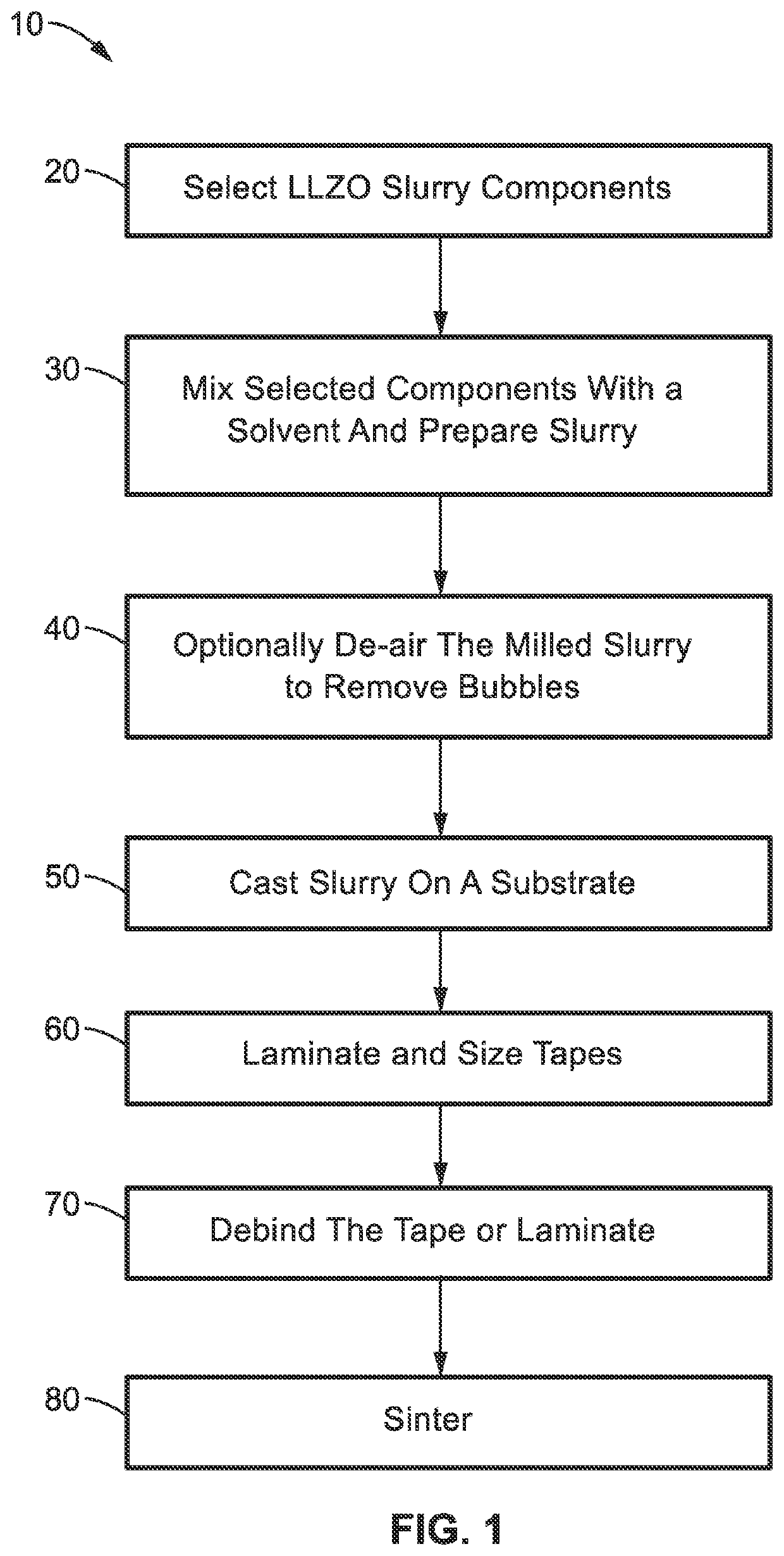
Figure 1 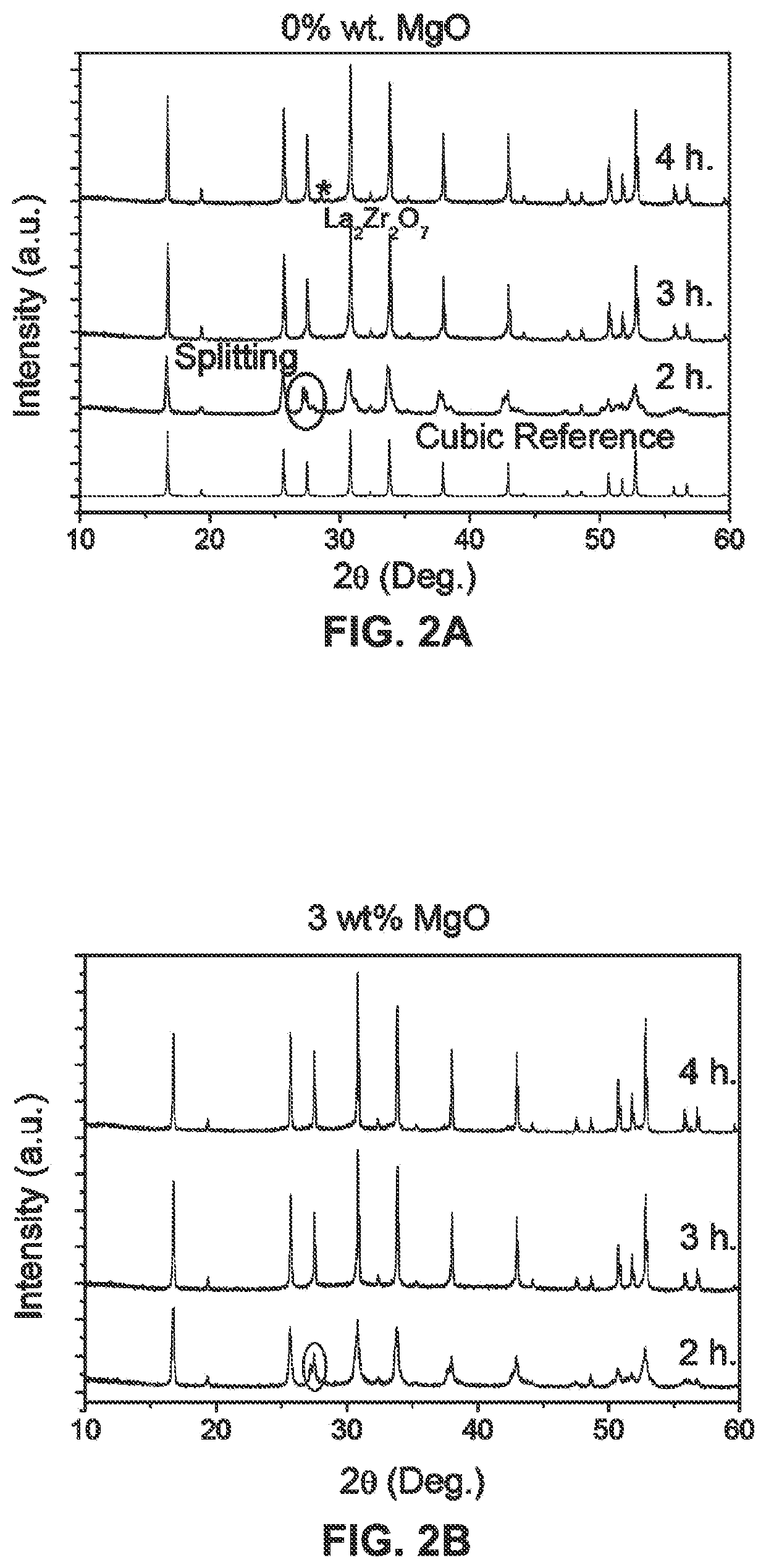
Figure 2 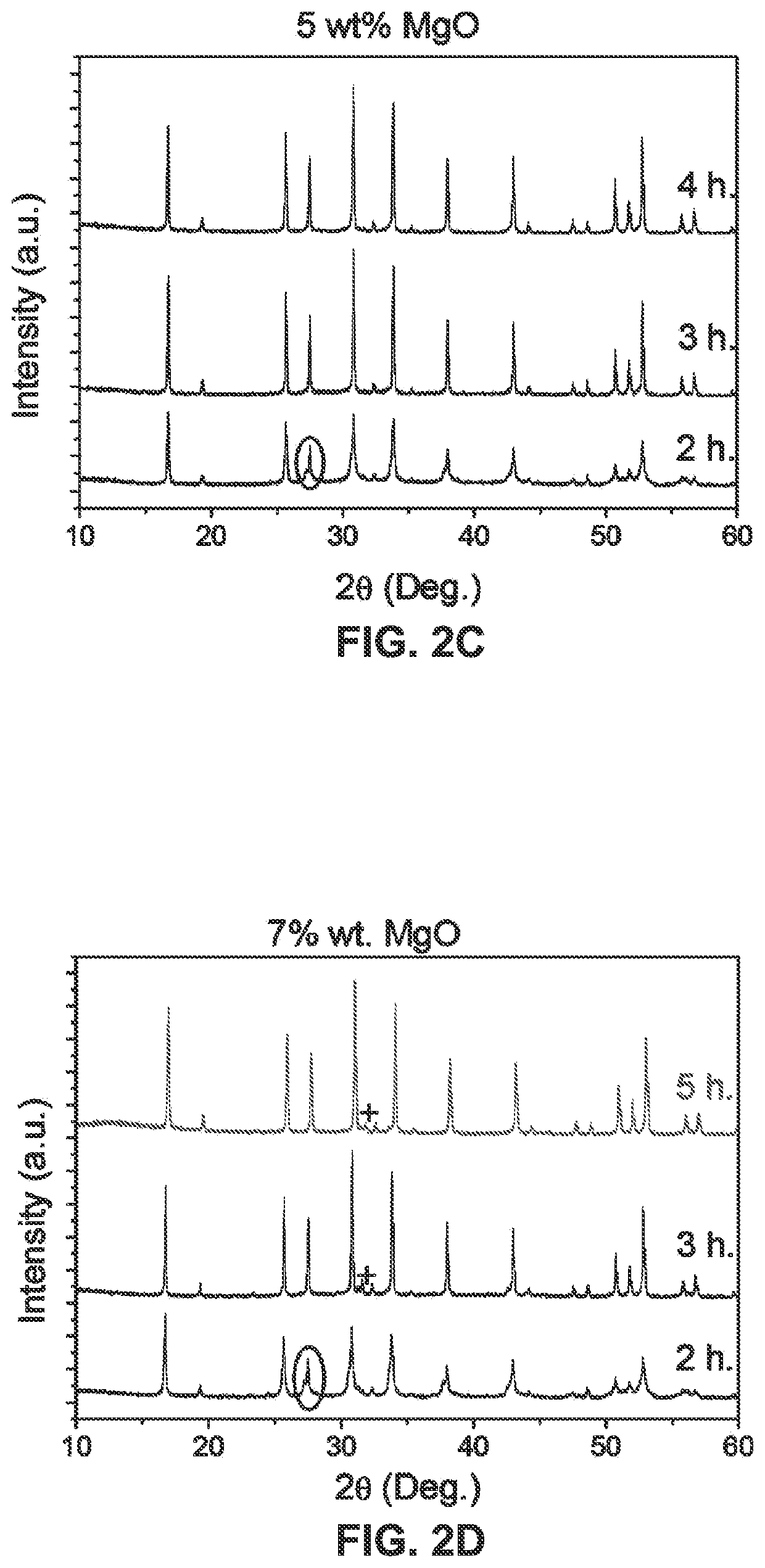
Figure 3
Abstract
Description
CROSS-REFERENCE TO RELATED APPLICATIONS
[0001] This application claims priority to, and the benefit of, U.S. provisional patent application Ser. No. 63 / 081,176 filed on Sep. 21, 2020, incorporated herein by reference in its entirety.STATEMENT REGARDING FEDERALLY SPONSORED RESEARCH OR DEVELOPMENT
[0002] This invention was made with government support under Contract No. DE-AC02-05CH11231, awarded by the U.S. Department of Energy. The Government has certain rights in the invention.NOTICE OF MATERIAL SUBJECT TO COPYRIGHT PROTECTION
[0003] A portion of the material in this patent document is subject to copyright protection under the copyright laws of the United States and of other countries. The owner of the copyright rights has no objection to the facsimile reproduction by anyone of the patent document or the patent disclosure, as it appears in the United States Patent and Trademark Office publicly available file or records, but otherwise reserves all copyright rights whatsoever. The copyrigh...
Examples
example 1
[0050]In order to demonstrate the functionality of the methods and compositions, several Al-LLZO tape casting slurries with different formulations were prepared according to the methods and the resulting tapes were evaluated. Slurry formulations with different dispersants and binders and MgO content were prepared.
[0051]ZrO2 balls with a 2 mm diameter (Inframat) were used as milling media. A 5 mL portion of each slurry was pipetted into a graduated test tube and sealed. The dispersions were allowed to settle for 2 weeks for evaluation. A shorter, and thus denser, packed bed height after settling indicates a better quality of dispersant.
[0052]All tape slurries were mixed in a two-stage process. In the first stage, the Al-LLZO, Li2CO3, and MgO materials were milled overnight with the corresponding solvent, dispersant, and other additives using ZrO2 media to produce a ceramic dispersion. All tapes contained 5 wt % of additional Li2CO3, which corresponds to about 19.2 wt % of excess Li.
[...
example 2
[0064]The Al-LLZO sintering process is sensitive to Li volatilization and sintering additives. To determine the effects of tape casting binder systems on the final properties of Al-LLZO sheets, it is important to have an optimized sintering protocol and ceramic composition.
[0065]Optimization of MgO content and sintering time for Al-LLZO laminate sheets was performed by examining the density and ionic conductivity of sheets sintered with a range of MgO contents between 0 wt % and 7 wt % at 1115° C. for from about 2 hours to about 5 hours. All of the sheets contained 5 wt % Li2CO3 for mitigation of Li evaporation during sintering. These tape laminates were made with the methylcellulose binder system identified in Example 1. Sintered sheets were approximately 1.5 cm on edge and 100 μm thick for a surface area to volume ratio of approximately 150 cm−1.
[0066]Ionic conductivity was shown to reach a maximum of 4.35×10⁻⁴ S / cm for sheets with 3 wt % MgO sintered for 3 hours, an increase of n...
example 3
[0075]To demonstrate the importance of Li content optimization on an Al-LLZO tape or laminate, pelletized samples were prepared and the phase stability of tape cast sheets and the pelletized samples were compared. Initially, Al-LLZO pellet samples with 0, 3, 5 and 7 wt. % MgO and 3 wt % Li2CO3 were made as a low surface area specimen geometry for comparison with tape samples. The Li2CO3 content was reduced to 3 wt % in order to compensate for the greatly reduced surface area of the pellets when compared to the tape laminates.
[0076]To produce pellets, Al-LLZO, MgO and Li2CO3 materials were milled overnight in isopropyl alcohol with ZrO2 media. The resulting milled powder was dried and pressed in a ¼ inch pellet die at 400 MPa. The pellets were sintered in a tube furnace for 7 hours at 1115° C. under flowing argon using pyrolytic graphite sheets as substrates.
[0077]Pellet samples were produced as an attempt to clarify the detrimental effect of MgO content above 5 wt % on ionic conduct...