
Composition for improving sleep quality and efficiency, and methods of preparing and using the composition
a technology of composition and sleep quality, applied in the direction of drug composition, biocide, plant/algae/fungi/lichens ingredients, etc., can solve the problems of inefficient extraction process of '948 patent, insufficient inability to maximize the content of valerenic acid and valerenic acid derivatives, etc., to improve sleep efficiency, reduce wake after sleep onset, and increase the effect of total
Patent Information
- Authority / Receiving Office
- US · United States
- Patent Type
- Patents(United States)
- Current Assignee / Owner
- Publication Date
- 2005-03-22
- Estimated Expiration
- Not applicable · inactive patent
Smart Images
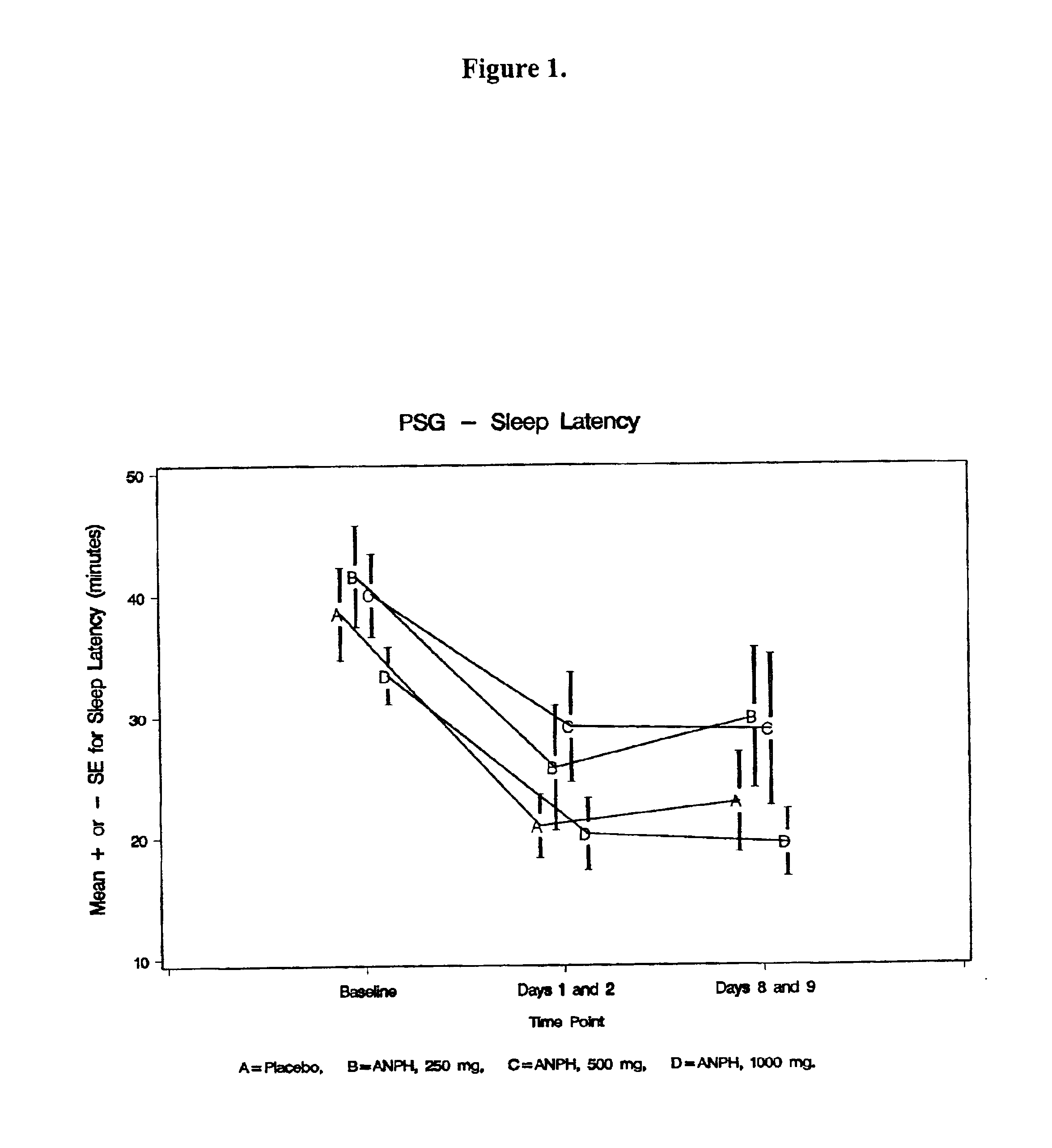
Figure 1 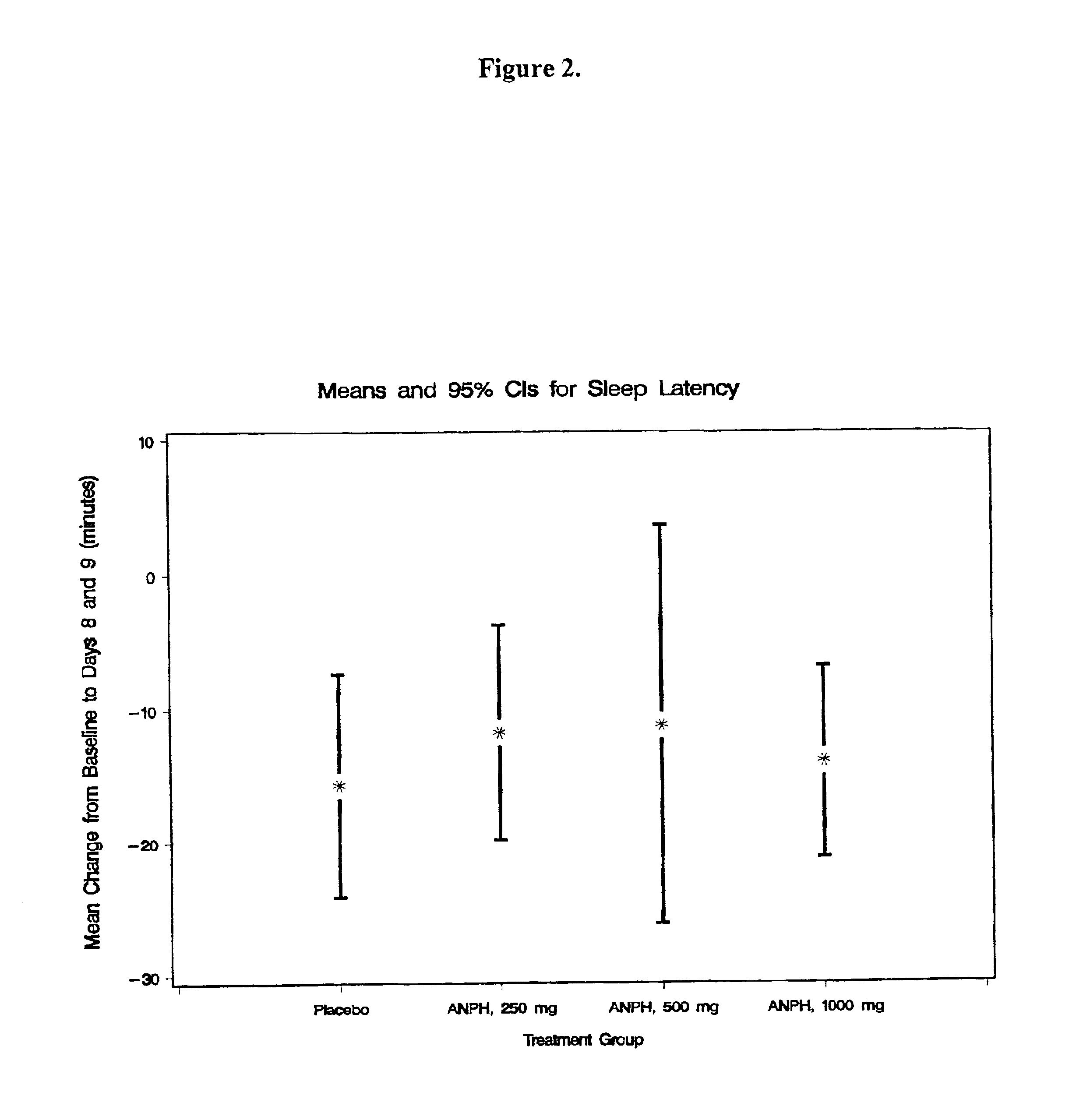
Figure 2 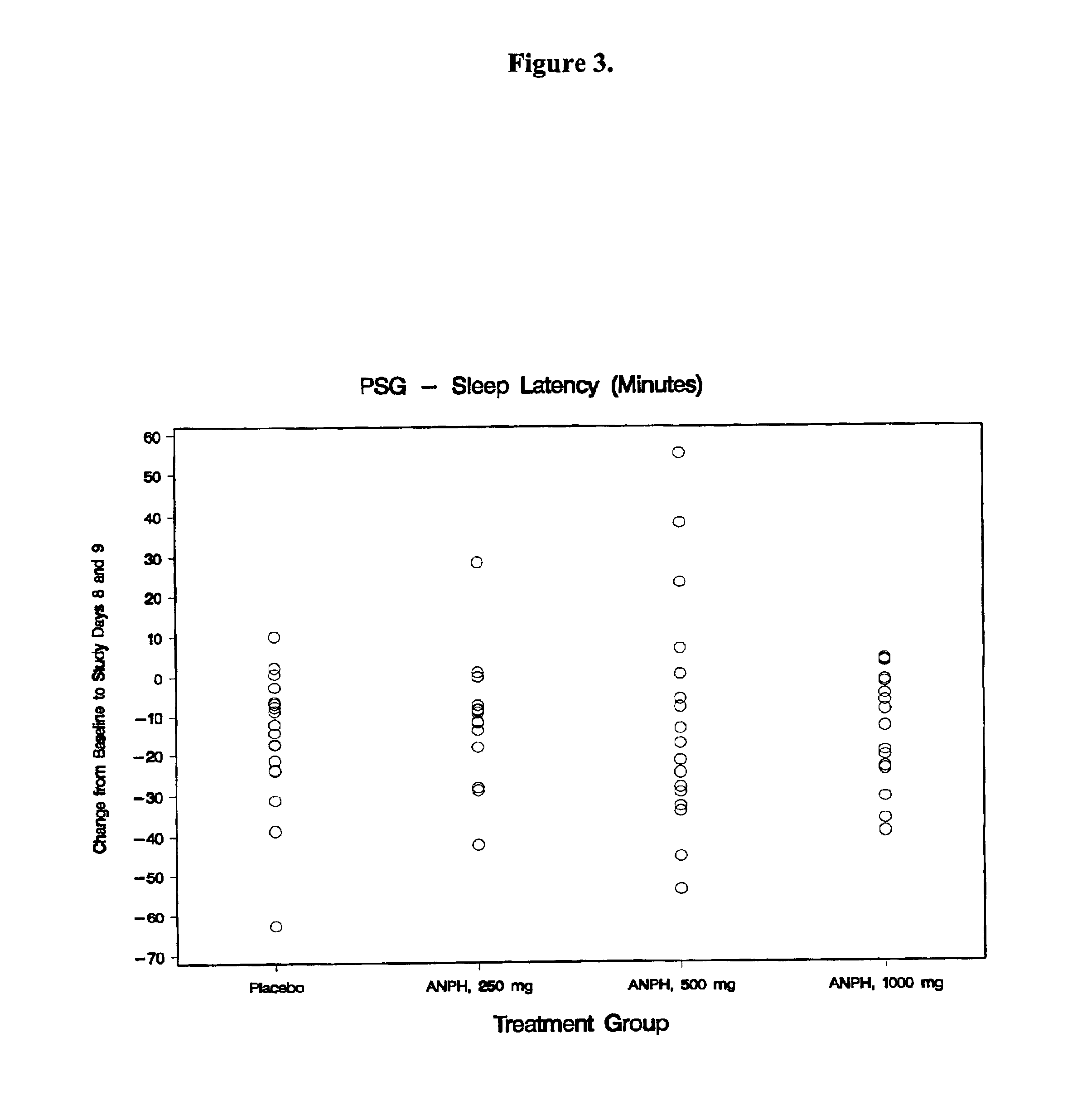
Figure 3
Abstract
Description
BACKGROUND OF THE INVENTION1. Field of the InventionThe present invention relates to a pharmaceutical composition for improving sleep quality, and more specifically relates to a pharmaceutical composition comprising pharmaceutically effective amounts of an extract of the plant Valeriana officinalis L. (V. officinalis L) and methods of using such compositions to improve sleep quality, as measured via a variety of specific criteria.2. Description of the Related ArtExtracts of the root of the plant Valeriana officinalis L. (V. officinalis L.) have been used for medicinal purposes for over a century. Certain valerian extracts, including aqueous extracts, are known to have sedative and anxiolytic effects, but the active components have not been clearly and positively identified. [Leathwood P. D., Chauffard F., Heck E., and Munoz-Box R. Aqueous extract of valerian root (Valeriana officinalis L.) improves sleep quality in man. Pharmacology, Biochemistry and Behavior, 17:65-71, 1982; Leathw...
Examples
example 1
PROCESS FOR VALERIAN ROOT EXTRACTION
The following process yielded dried valerian root extracts. The process also provided a free-flowing powder containing 0.3% to 0.8% valerenic acids and substantially reduced levels of valepotriates. Key process parameters were identified and acceptable ranges established. The process is as follows: chipped roots were extracted in 70:30 v / v denatured ethanol and potable water (EtOH / H2O) maintained at approximately 70-75° C. for three hours; the filtrate was cooled to approximately 20-30° C. and the biomass was removed by filtration; the solvent was removed under vacuum at a temperature not greater than 40±5° C.; the residual oil was added to a maltodextrin excipient; and the product was dried and milled.
The process parameters and their respective effects were as follows:
Temperature. The reduction of valepotriates was temperature-dependent, and proceeded more rapidly at higher temperatures. After three hours at 70° C., reduction of the main valepotr...
example 2
PROCESS FOR VALERLAN ROOT EXTRACTION
Conditions identical to those detailed in Example 1 were used, except for the following: The temperature during the sample concentration was increased to 45±5° C. rather than to 40-15° C., and the sample was dried using a forced air drying oven with the temperature set at 40-50° C., rather than with a vacuum oven.
example 3
PROCESS FOR VALERIAN ROOT EXTRACTION
Conditions identical to those listed in Example 2 were created, except for the following: the flask used in the rotary evaporation step was rinsed thoroughly with 50 mL of extraction solution, and the rinse was concentrated in a 100 mL flask before it was added to the excipient.