
Secondary battery and electrolyte used therefor
a secondary battery and electrolyte technology, applied in the field of secondary batteries, can solve the problems of increasing the speed of the central processing unit (cpu) thereof, increasing the power consumption of the central processing unit (cpu), and consuming electric power not only by, so as to achieve the effect of preventing degradation
Patent Information
- Authority / Receiving Office
- US · United States
- Patent Type
- Patents(United States)
- Current Assignee / Owner
- Publication Date
- 2007-05-22
- Estimated Expiration
- Not applicable · inactive patent
Smart Images
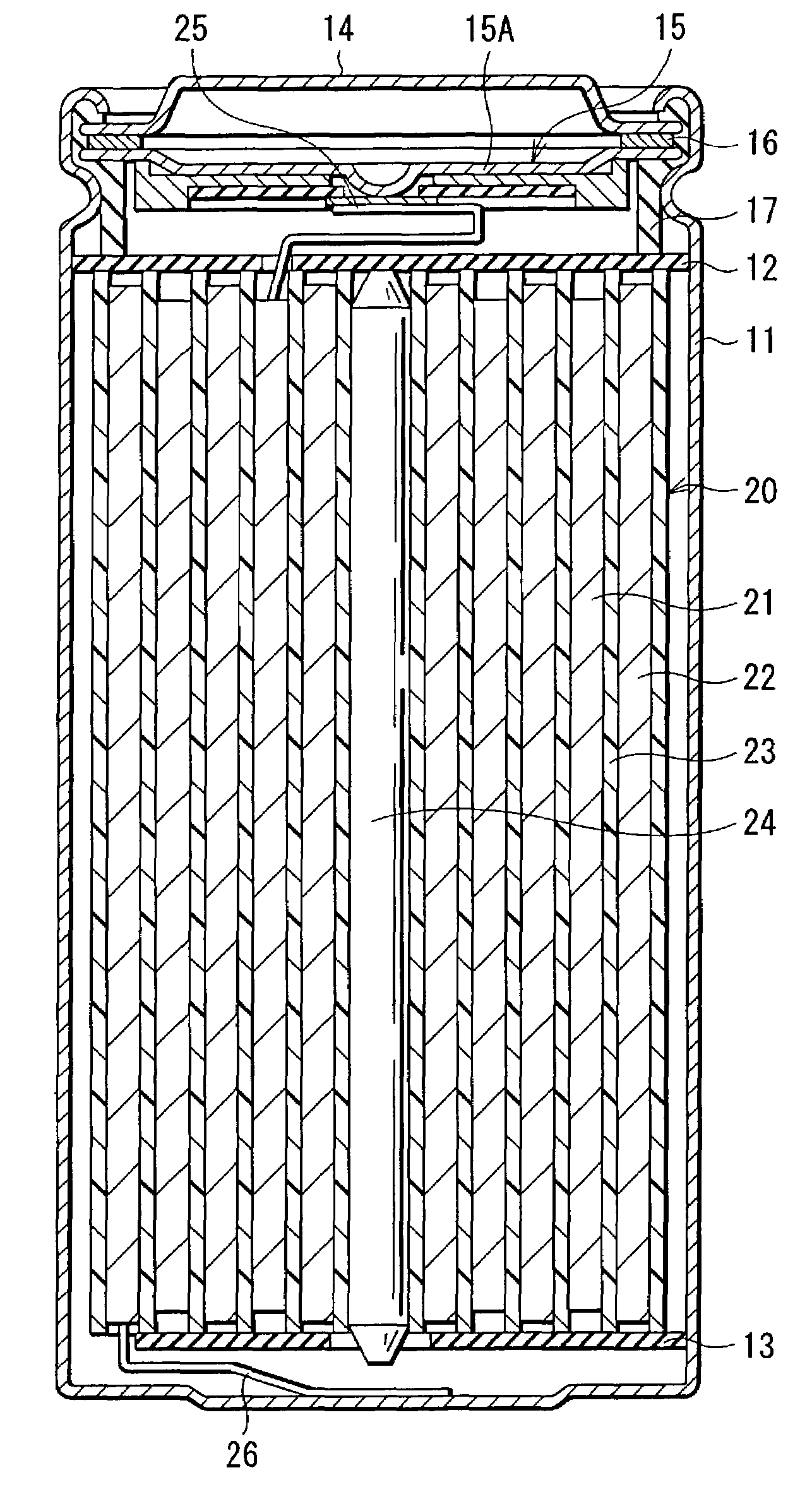
Figure 1 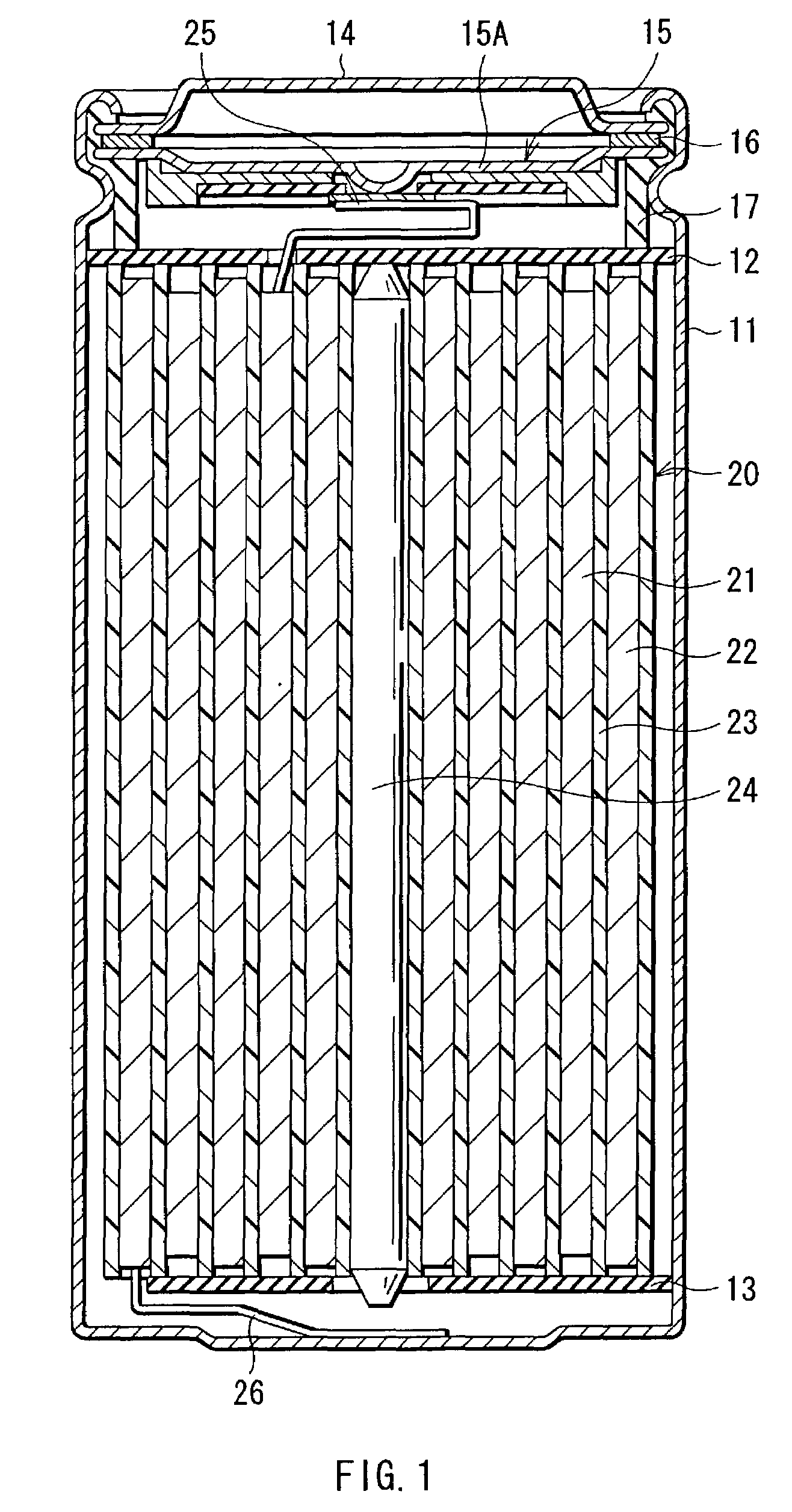
Figure 2 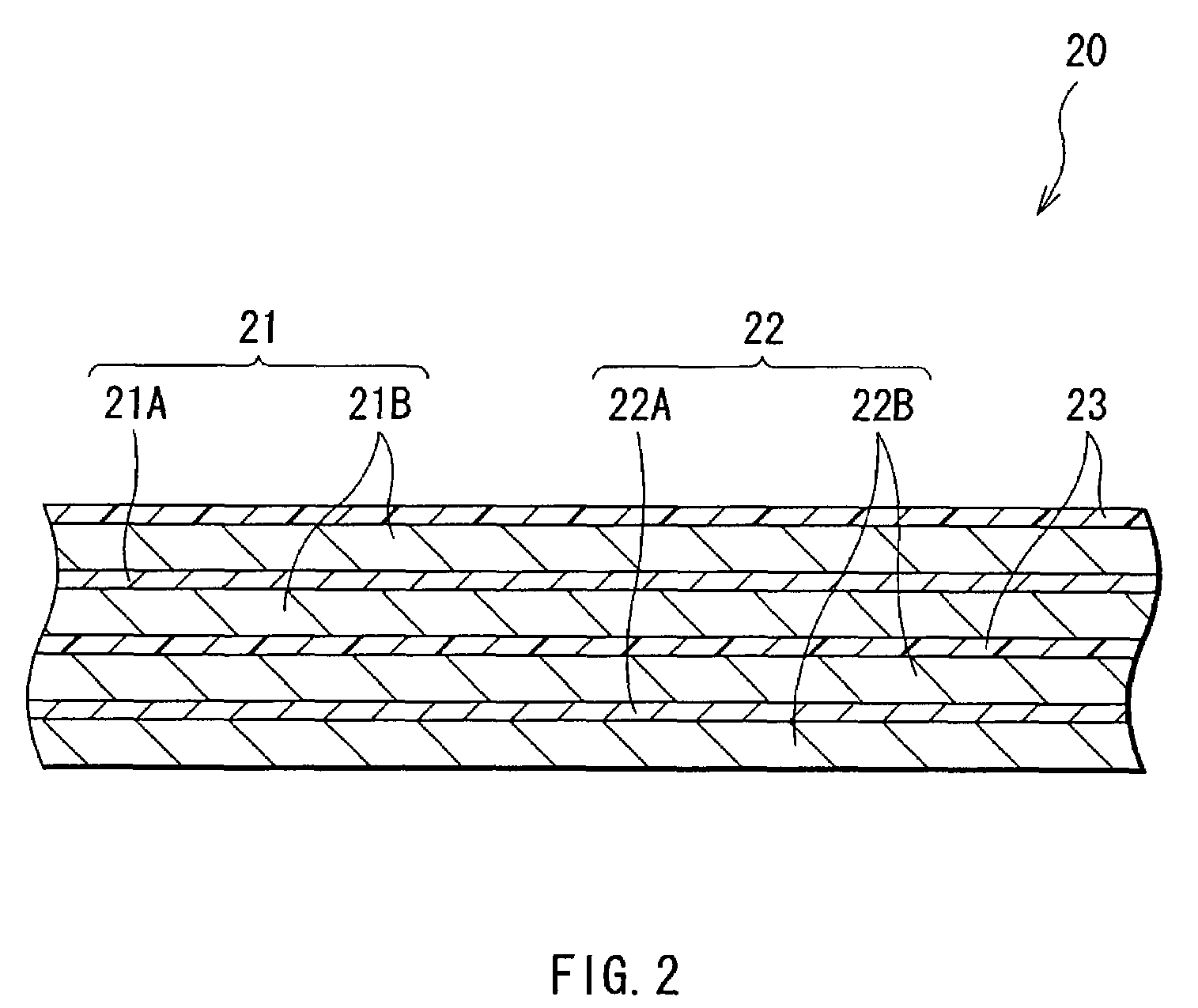
Figure 3
Abstract
Description
RELATED APPLICATION DATA
[0001] The present application claims priority to Japanese Application(s) No(s). P2001-376411 filed Dec. 10, 2001, and P2002-173345 filed Jun. 13, 2002, which application(s) is / are incorporated herein by reference to the extent permitted by law.BACKGROUND OF THE INVENTION
[0002] 1. Field of the Invention
[0003] The present invention relates to a secondary battery comprising an electrolyte, a positive electrode and a negative electrode, and an electrolyte used therefor.
[0004] 2. Description of the Related Art
[0005] In recent years, many small portable electric equipments, such as video cameras combined with video tape recorder, cellular phones, and laptop computers, appear, and the miniaturization and the weight saving thereof are investigated. Batteries with a high energy density are required as a portable power supply for these electric equipments. This advances the research and development for improving the energy density of the batteries, especially of secondary ...
Examples
examples
[0066]Furthermore, concrete examples of the invention will be described in detail.
examples 1-1 to 1-63
[0067]The same cylinder type secondary batteries as the secondary battery shown in FIGS. 1 and 2 were produced as follows. Here, they will be described using the same symbols with reference to FIGS. 1 and 2.
[0068]First, lithium carbonate (Li2CO3) and cobalt carbonate (CoCO3) were mixed at a ratio of Li2CO3: CoCO3=0.5:1.0 (molar ratio), and fired for about 5 hours at about 900° C. in the air to obtain lithium cobalt composite oxide (LiCoO2) as the positive active material. Subsequently, the lithium cobalt composite oxide was ground to obtain powder with 50% cumulative particle size of 15 μm which was obtained by the laser diffractometry. In addition, X-ray diffraction measurement was performed on the above-obtained powder, and this has revealed that the pattern thereof agreed with the X-ray diffraction pattern of LiCoO2 in the JCPDS (Joint Committee of Powder Diffraction Standard) file. Furthermore, 95 weight parts of the lithium cobalt composite oxide powder and 5 weight parts of li...
examples 2-1 to 2-74
[0092]Except for changing composition of the electrolyte salt, the same cylinder type secondary batteries as the secondary battery shown in FIGS. 1 and 2 were produced like Examples 1-1 to 1-63.
[0093]Lithium salts obtained by mixing PF6−, (PFaQbRc)−, and N(CnF2n+1SO2)2− at certain concentration ratios as shown in the following Tables 6 to 9 were used as the electrolyte. Concentration of the whole electrolyte salt is similarly 1 mol / dm3.
[0094]“Capacity recovery rate after storage” and “heavy load discharge maintenance rate” were calculated on the same conditions as Examples 1-1 to 1-63 using the produced secondary batteries. Furthermore, using the above secondary batteries, battery capacities before cycle were measured after discharging the batteries to a final voltage of 2.5 V at a constant current of 1.0 A in a 50° C. atmosphere. Then, cycle of constant current and voltage charging in the 50° C. atmosphere on the conditions of a maximum voltage of 4.2 V, a constant current of 1.0A ...