
Internal cord fixation device
a fixation device and cord technology, applied in the field of internal cord fixation devices, can solve the problem that the cord does not prevent the bone, and achieve the effect of preventing or reducing particulate shedding and providing compressive resistan
Patent Information
- Authority / Receiving Office
- US · United States
- Patent Type
- Patents(United States)
- Current Assignee / Owner
- Publication Date
- 2008-08-12
- Estimated Expiration
- Not applicable · inactive patent
Smart Images
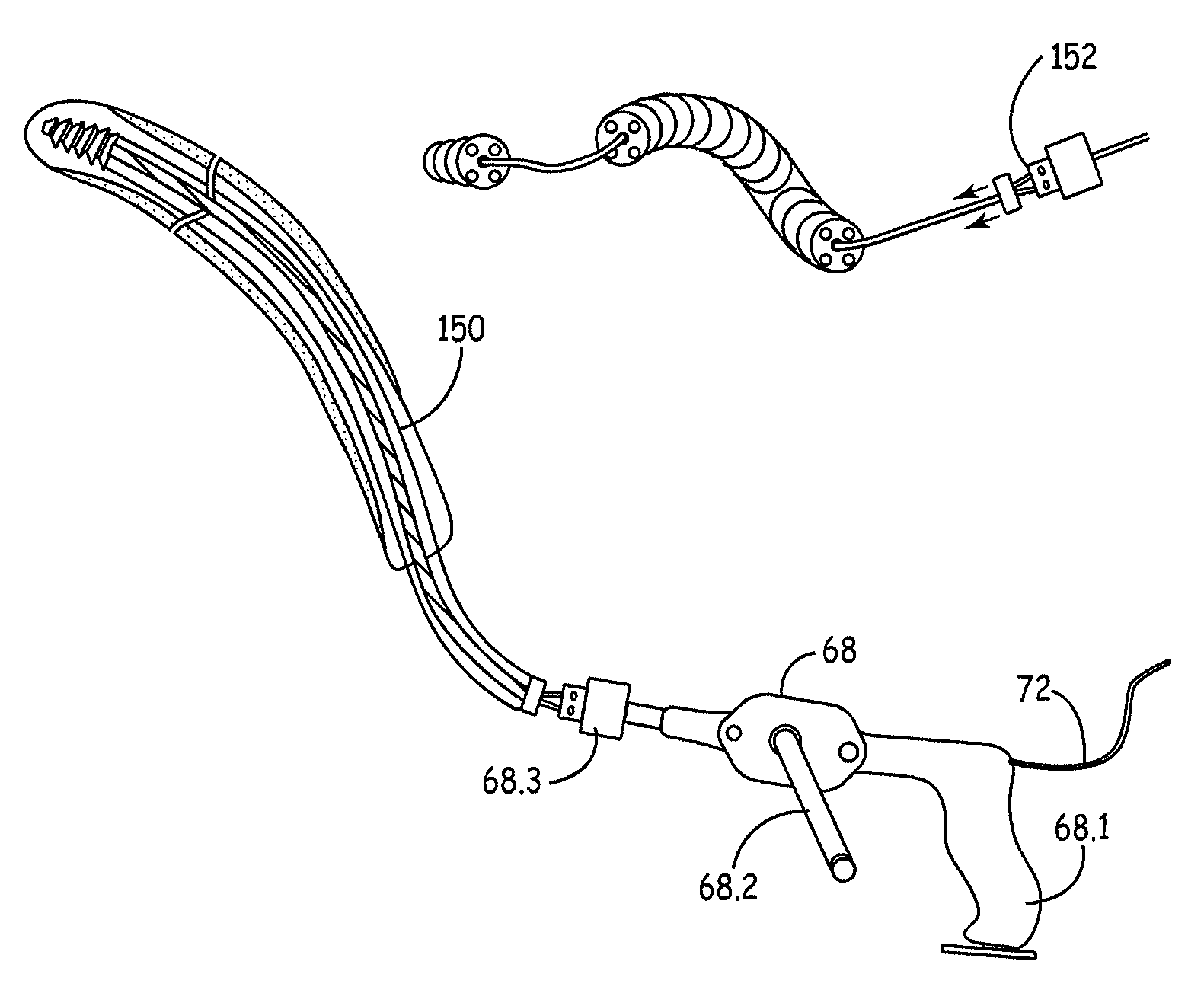
Figure 1 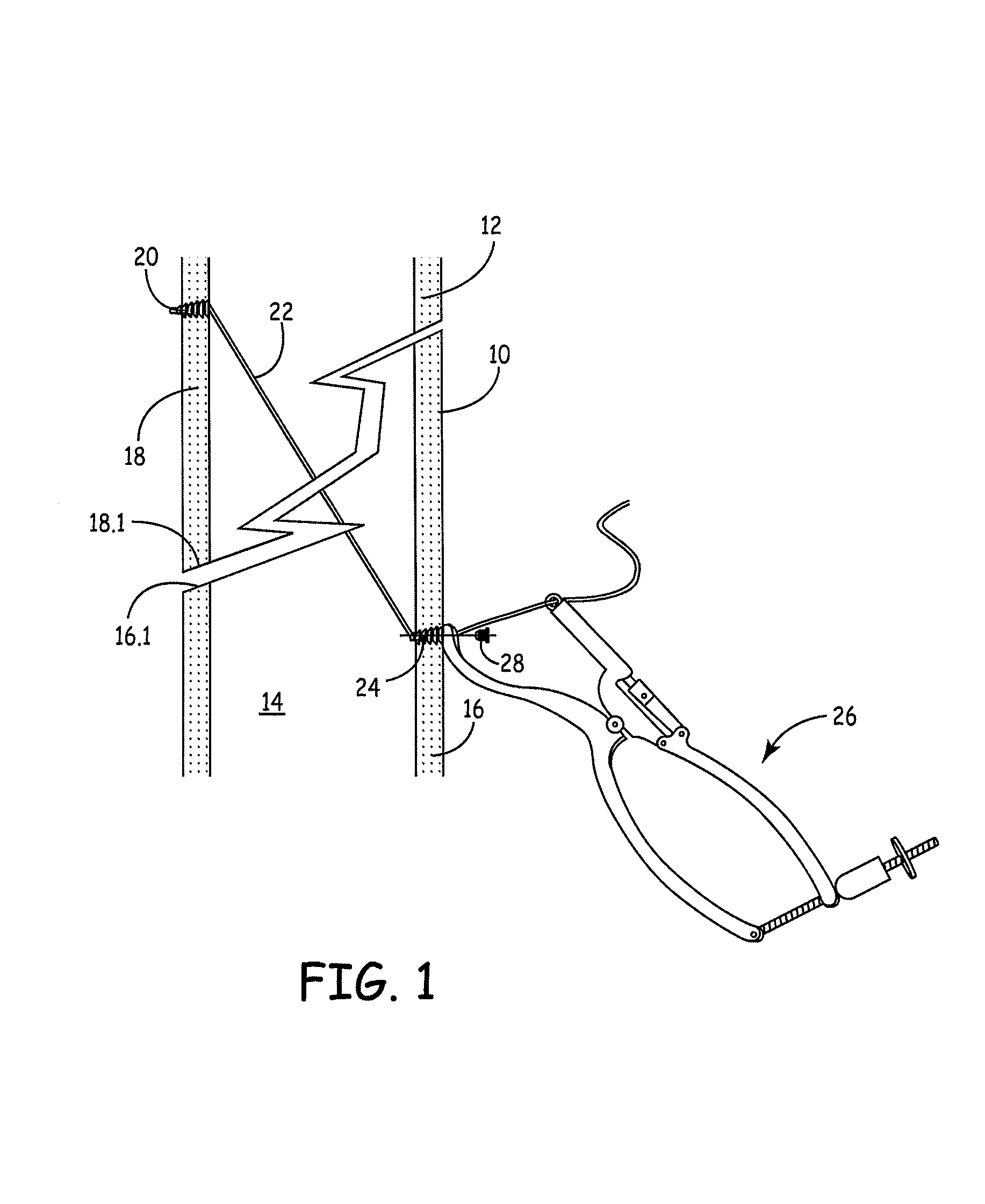
Figure 2 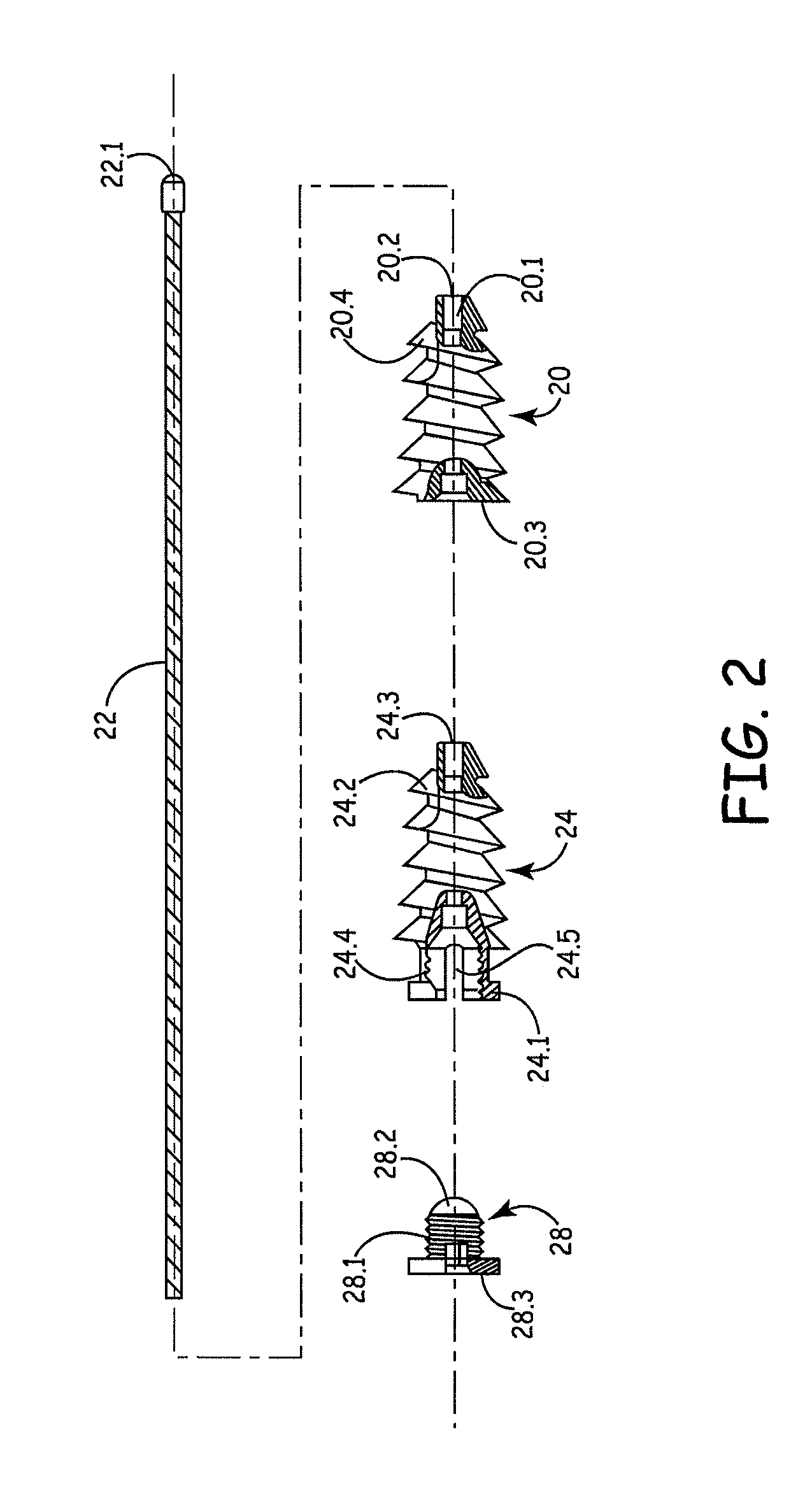
Figure 3
Abstract
Description
[0001] This is a continuation-in-part of U.S. patent application Ser. No. 10 / 115,446, filed Apr. 2, 2002, now abandoned, which is a continuation of U.S. patent application Ser. No. 09 / 162,036, filed Sep. 28, 1998, now U.S. Pat. No. 6,368,326.FIELD OF THE INVENTION
[0002] This invention pertains to the field of fixation devices for bones.BACKGROUND OF THE INVENTION
[0003] Simple fractures of bones are readily treated by bringing the fracture surfaces together and holding them in the desired orientation with respect to one another through the use of splints, casts and the like. Bones in general have dense outer, strong cortical portions and interior, non-cortical portions that may include cancellous bone.
[0004] Comminuted fractures and fractures involving the breakage of a bone into numerous bone fragments are especially difficult to deal with since one must attempt to reposition each bone fragment in an orientation relative to each other bone fragment such that the fragments may knit toget...
Examples
Embodiment Construction
[0050]As used herein, “cord” refers to any of a variety of materials that are strong in tension, inelastic, flexible, and biocompatible. If desired, the cord may be made of an organic suture material, or may be made from bioabsorbable materials such as poly (lactic acid). Preferably, however, the cord is made of a metal wire, such as in the form of a metal wire braid for improved flexibility. Stainless steel is an appropriate and preferred material. The cord is sufficiently flexible to substantially straighten within the bone interior when placed under sufficient tension to draw bone fragments together, that is, under a tension of about 5 or more newtons. The cord may be made of a single material or composite, or may include sections of different materials chosen for their particular properties such as strength, flexibility, and radiopacity to enable the cords to be readily visualized by fluoroscopy.
[0051]The cord of the present invention is sufficiently flexible as to exhibit subst...