
Glucose sensitive regulator of insulin transcription
a transcription regulator and insulin technology, applied in the field of glucose sensitive regulator of insulin transcription, can solve the problems of insufficient insulin production, inability to regulate transgenic insulin production, and difficult transfer of these regulatory mechanisms to in vivo models, so as to reduce protein catabolism, reduce protein catabolism, and reduce insulin production
Patent Information
- Authority / Receiving Office
- US · United States
- Patent Type
- Patents(United States)
- Current Assignee / Owner
- Publication Date
- 2010-09-07
- Estimated Expiration
- Not applicable · inactive patent
Smart Images
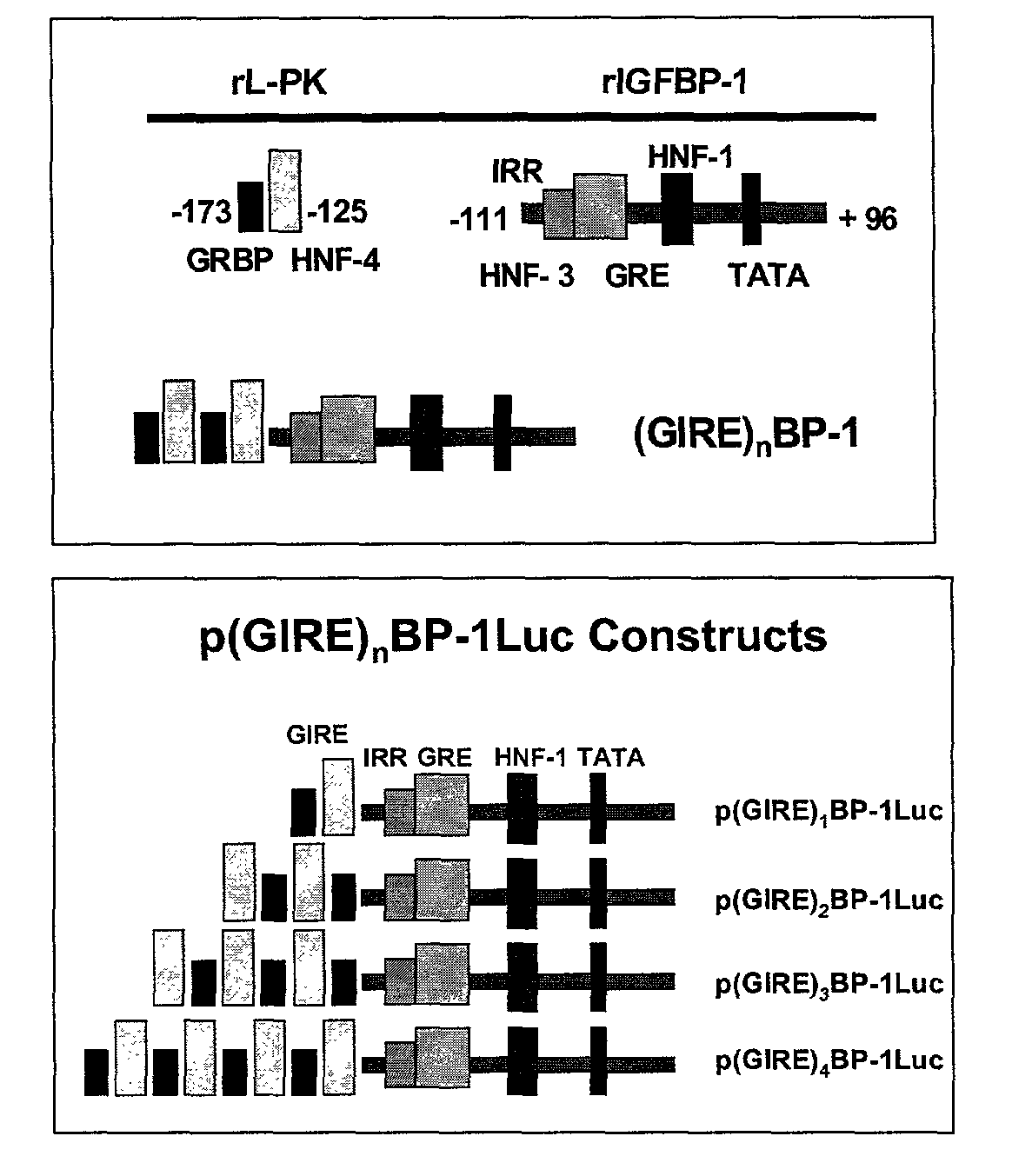
Figure 1 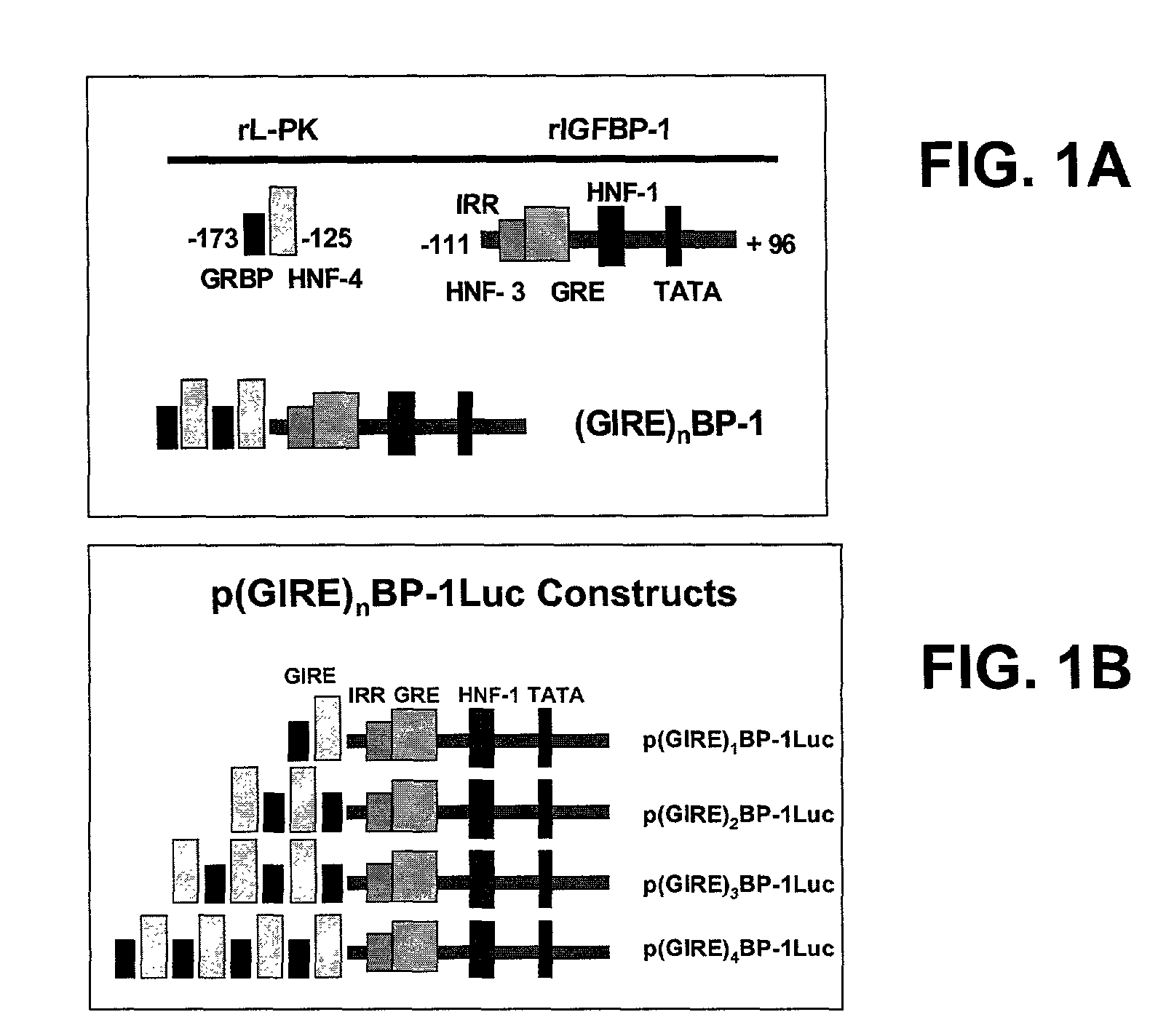
Figure 2 
Figure 3
Abstract
Description
CROSS-REFERENCE TO RELATED APPLICATIONS
[0001] The present application claims priority on prior U.S. Provisional Application Ser. No. 60 / 239,113, filed Oct. 11, 2000, and which is incorporated herein in its entirety by reference.REFERENCE TO SEQUENCE LISTING
[0002] The present application incorporates by reference a file named: US 1292-01 Replacement Sequence Listing 4-21-04, including SEQ ID NO.: 1, SEQ ID NO.: 2, SEQ ID NO.: 3, SEQ ID NO.: 4, SEQ ID NO.: 5, SEQ ID NO.: 6, SEQ ID NO.: 7, SEQ ID NO.: 8, SEQ ID NO.: 9, SEQ ID NO.: 10, SEQ ID NO.: 11, SEQ ID NO.: 12, SEQ ID NO.: 13, and SEQ ID NO.: 14 provided herewith on a diskette, created on Apr. 21, 2004 and containing 4,364 bytes. The information recorded on the diskette is identical to the written sequence listing provided herein.BACKGROUND OF THE INVENTION
[0003] Type 1 diabetes mellitus (DM) is usually precipitated by autoimmune destruction of pancreatic β-cells, leading to insufficient insulin production (Reference 1). Since clinic...
Examples
Embodiment Construction
[0048]We hypothesized that transcriptional regulation of transgenic insulin production would be feasible, but that to be successful, insulin expression should be restricted to a single tissue, must be sufficient to fulfill metabolic requirements, and must be sufficiently regulated to both avoid lethal hypoglycemia, and accommodate glucose loads. To satisfy these requirements, a family of chimeric promoters composed of the Insulin-like Growth Factor Binding Protein-1 (IGFBP-1) basal promoter, and multimers of the glucose response element (GIRE) of the liver-pyruvate kinase (L-PK) promoter, was designed and constructed. IGFBP-1 was chosen for an expression largely restricted to the liver, its robust production, and characteristics of its metabolic regulation (References 19-25).
[0049]The liver possesses a prodigious synthetic capacity, is readily accessible as a site for viral gene transfer, and is the first recipient of nutrient blood flow from the intestinal tract. This location prov...