
Compositions and methods for delivering an agent to a wound
a technology applied in the field of compositions and methods for delivering an agent to a wound, can solve the problems of pathogen entry and infection, complex open wounds are also prone to infection, and serious infections in the bone and associated tissues, so as to reduce the probability of developing a disorder
Patent Information
- Authority / Receiving Office
- US · United States
- Patent Type
- Patents(United States)
- Current Assignee / Owner
- Publication Date
- 2015-03-31
Smart Images
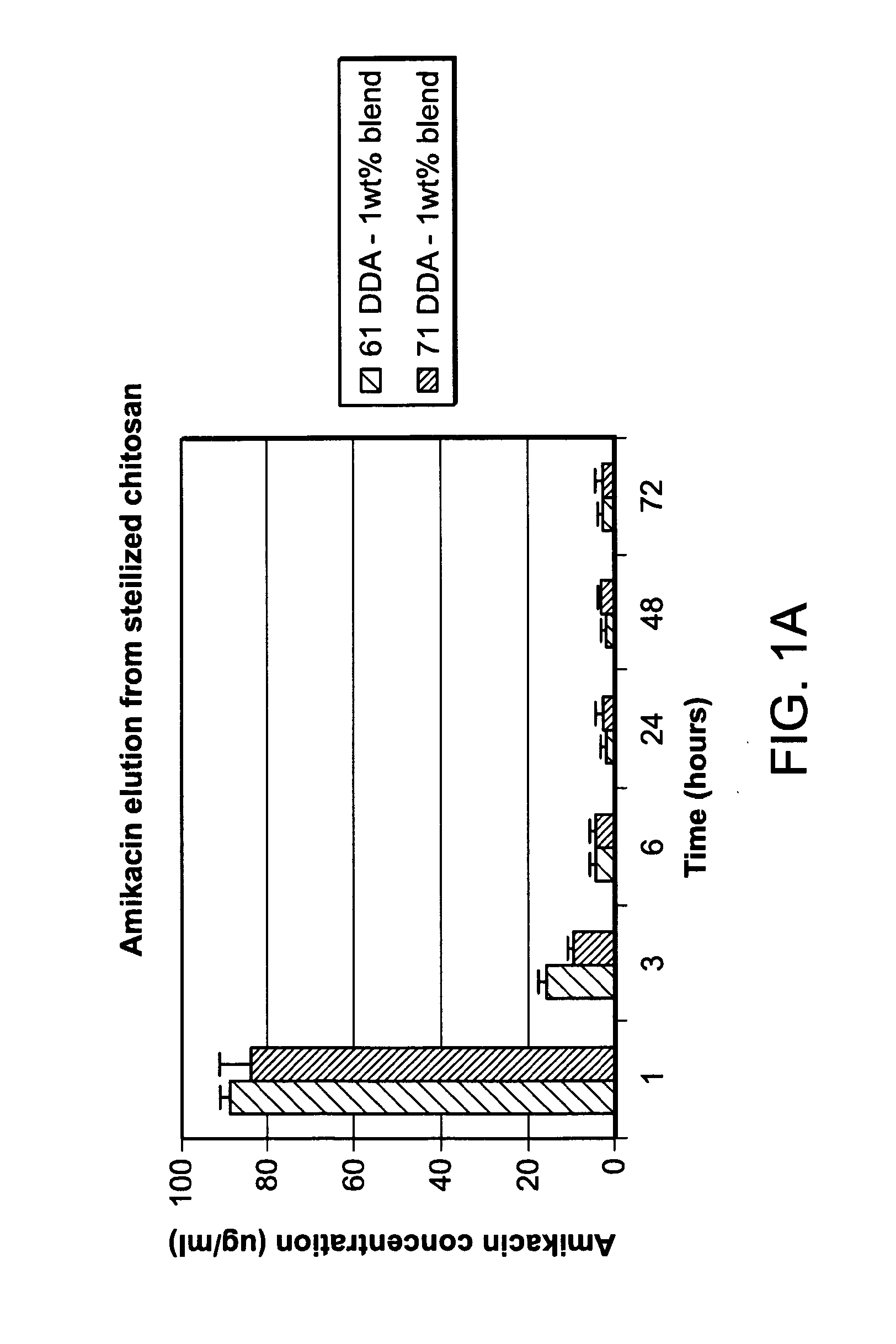
Figure 1 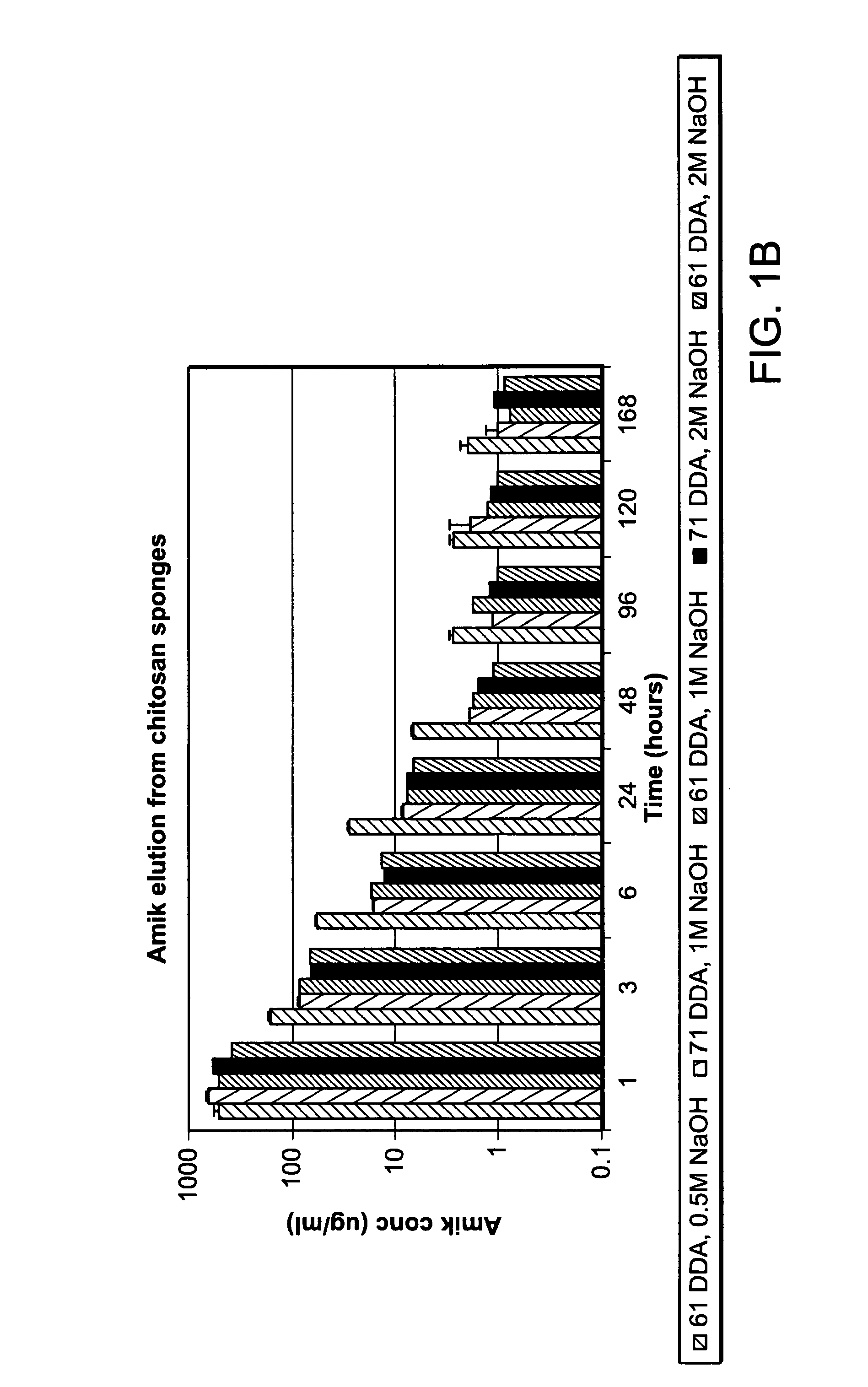
Figure 2 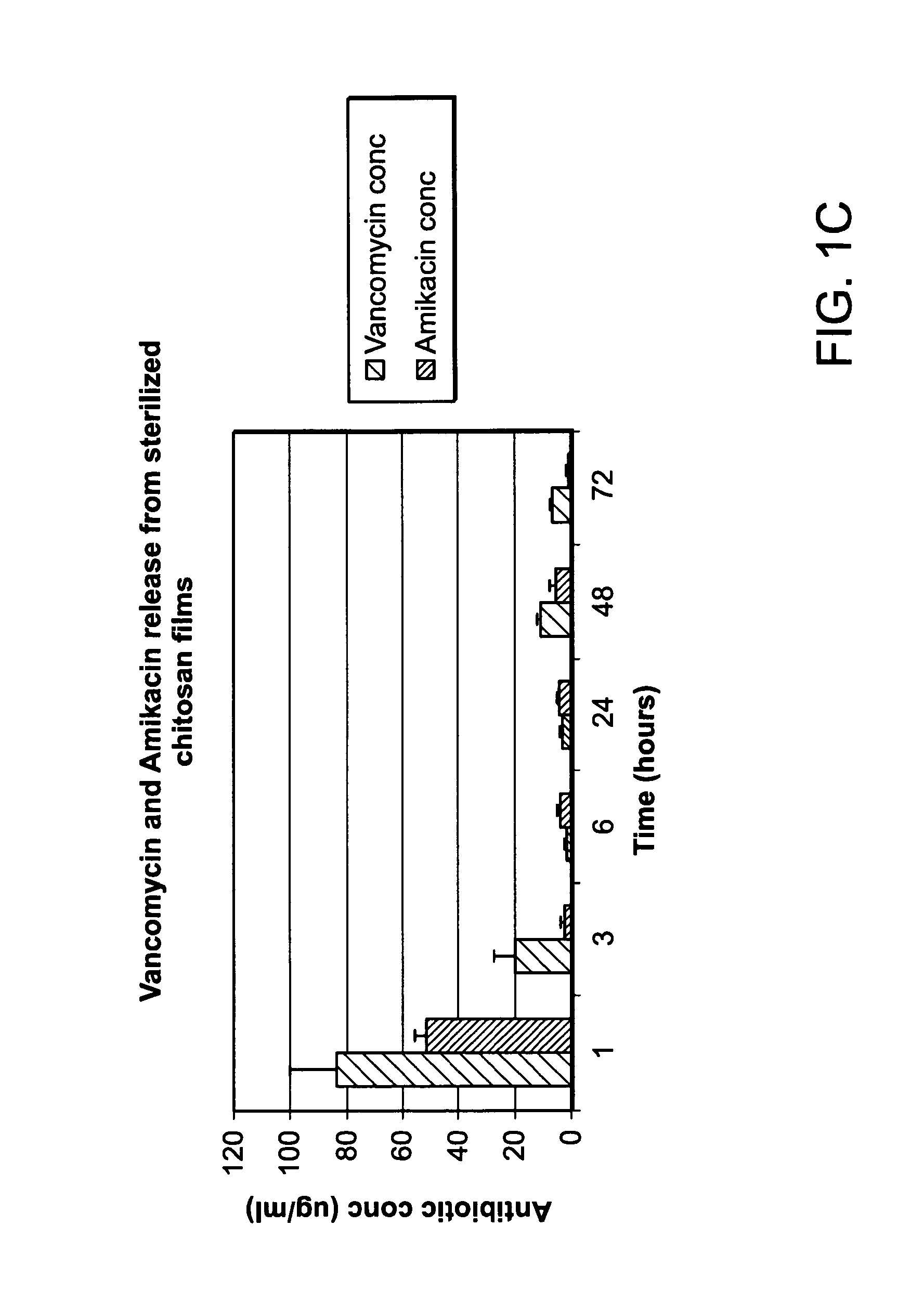
Figure 3
Abstract
Description
CROSS-REFERENCE TO RELATED APPLICATIONS
[0001] This application is a 35 U.S.C. §371 U.S. national entry of International Application PCT / US2010 / 027481 (WO 2010 / 107794) having an International filing date of Mar. 16, 2010 which claims the benefit of the following U.S. Provisional Application Ser. Nos. 61 / 160,539, filed Mar. 16, 2009, 61 / 171,805, filed Apr. 22, 2009, and 61 / 227,606, filed Jul. 22, 2009; the entire contents of each of which are incorporated herein by this reference.STATEMENT OF RIGHTS TO INVENTIONS MADE UNDER FEDERALLY SPONSORED RESEARCH
[0002] This work was supported by the following grants from the U.S. Army: AMEDD Grant No. W81 XWH-080312. The government has certain rights in the invention.BACKGROUND OF THE INVENTION
[0003] The skin serves as an important barrier to infection. Any trauma that breaks the skin creates an opportunity for pathogen entry and infection. Open fractures are ideal sites for infection. Surgical site infections in closed fractures range from 3.6-8.1...
Examples
example 1
Antibiotic Delivery by a Chitosan Sponge Inhibited Bacterial Growth
[0147]There is a need for a biocompatible, resorbable carrier for use in contaminated extremity injuries that can be custom loaded with therapeutic agents based on the suspected bacterial species in a wound. Non-restrictive loading could potentially reduce bacterial colonization by orders of magnitude and reduce infection rates and loss of functionality in limbs in compromised patients with contaminated wounds. The following results indicate that lyophilized chitosan sponges are useful as a carrier for antibiotics. Such sponges may be used alone or as an adjunctive therapy to standard irrigation and debridement for orthopaedic trauma and other musculoskeletal applications.
[0148]A sponge containing 61 and 71% deacetylated (DDA) chitosan was loaded with the antibiotic amikacin. Amikacin release at one hour was found to be 88.7±2.4 μg / ml and 83.7±7.3 μg / ml for the 61 and 71 DDA samples, respectively. Amikacin was eviden...
example 2
Chitosan Compositions Comprising Antibiotics that Inhibited Infection In Vivo
[0152]Chitosan sponges (FIGS. 2A-2C) were loaded with antibiotic. The antibiotic elution profile is provided at Table 1.
[0153]
TABLE 1Results of the amikacin elution study performed with sterilized chitosan sponges using the finalizedmethodology in sponge fabrication. Sample / 1 hr3 hr6 hr24 hr48 hr72 hr Time(μg / ml) (μg / ml)(μg / ml)(μg / ml)(μg / ml)(μg / ml)140040020010010010024004001002001001003400400100200100100All values listed are in μg / ml. All samples were drawn from 20 ml of 1 × PBS (complete refreshment of solution was done at each timepoint).
[0154]Agent elution from chitosan sponges loaded with the antibiotics amikacin, vancomycin, and daptomycin was analyzed in parallel (FIG. 17). As shown in FIG. 17, profiles for amikacin and vancomycin release was similar throughout the duration of the study whereas daptomycin release was significantly less than the other two tested antibiotics at the 72 hour time point. A...
example 3
Chitosan Films Maintain Mechanical Integrity after Re-Hydration
[0171]The following study shows that chitosan films can be used as an adaptable implant for musculoskeletal wound infection prevention or treatment. Dehydrated chitosan film absorb antibiotics and elute drugs over time. Chitosan films also biodegrade in the body. The results provided below show that a chitosan drug delivery device can be customized by a clinician through in situ antibiotic loading. Such compositions maintain rehydrated mechanical integrity.
[0172]During in situ loading the chitosan film absorbs antibiotics through rehydration. In one embodiment, antibiotic loading is carried out in an operating room or other clinical setting, immediately prior to implantation. This allows a clinician to tailor the drug delivery device to the patient's need through antibiotic choice and concentration. These properties allow for chitosan's use in infected musculoskeletal wound treatment. As shown herein, use of the device p...