
Ship hull sectional turn-over method and special-purpose rolling rack
A roll cage and hull technology, applied in ship parts, ship construction, ships, etc., can solve the problems of small segment division, segmental or segmental partial structure wrinkle, poor safety, etc. Good quality and stress state
- Summary
- Abstract
- Description
- Claims
- Application Information
AI Technical Summary
Problems solved by technology
Method used
Image

Examples
Embodiment Construction
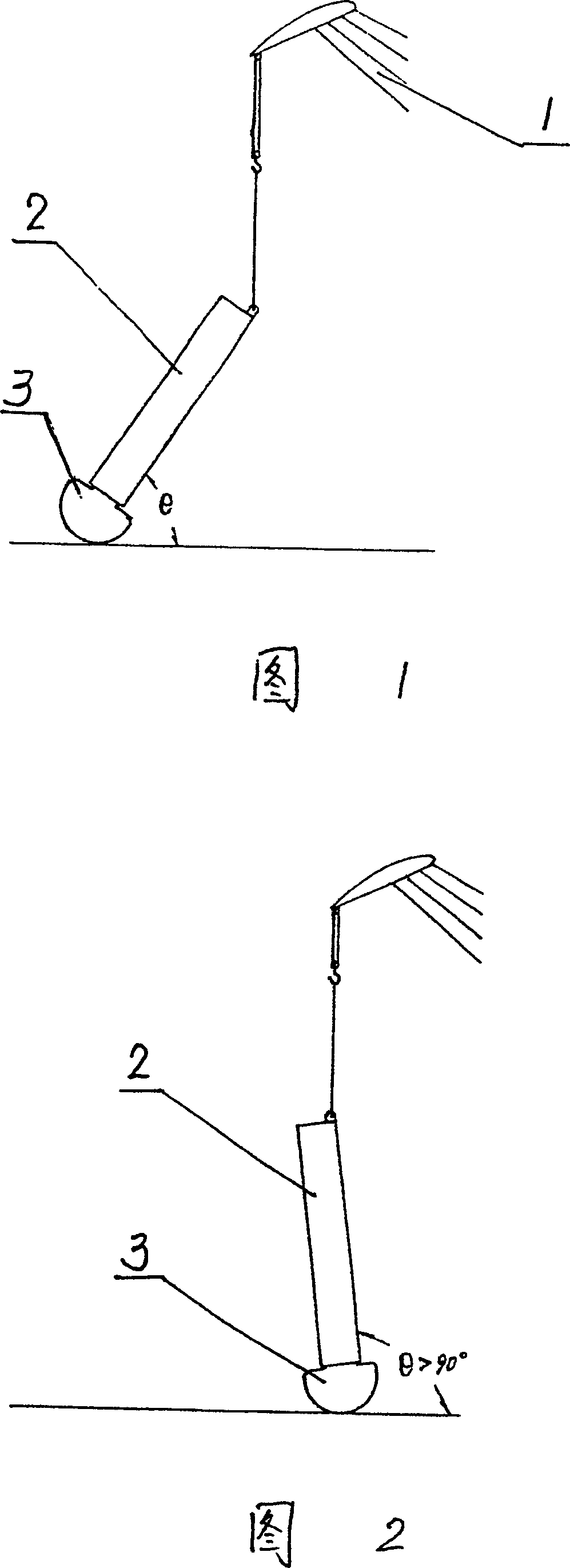
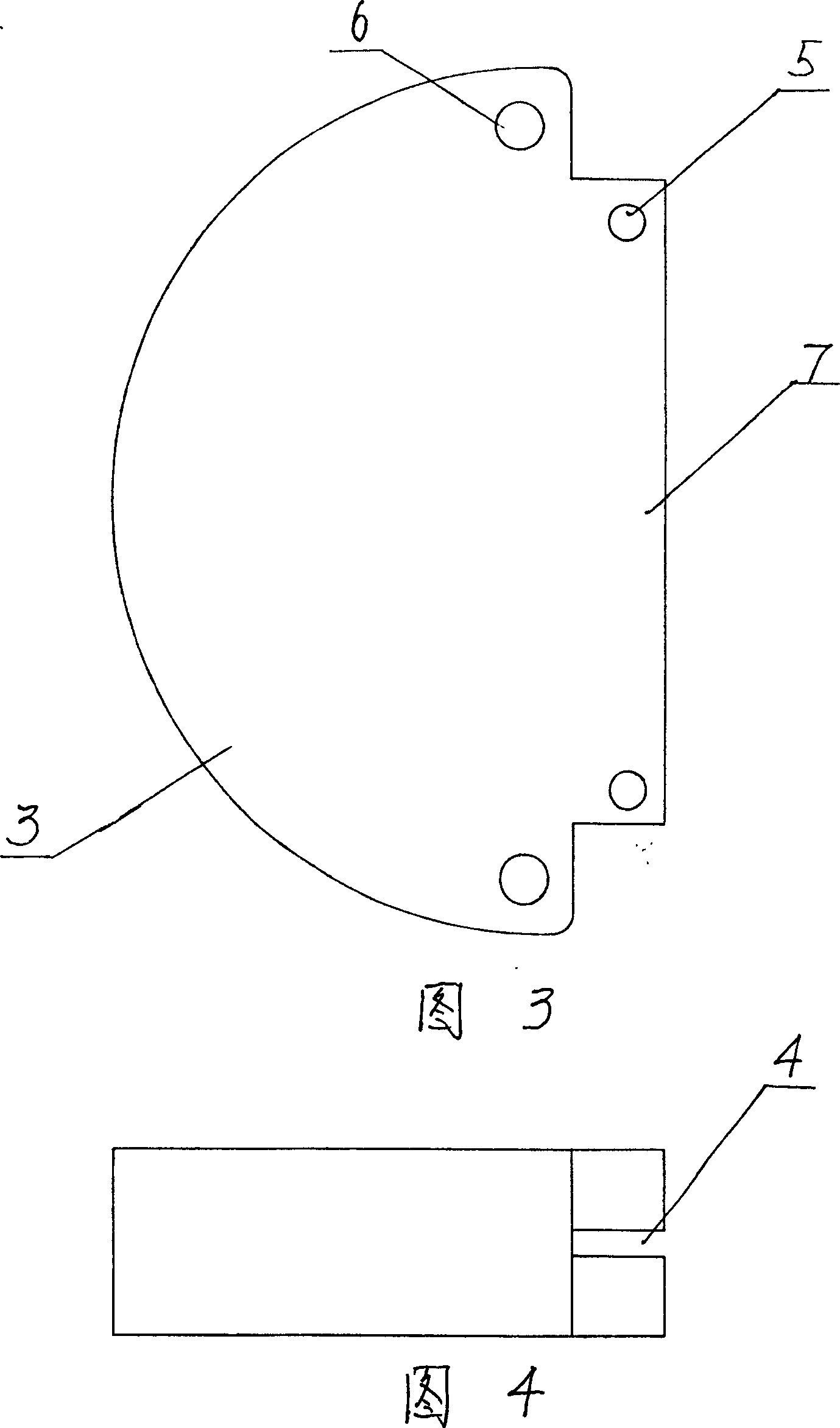
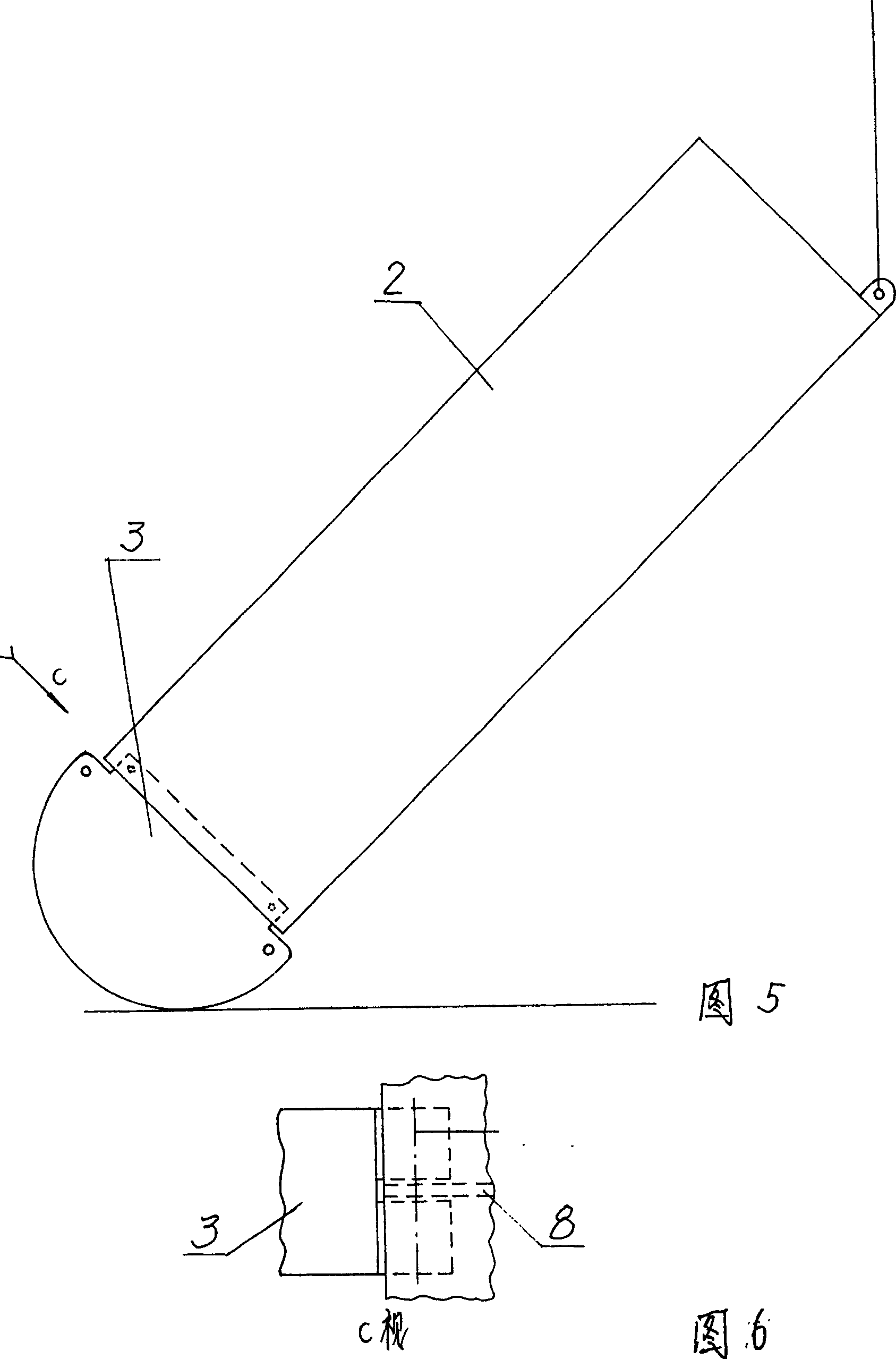
[0021] In the segmental overturning method of the hull of the present invention, at first two sides of one end of the segment 2 are respectively fixed with 3 roll racks with a 180° arcuate surface, and the axis of the arcuate roll rack needs to be parallel to the segmental overturning surface. And the chord where the arc is located is perpendicular to the longitudinal axis of the segment; Then lift the other end of the segment with the crane 1, as shown in Figure 1, at this moment the roller frame is supporting the segment and rolls on the ground; when θ=90° , the crane extends the boom forward (for the bridge crane, it moves the trolley in the direction of overturning), so that θ>90°, and the inclined state is formed in sections, as shown in Figure 2. At this time, as the cable is loosened by the crane, the section rolls to the other side with the roller frame under the action of gravity until the section is in a horizontal state, and the section turns over and ends.
[0022]...
PUM
 Login to View More
 Abstract
Description
Claims
Application Information
 Login to View More