
Digital picture obscurity enhancement method for anastomosing a plurality of blurring operators
A fuzzy enhancement and digital image technology, applied in the field of image processing, can solve the problems of image loss, low grayscale information, and inability to process, and achieve the effects of reducing calculation, overcoming uncertainty, and good visual effects
- Summary
- Abstract
- Description
- Claims
- Application Information
AI Technical Summary
Problems solved by technology
Method used
Image

Examples
Embodiment
[0037] Taking the input of a color image (in three channels of R, G, and B) as an example, the specific implementation of the present invention will be described below.
[0038] Carry out the fuzzy enhancement of image in the following steps in this embodiment:
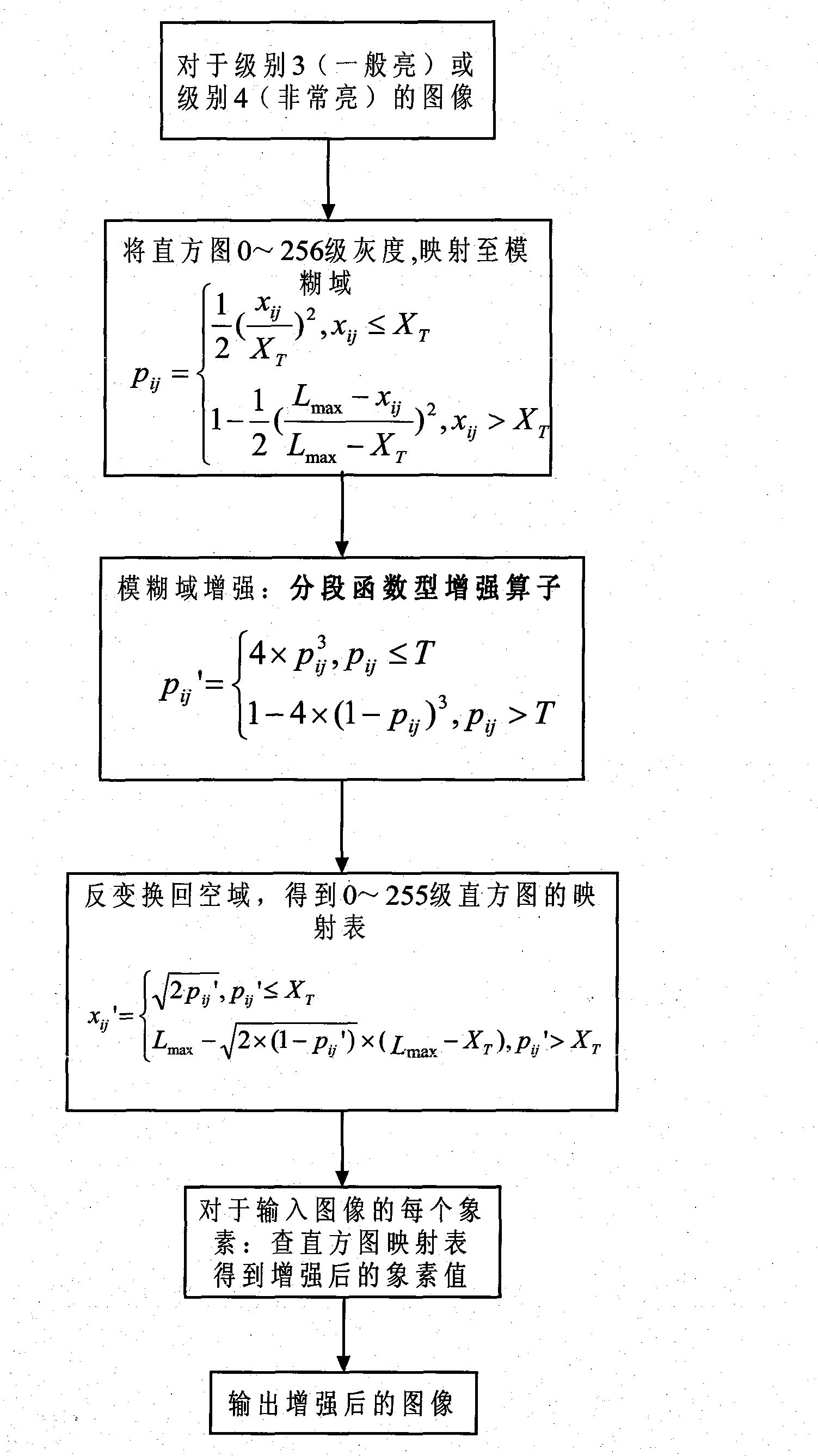
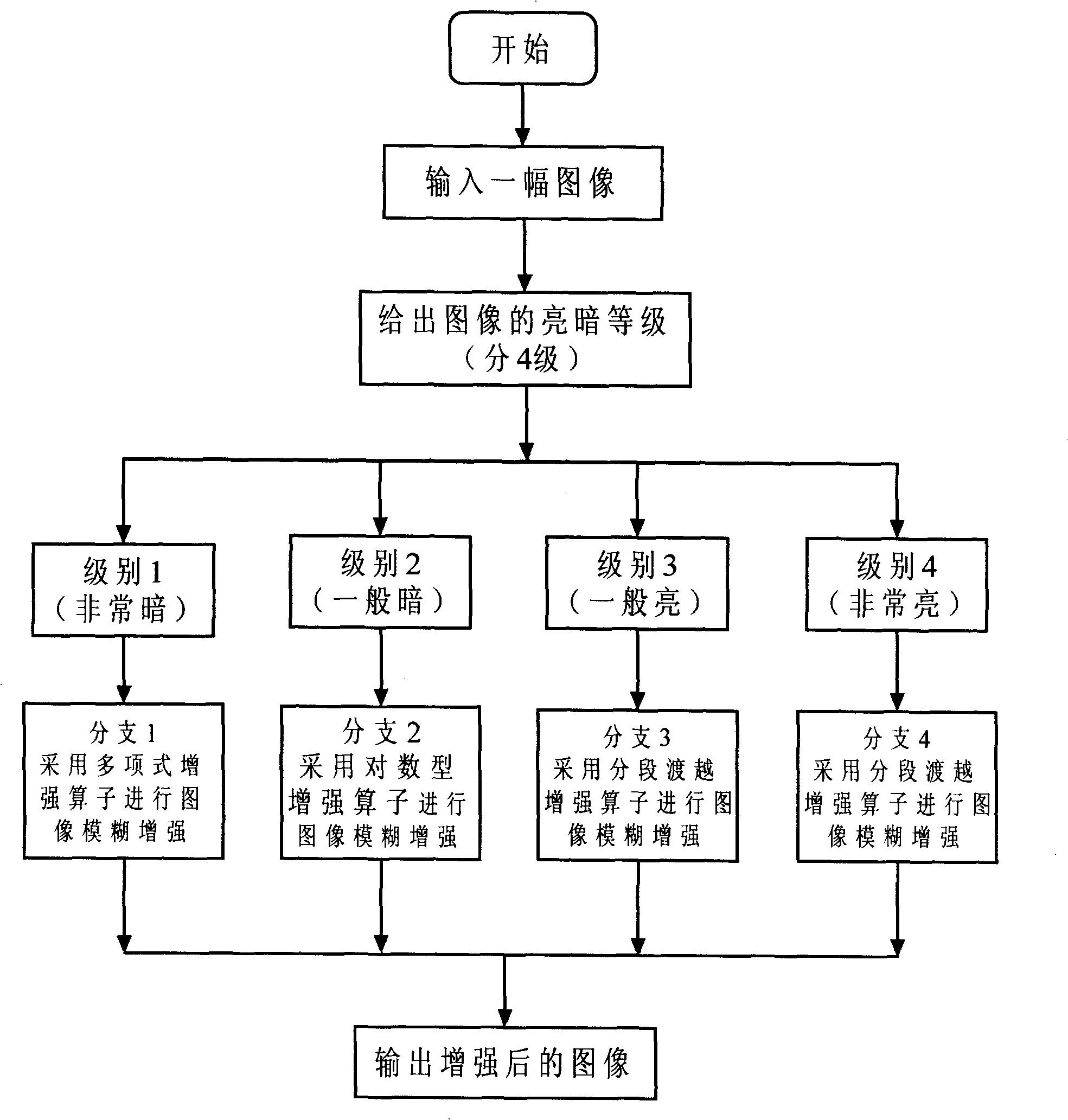
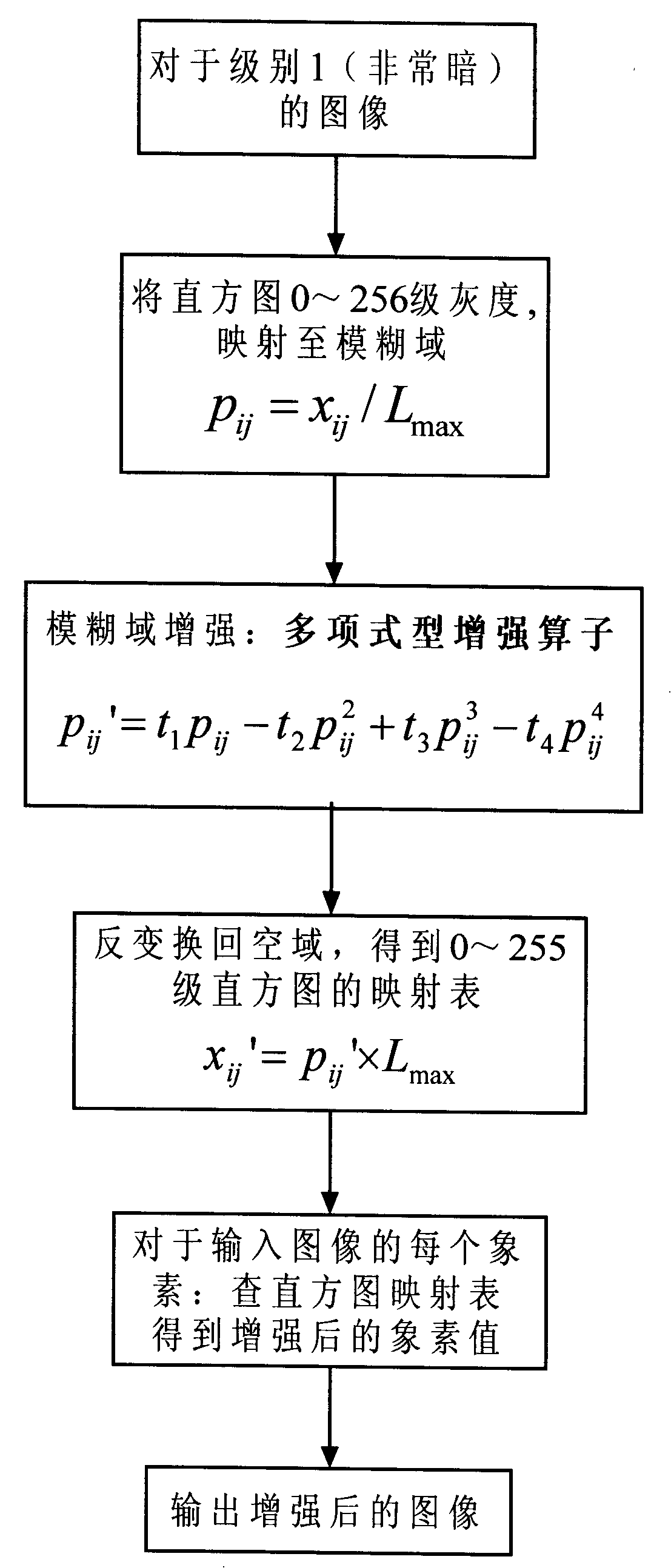
[0039] Step 1: Determine the overall brightness level of the image. This step can be provided after the image to be enhanced is observed by human eyes, or can be given by a statistical analysis method (such as by calculating the size of the average brightness of the image, if the average brightness is small, it is considered dark, and if the average brightness is large, it is considered brighter) is given. Divide the brightness and darkness of the image into four levels (levels 1 to 4 represent the levels from dark to bright, level 1 is very dark, level 2 is generally dark, level 3 is generally bright, level 4 is very bright ), where grades 1 to 2 are for darker images, and grades 3 to 4 are for brighter images. As...
PUM
 Login to View More
 Abstract
Description
Claims
Application Information
 Login to View More