
Pilot resource distribution method, system and equipment
A technology of resource allocation and resource allocation mode, applied in the field of pilot resource allocation
- Summary
- Abstract
- Description
- Claims
- Application Information
AI Technical Summary
Problems solved by technology
Method used
Image

Examples
Embodiment 1
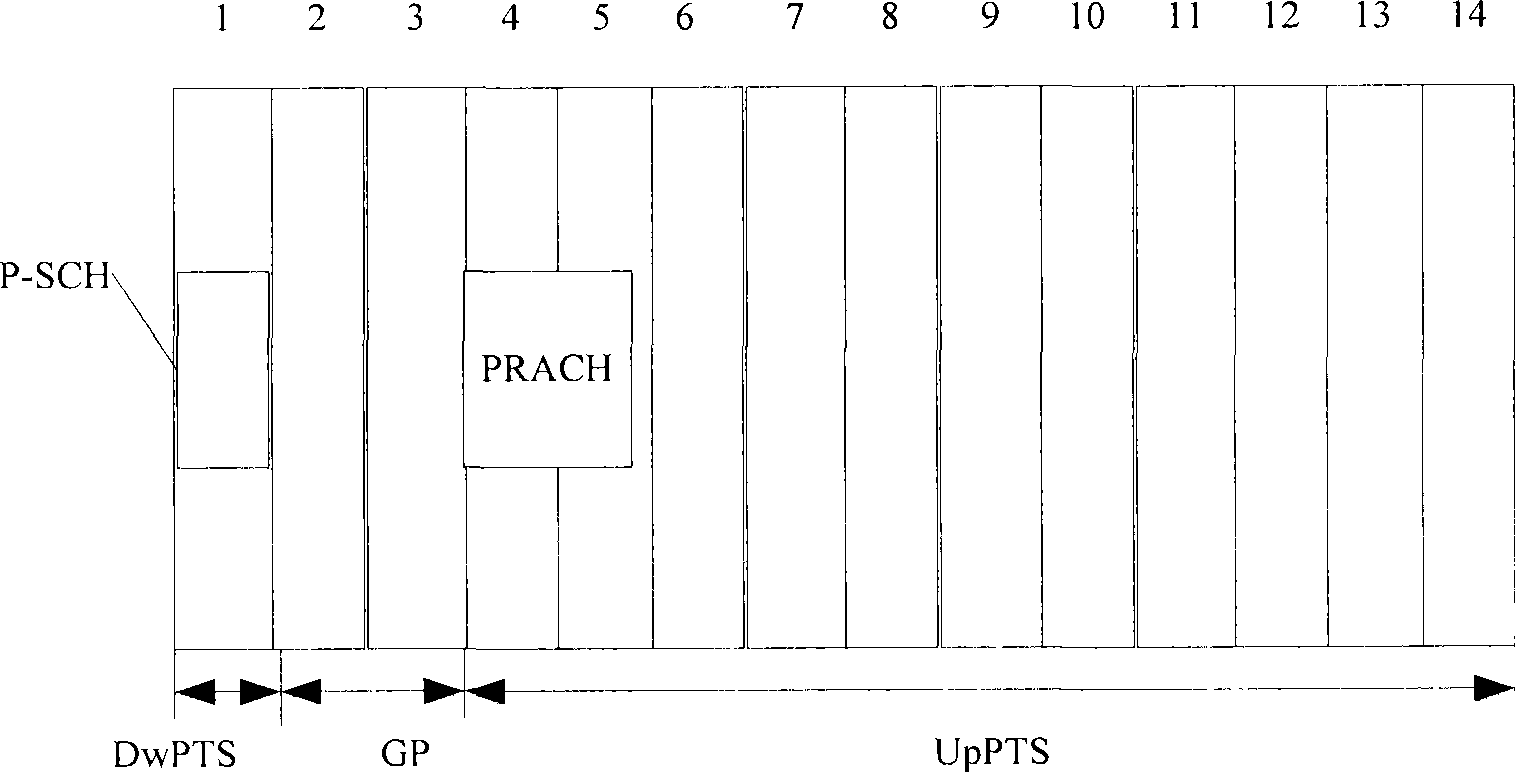
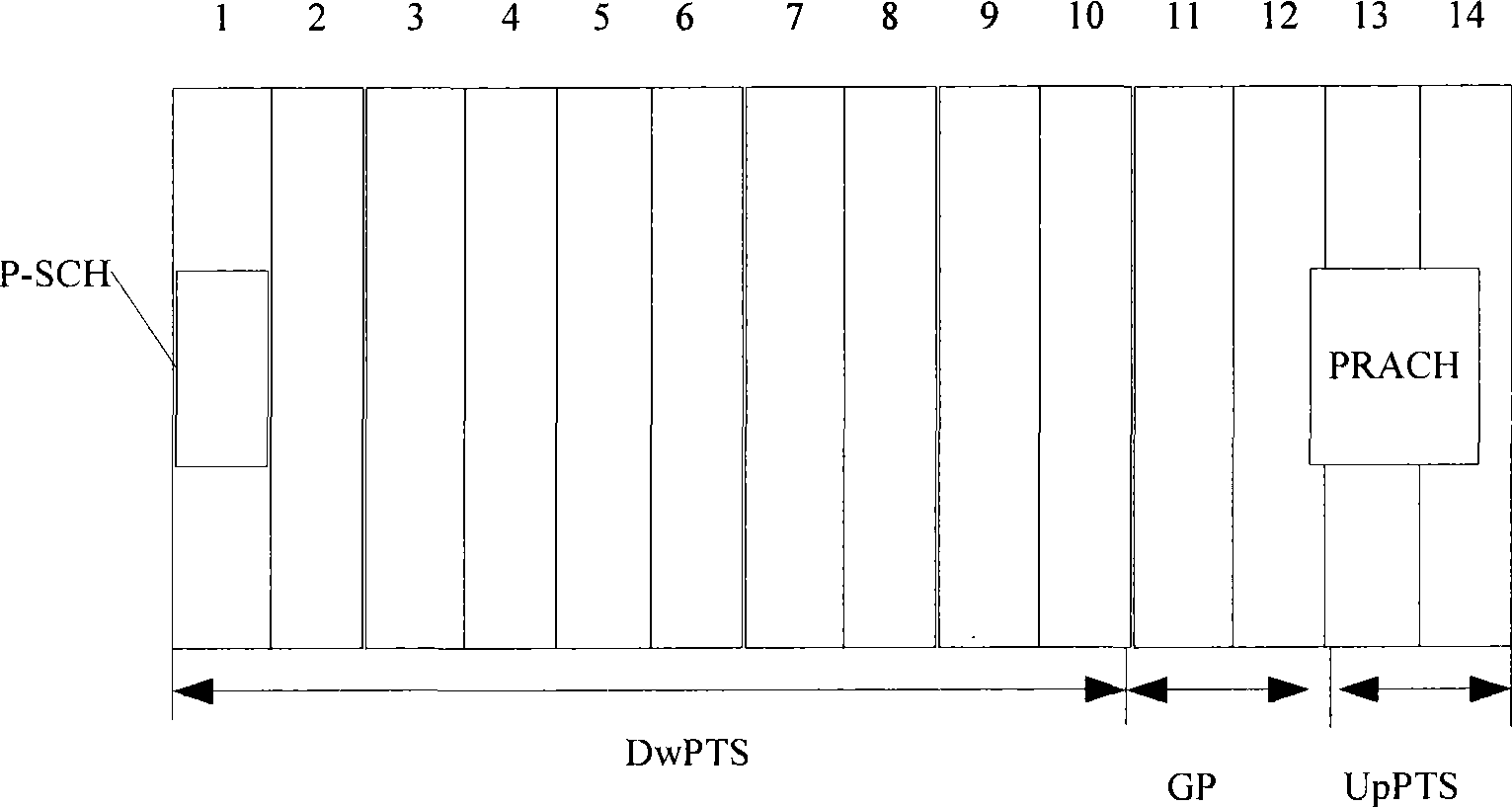
[0055] Use the uplink pilot resource allocation mode in the normal subframe to allocate the time-frequency resources in the UpPTS to the uplink pilot, that is, allocate forward from the last SC-FDMA symbol of the UpPTS, and in the case of a short CP, use 7 SCs -FDMA symbol is one cycle, such as Figure 3a As shown, in this cycle, the fourth SC-FDMA symbol is allocated to the uplink pilot. In the case of long CP, 6 SC-FDMA symbols are used as a cycle, such as Figure 3b As shown, in this period, the third SC-FDMA symbol is allocated to the uplink pilot until the first SC-FDMA symbol of the UpPTS. For example, in the case of a short CP, when the length of the UpPTS is 7, the time-frequency resource allocation status of the UpPTS is as follows: Figure 4a As shown, the PRACH is allocated in the first two SC-FDMA symbols of the UpPTS, and the fourth SC-FDMA symbol of the UpPTS is allocated to the uplink pilot.
[0056] In this embodiment, when the length of the UpPTS is 6 to 10 ...
Embodiment 2
[0063] Allocate other configured time-frequency resources in the UpPTS except the time-frequency resources occupied by the PRACH to the uplink pilot. This distribution method can include the following situations:
[0064] First, when time-frequency resources are not allocated to PRACH, allocate the time-frequency resources occupied by any one or more configured SC-FDMA symbols in the UpPTS to the uplink pilot, and use the system message to assign the result sent to the mobile terminal. This way works for UpPTS of any length. For example, in the case of a short CP, if the length of the UpPTS is 2, it can be set to allocate the time-frequency resource occupied by the first SC-FDMA symbol in the UpPTS to the uplink pilot, such as Figure 4b shown.
[0065] If the mobile terminal knows from the system message sent by the base station that no PRACH is set in the UpPTS, it can send the uplink pilot within the time-frequency resource occupied by any one of the set SC-FDMA symbols ...
PUM
 Login to View More
 Abstract
Description
Claims
Application Information
 Login to View More