
Method, system and SIP entity for overload processing
A processing method and processing system technology, applied in transmission systems, digital transmission systems, using return channels for error prevention/detection, etc., can solve problems such as failure to respond, and achieve the effect of strong flexibility
- Summary
- Abstract
- Description
- Claims
- Application Information
AI Technical Summary
Problems solved by technology
Method used
Image

Examples
Embodiment Construction
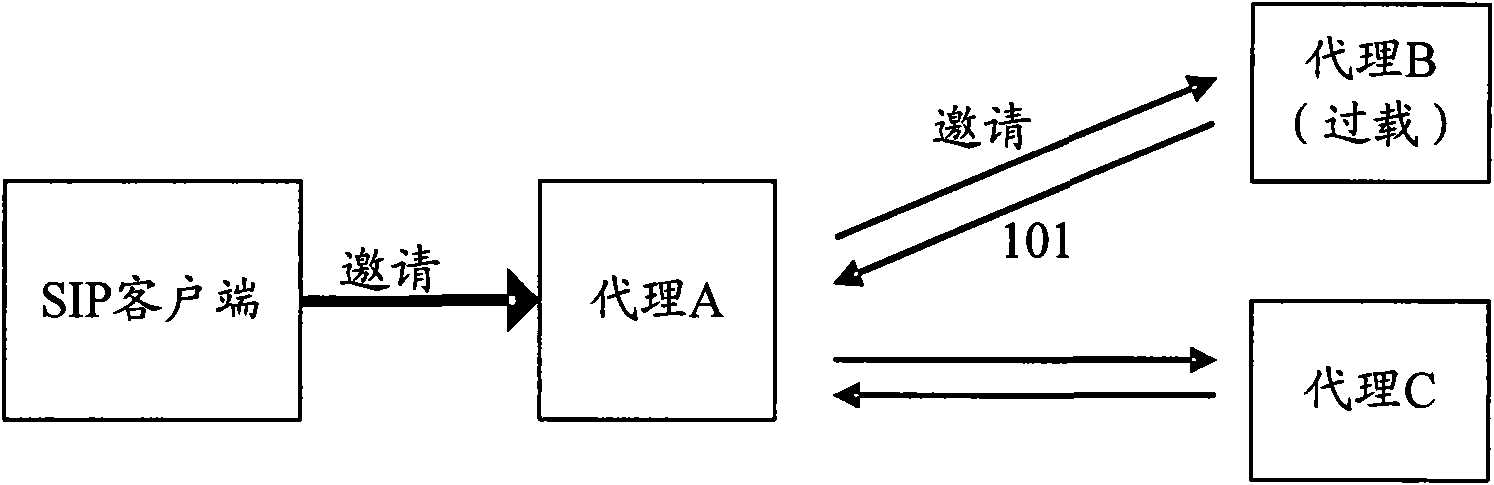
[0031] In the network architecture, the entities in the system need resources to process the received request / response messages, and the system overload often refers to the situation that the current resources cannot or are not enough to process the received request or response messages; when Overload also occurs in a SIP network when functional entities in the SIP network cannot process SIP requests or responses.
[0032] There are two main types of overload: one is server overload, which is overloaded because the server cannot process the messages it receives, or is unable to receive messages because the server is busy with other processing processes, resulting in overload; the other is network overload, which is caused by insufficient network bandwidth , cannot process messages, for example, if the network bandwidth is 256Kbps, but actually needs 2Mbps, then a large number of information packets will be discarded in the network, which is similar to the SIP messages in the SI...
PUM
 Login to View More
 Abstract
Description
Claims
Application Information
 Login to View More