Method based on wireless network interface selection to improve a smart phone user experience

A wireless interface, smart phone technology, applied in the field of enhancing smart phone user experience, can solve problems such as only considering optimization strategies, high power consumption and tariffs

CN102209369AInactive Publication Date: 2011-10-05BEIHANG UNIV
3 Cites 6 Cited by

Patent Information

Authority / Receiving Office
CN · China
Patent Type
Applications(China)
Current Assignee / Owner
Publication Date
2011-10-05
Estimated Expiration
Not applicable · inactive patent

Smart Images

  • Figure 1
    Figure 1
  • Figure 2
    Figure 2
  • Figure 3
    Figure 3
Patent Text Reader

Abstract

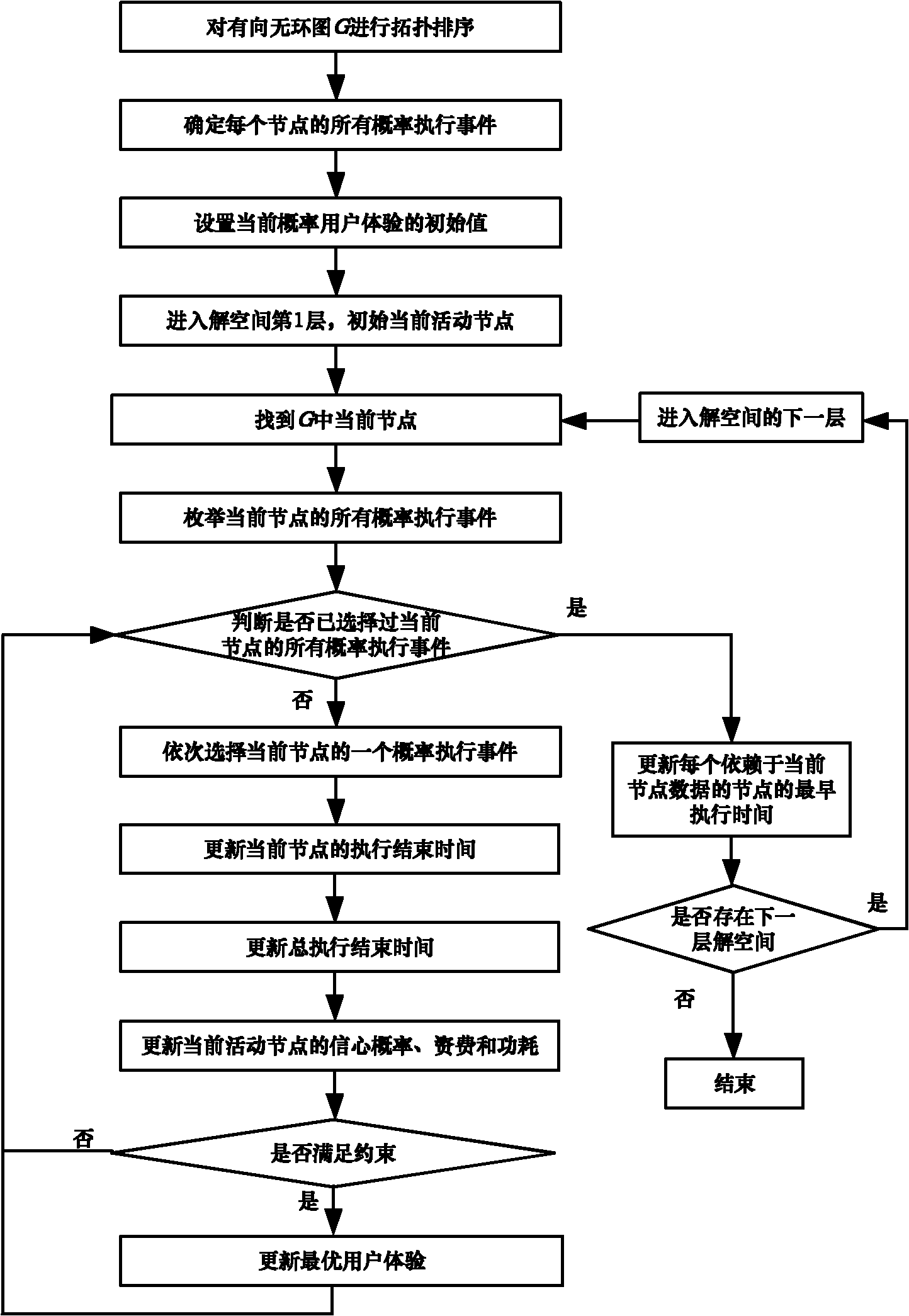
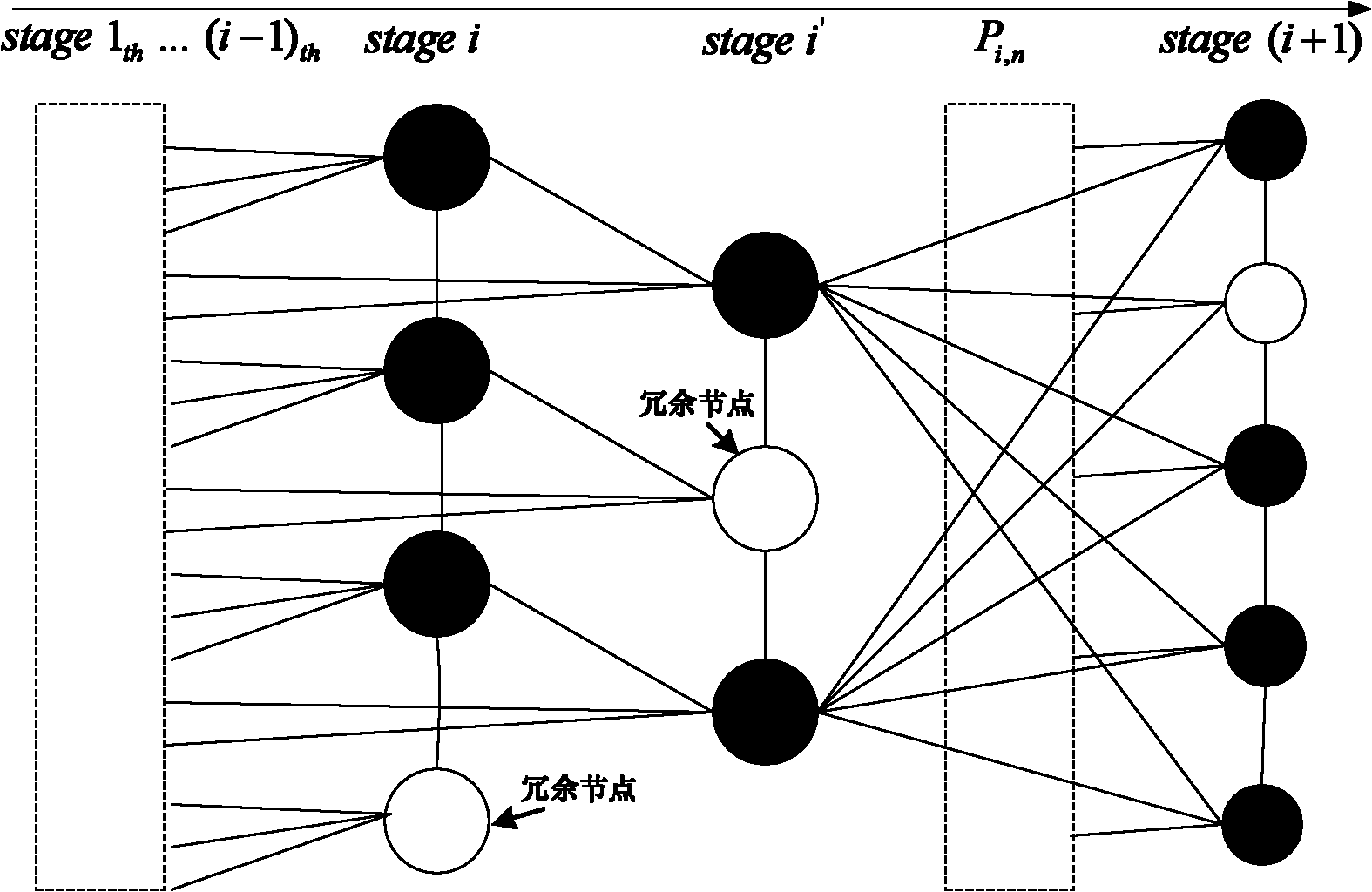
The invention brings forward a method based on a wireless network interface selection to improve a smart phone user experience. According to the invention, in view of the vehicle-mounted mobile situation, an optical user experience is obtained by dynamically distributing a wireless network interface to an application node with data independence. Two solutions are brought forward in the invention. One solution is as follows: enumerating all probability execution events of an application node by carrying out a depth-first search on a solution space; carrying out pruning based on constraints; and selecting a wireless network interface for each node to obtain an optical user experience; the other solution is as follows: decomposing a problem into a problem of a smaller subgraph by a dynamic programming; distributing and determining a probability event for each node having a plurality of father nodes to avoid a conflict in selecting a wireless network interface; deleting a suboptimal solution and an infeasible solution by using a redundant node concept to obtain an optical user experience and a selection of a wireless network interface of each node. According to the invention, a good user experience can be obtained; moreover, the user can set an experience parameter by himself / herself, so that more freedom and selection space are provided for the user.
Need to check novelty before this filing date? Find Prior Art

Description

technical field

[0001] The invention belongs to the communication field, and in particular relates to a method for enhancing user experience of a smart phone based on wireless network interface selection. Background technique

[0002] In the information age, every smartphone is a handheld mobile terminal that constantly receives and sends data. At the same time, mobile users expect an optimal user experience characterized by low latency, cheap wireless network service, and low power consumption. However, in reality, the performance of smartphones is affected by many factors such as wireless signal attenuation, power management strategies, and environmental conditions. In order to improve user experience and meet real-time requirements, existing research emphasizes the realization of wireless network self-interface adaptive technology: by detecting the current wireless network environment or predicting the current network status based on past wireless data, dynamic Select t...

Examples

Embodiment Construction

[0048] specific implementation

[0049] The content of the present invention will be further described in detail below in conjunction with the accompanying drawings and embodiments.

[0050] The method of the present invention is applicable to the application scenario of a group of data-dependent mobile smart phones in the case of vehicle movement, and dynamically allocates wireless network interfaces to quickly respond to user requests in a time-varying wireless network with relatively small tariffs and power consumption , in order to provide users with the best user experience. A group of data-dependent mobile applications in the application scenario can be represented by DAG (Directed Acyclic Graph), and then the problem of enhancing the user experience of smartphones in the actual application scenario is transformed into how to minimize the mobile application process in the entire DAG execution time. According to whether the execution time of each application process in ...