Method for uniformly allocating time slots of MF-TDMA (Multi-Frequency Time Division Multiple Access) system based on minimum mean square error rule

A MF-TDMA, minimum mean square error technology, applied in the field of uniform time slot allocation in MF-TDMA systems, can solve the problem of reducing service delay and achieve the effect of reducing service delay

CN104684088AActive Publication Date: 2015-06-03成都国恒空间技术工程股份有限公司
5 Cites 2 Cited by

Patent Information

Authority / Receiving Office
CN · China
Patent Type
Applications(China)
Current Assignee / Owner
Publication Date
2015-06-03

Smart Images

  • Figure 1
    Figure 1
  • Figure 2
    Figure 2
  • Figure 3
    Figure 3
Patent Text Reader

Abstract

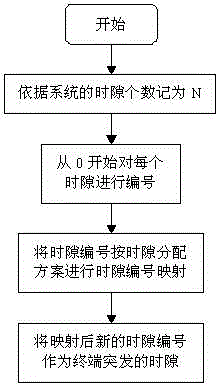
The invention discloses a method for uniformly allocating time slots of an MF-TDMA (Multi-Frequency Time Division Multiple Access) system based on a minimum mean square error rule. The method comprises the following steps: S1, determining the number N of the time slots according to the system; S2, numbering all the time slots from the beginning of 0; S3, mapping time slot numbers [0, N-1] according to a searched time slot allocation scheme; S4, taking mapped new time slot numbers as emergent time slots of a terminal. According to the method disclosed by the invention, levels are allocated at the positions of the time slots, so the allocation of the time slots in the MF-TDMA system is really and effectively realized, uniform allocation of the number of the time slots in any system can be finished, and the uniform allocation of the time slots when the number of the time slots in the system is nth power of an integer except 2 can be finished; in addition, service delay can be effectively reduced, and better time delay and time delay jitter performances are obtained.
Need to check novelty before this filing date? Find Prior Art

Description

technical field

[0001] The invention relates to an MF-TDMA system uniform time slot allocation method based on the minimum mean square error criterion. Background technique

[0002] In a wireless communication system using MF-TDMA technology, all terminals share wireless link resources, and the system allocates certain wireless transmission resources (that is, time slots) for each user to transmit data. The result is expressed in the number of allocated slots per frame. The terminal can only send data in a burst mode on the time slot allocated to it in each MF-TDMA frame. When a data packet arrives at a terminal, it must wait until the beginning of a time slot allocated for the terminal before sending data. Time slot allocation is an important task of the MF-TDMA system, and it is an important factor that affects service delay, delay jitter performance and overall system performance (radio resource utilization, etc.), especially for voice, etc. High real-time business eff...

Examples

Embodiment Construction

[0018] The technical solution of the present invention will be further described below in conjunction with the accompanying drawings, but the content protected by the present invention is not limited to the following description.

[0019] like figure 1 Shown, the MF-TDMA system uniform time slot allocation method based on the minimum mean square error criterion, it comprises the following steps:

[0020] S1: The number of time slots determined according to the system is recorded as N;

[0021] S2: Number each time slot starting from 0, that is, [0, N-1];

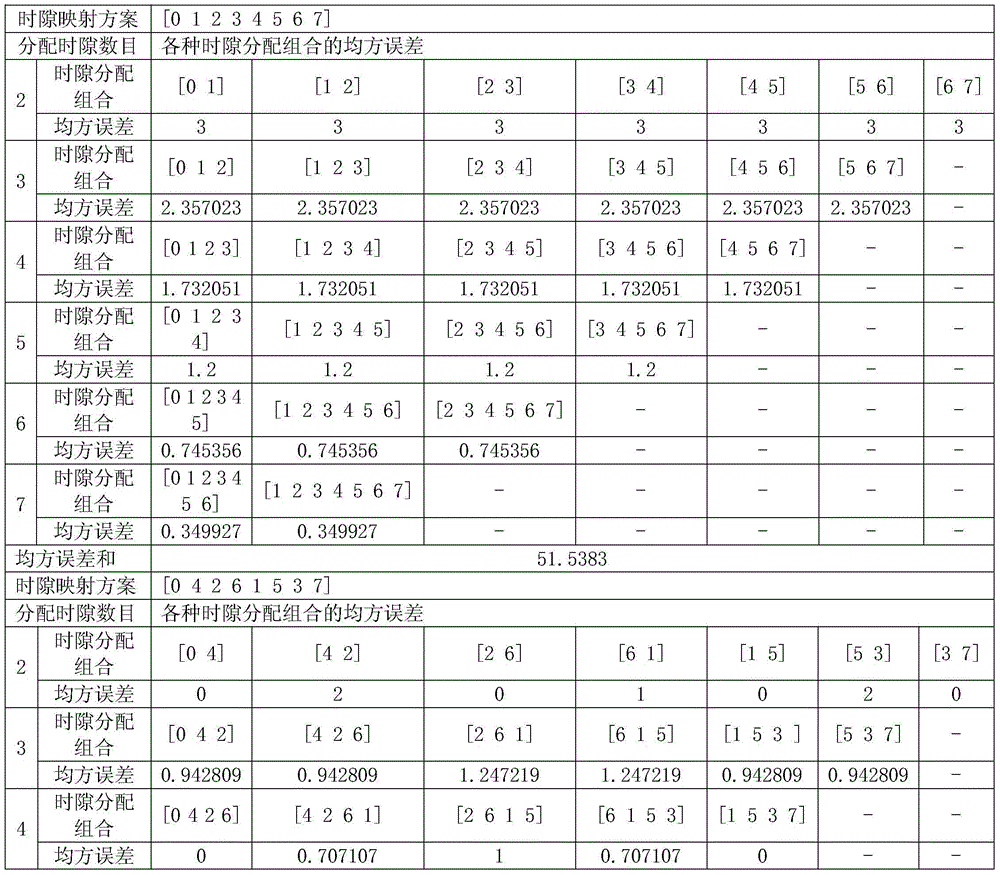
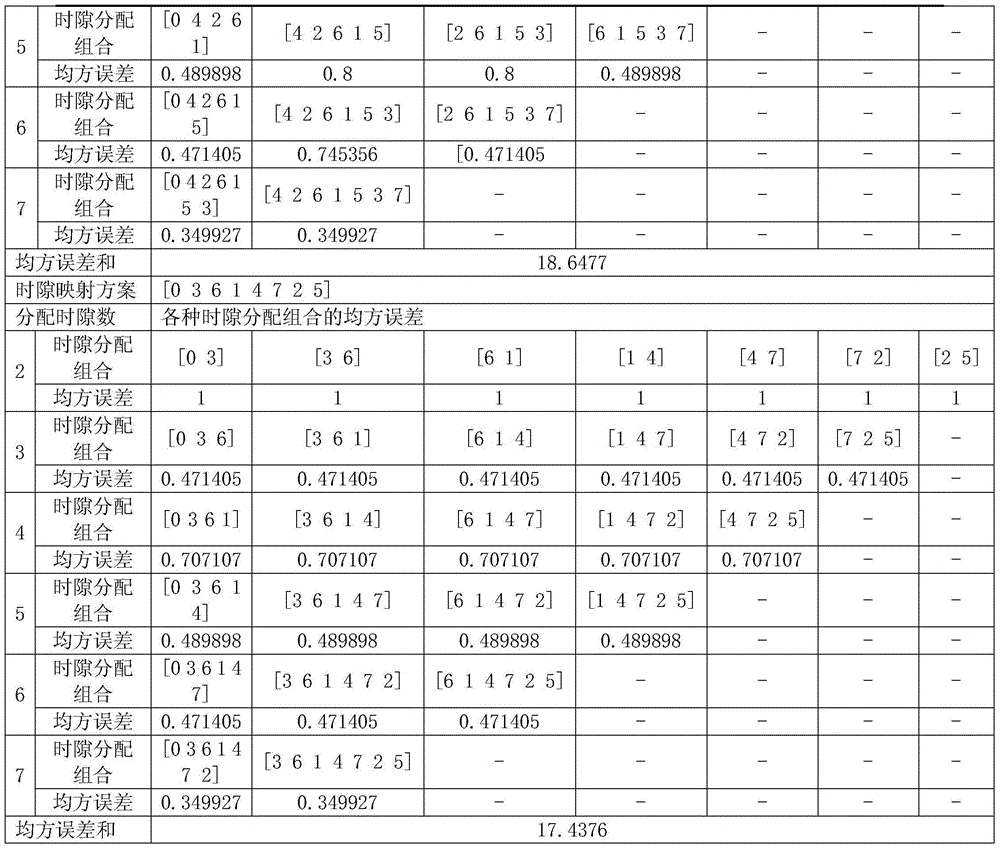
[0022] S3: Map the time slot number [0, N-1] according to the time slot allocation scheme searched by the minimum mean square error sum method, for example, for a system with 8 time slots, the mapping scheme is: [0, 3, 6, 1, 4, 7, 2, 5] or rotate it;

[0023] S4: Use the new time slot number after mapping as the time slot for the terminal burst.

[0024] The time slot number mapping method in the step S3 is: respectively...