
Spur dike size determining method suitable for branched reach channel improvement
A method for determining a channel and a technology for channel determination, which is applied in the field of spur dam size determination for channel regulation in branch river sections, can solve problems such as lack of quantitative research, and achieve the effect of river stability and channel improvement.
- Summary
- Abstract
- Description
- Claims
- Application Information
AI Technical Summary
Problems solved by technology
Method used
Image



Examples
Embodiment Construction
[0029] In order to further understand the invention content, characteristics and effects of the present invention, the following embodiments are enumerated hereby, and detailed descriptions are as follows in conjunction with the accompanying drawings:
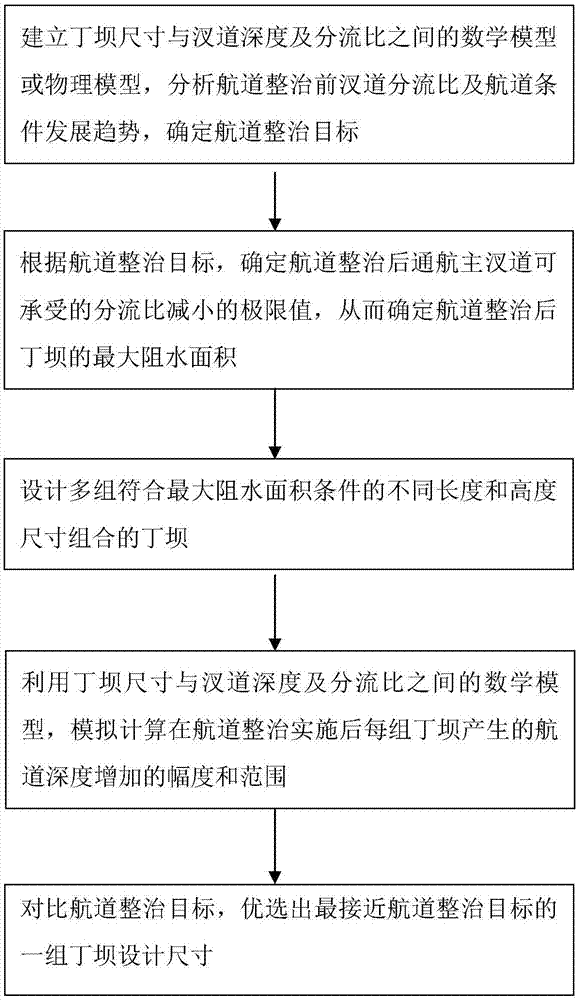
[0030] See figure 1 , a method for determining the size of spur dikes suitable for branched river channel regulation, including the following steps:
[0031] Step 1: Establish a mathematical model or a physical model between the size of the spur dike, the depth of the branch channel and the diversion ratio, analyze the diversion ratio of the branch channel and the development trend of the channel conditions before channel regulation, and determine the goal of channel regulation;
[0032] Step 2. According to the goal of waterway regulation, determine the limit value of the reduction of diversion ratio that the navigable main channel can bear after the channel regulation, so as to determine the maximum water blocking area of t...
PUM
 Login to View More
 Abstract
Description
Claims
Application Information
 Login to View More