
A kind of microwave dielectric ceramic material and preparation method thereof
A technology of microwave dielectric ceramics and raw materials, applied in ceramics, inorganic insulators, etc., can solve the problems of spectrum resource shortage, low dielectric constant, high cost, etc., and achieve suitable large-scale industrialization, simple preparation process, and broad application prospects Effect
- Summary
- Abstract
- Description
- Claims
- Application Information
AI Technical Summary
Problems solved by technology
Method used
Image


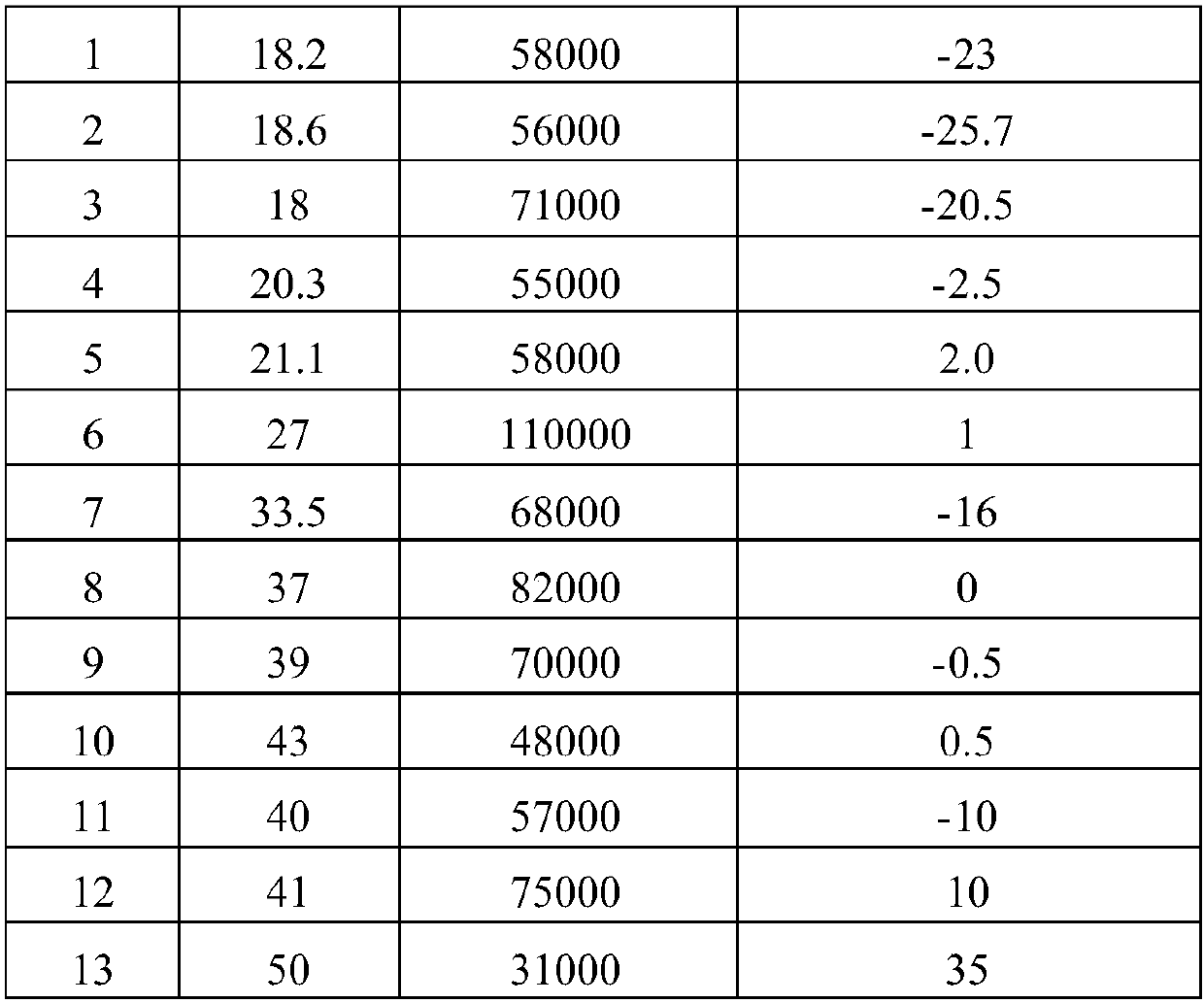
Examples
preparation example Construction
[0047] The present invention also provides a preparation method of the microwave dielectric ceramic material described in the above technical solution, comprising the following steps:
[0048] a) mixing lanthanum oxide, strontium carbonate, aluminum oxide, titanium dioxide and water, performing fermentation and sand grinding for the first time in sequence to obtain the first raw material mixture;
[0049] b) After the first raw material mixture obtained in step a) is dried for the first time, it is pre-calcined to obtain a pre-fired material;
[0050] c) crushing and sieving the calcined material obtained in step b), mixing it with a sintering aid and water, and performing a second sand mill to obtain a second raw material mixture;
[0051] d) After the second raw material mixture obtained in step c) is dried for the second time, sieving and compression molding are carried out in sequence to obtain a compression molding material;
[0052] e) Sintering the pressed molding mate...
Embodiment 1
[0082] (1) According to xLa in Table 1 2 o 3 -ySrO-zAl 2 o 3 -wTiO 2 The stoichiometric ratio is weighed and mixed with lanthanum oxide, strontium carbonate, aluminum oxide and titanium dioxide to obtain the first mixture; then add water equal to the quality of the first mixture, stir and ferment with a mixer for 24 hours, and then use a sand mill to Sanding for 1h to obtain a particle size range of 0.1μm≤D 0.5 ≤ 0.3 μm of the first raw material mixture.
[0083] (2) After discharging the first raw material mixture obtained in step (1), use a spray drying tower to spray dry at 220°C, then heat up to 1250°C at a heating rate of 3°C / min, and then preheat at 1250°C Burn for 5 hours and cool with the furnace to obtain pre-fired material.
[0084] (3) After pulverizing the calcined material obtained in step (2), pass through an 80-mesh sieve, add the sintering aid of the specific content (relative to the mass of the calcined material) in Table 1, stir it evenly with a mixer, ...
Embodiment 2
[0088] (1) According to xLa in Table 1 2 o 3 -ySrO-zAl 2 o 3 -wTiO 2 The stoichiometric ratio is weighed and mixed with lanthanum oxide, strontium carbonate, aluminum oxide and titanium dioxide to obtain the first mixture; then add water equal to the quality of the first mixture, stir and ferment with a mixer for 24 hours, and then use a sand mill to Sanding for 1h to obtain a particle size range of 0.1μm≤D 0.5 ≤ 0.3 μm of the first raw material mixture.
[0089] (2) After discharging the first raw material mixture obtained in step (1), use a spray drying tower to spray dry at 220° C., then raise the temperature to 1100° C. at a heating rate of 3° C. / min, and then preheat at 1100° C. Burn for 6 hours and cool with the furnace to obtain pre-fired material.
[0090] (3) After the calcined material obtained in step (2) is pulverized, pass through an 80-mesh sieve, add the sintering aid of the specific content (relative to the quality of the calcined material) component in T...
PUM
| Property | Measurement | Unit |
|---|---|---|
| particle size | aaaaa | aaaaa |
| particle size | aaaaa | aaaaa |
| frequency temperature coefficient | aaaaa | aaaaa |
Abstract
Description
Claims
Application Information
 Login to View More