
A method for efficiently and quickly preparing wax leaf specimens of plants
A technology for preserved leaf specimens and plant specimens, which is applied to the field of efficient and rapid production of plant preserved leaf specimens, can solve the problems of many processes, waste of plant resources, long time consumption, etc., achieves high art collection value, solves the problem of taking a long time for pressing, and improves work efficiency. The effect of efficiency
- Summary
- Abstract
- Description
- Claims
- Application Information
AI Technical Summary
Problems solved by technology
Method used
Image

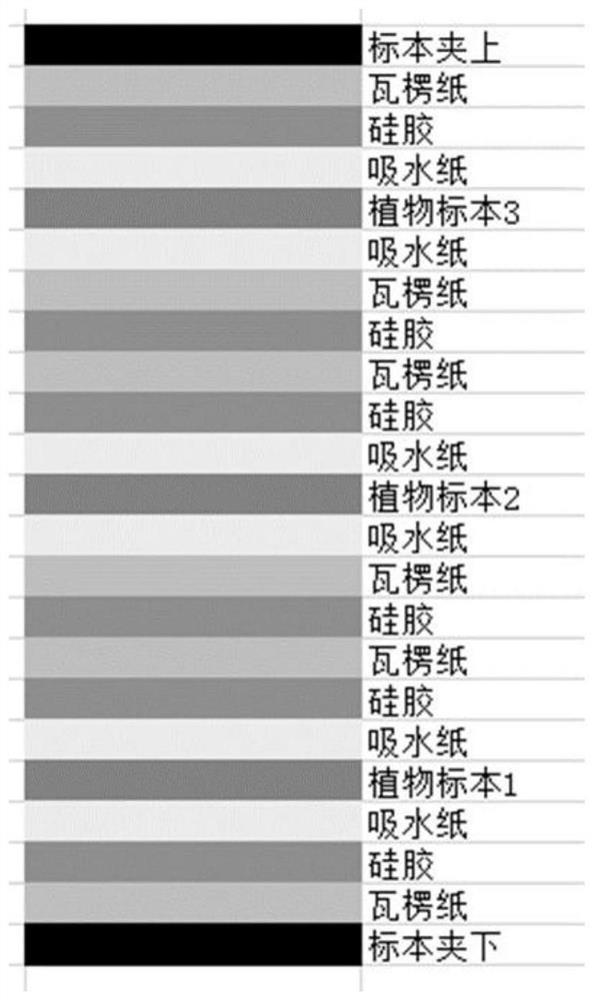
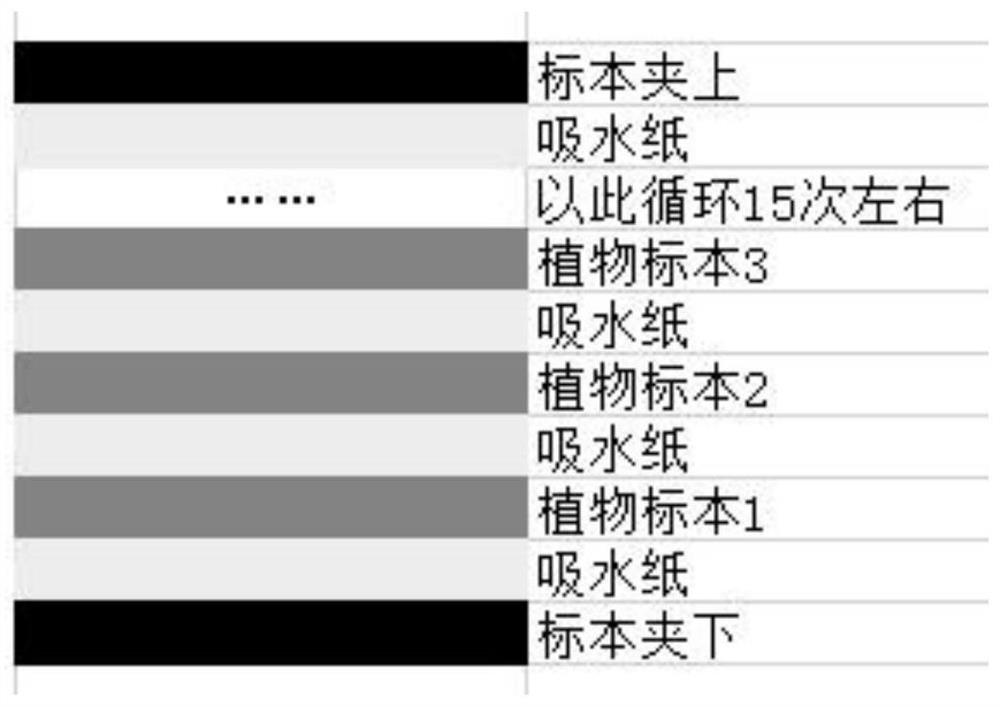
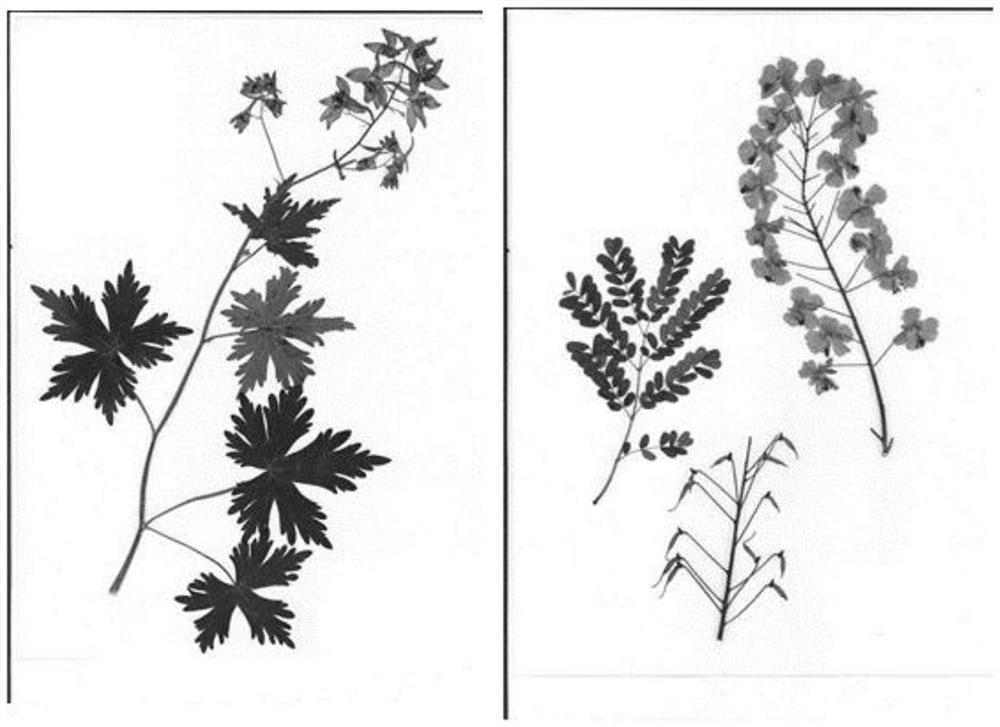
Examples
Embodiment 1
[0034] The present invention makes the method for plant wax leaf specimen (as figure 1 ) includes the following steps:
[0035] Prepare the tools and materials required for pressing specimens, including color-changing silica gel particles, 50cm×60cm wooden specimen holder, 50cm×60cm corrugated paper, hemp absorbent paper, utility knife, pruning shears, tweezers, binding rope; vertical board of corrugated paper There are small holes with a diameter of 5cm×5cm and a diameter of 2-3mm. The hemp absorbent paper is made of handmade off-white grass paper, which is rough and has good toughness. It is not easy to damage or break holes after absorbing water and moisture. If the alkalinity is too large, it will damage the color of plant specimens;
[0036] S1. Trim and shape the collected Sedum sedum specimens, remove overlapping and defective branches, leaves, roots, tubers and flowers; dry the discolored silica gel particles to make them completely blue, free of moisture, and seal an...
Embodiment 2
[0068] The method for making plant wax leaf specimen of the present invention comprises the following steps:
[0069] Prepare the tools and materials required for pressing specimens, including color-changing silica gel particles, 50cm×60cm wooden specimen holder, 50cm×60cm corrugated paper, hemp absorbent paper, utility knife, pruning shears, tweezers, binding rope; vertical board of corrugated paper There are small holes with a diameter of 5cm×5cm and a diameter of 2-3mm. The hemp wrinkle absorbent paper is made of handmade off-white straw paper, which is rough and has good toughness. It is not easy to damage or break holes after absorbing water and moisture. The alkalinity of paper is too high, which will damage the color of plant specimens;
[0070] S1, pruning and shaping the collected milk vetch plant specimens, removing overlapping, defective branches, leaves, roots, tubers and flowers; Stems, leaves, flowers, roots and other organs are small and thin;
[0071] Dry the...
Embodiment 3
[0098] The method for making plant wax leaf specimen of the present invention comprises the following steps:
[0099] Prepare the tools and materials required for pressing specimens, including color-changing silica gel particles, 50cm×60cm wooden specimen holder, 50cm×60cm corrugated paper, hemp absorbent paper, utility knife, pruning shears, tweezers, binding rope; vertical board of corrugated paper There are small holes with a diameter of 5cm×5cm and a diameter of 2-3mm. The hemp absorbent paper is made of handmade off-white grass paper, which is rough and has good toughness. It is not easy to damage or break holes after absorbing water and moisture. If the alkalinity is too large, it will damage the color of plant specimens;
[0100] S1, pruning and shaping the collected iris plant specimens, remove overlapping, defective branches, leaves, roots, tubers and flowers; Flowers, roots and other organs are thick and succulent;
[0101] Dry the color-changing silica gel particl...
PUM
 Login to View More
 Abstract
Description
Claims
Application Information
 Login to View More