
6xxx aluminum alloy sheet products and methods for making the same
a technology of aluminum alloy and products, applied in the field of6xxx aluminum alloy sheet products and methods, can solve the problems of difficult to increase the strength of a 6xxx aluminum alloy without decreasing its corrosion resistance, and elusive to improve one property of an aluminum alloy without degrading another property, etc., to reduce the natural aging rate, improve the hemming response, and resist dissolution
- Summary
- Abstract
- Description
- Claims
- Application Information
AI Technical Summary
Benefits of technology
Problems solved by technology
Method used
Image

Examples
example 1
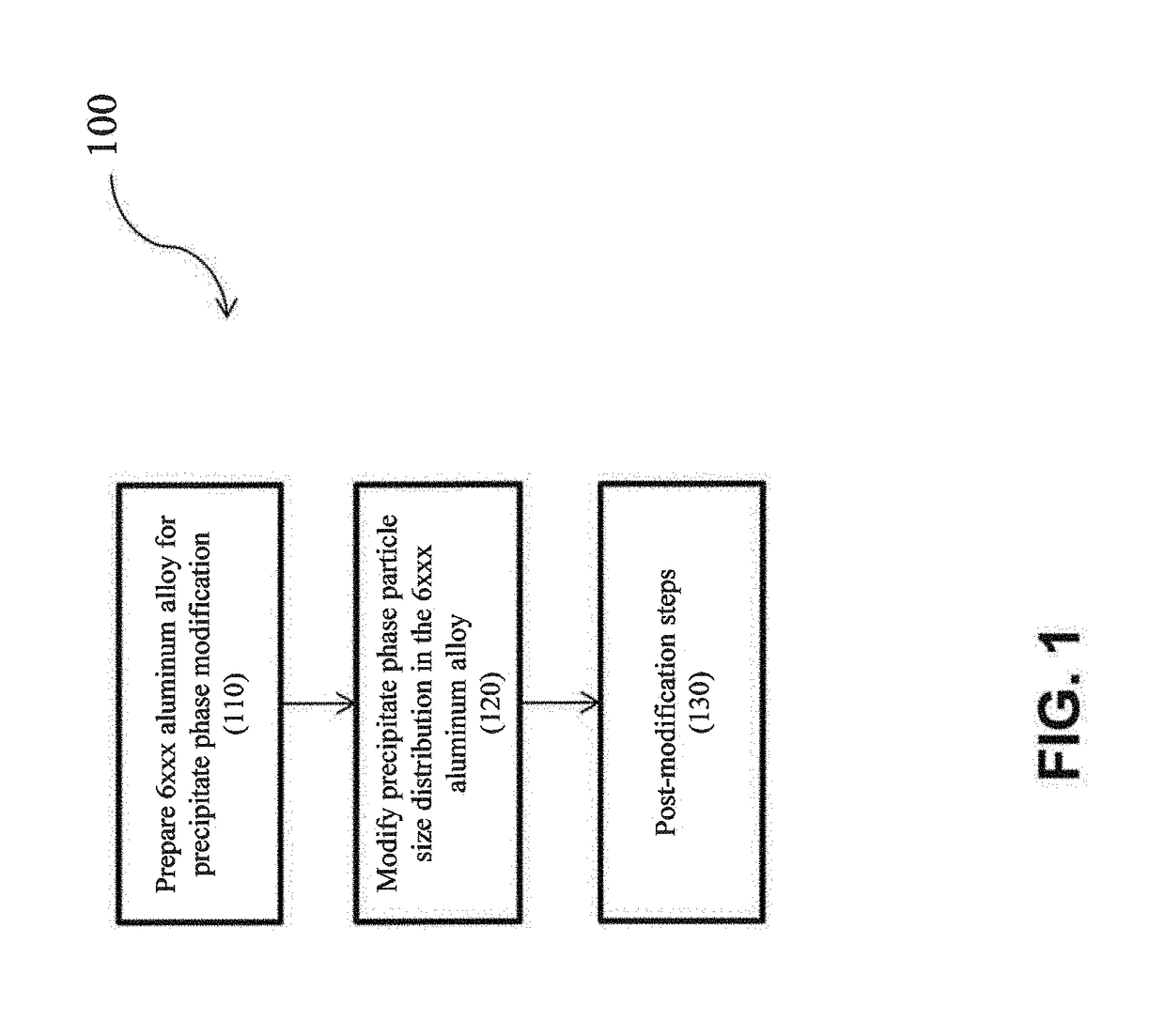
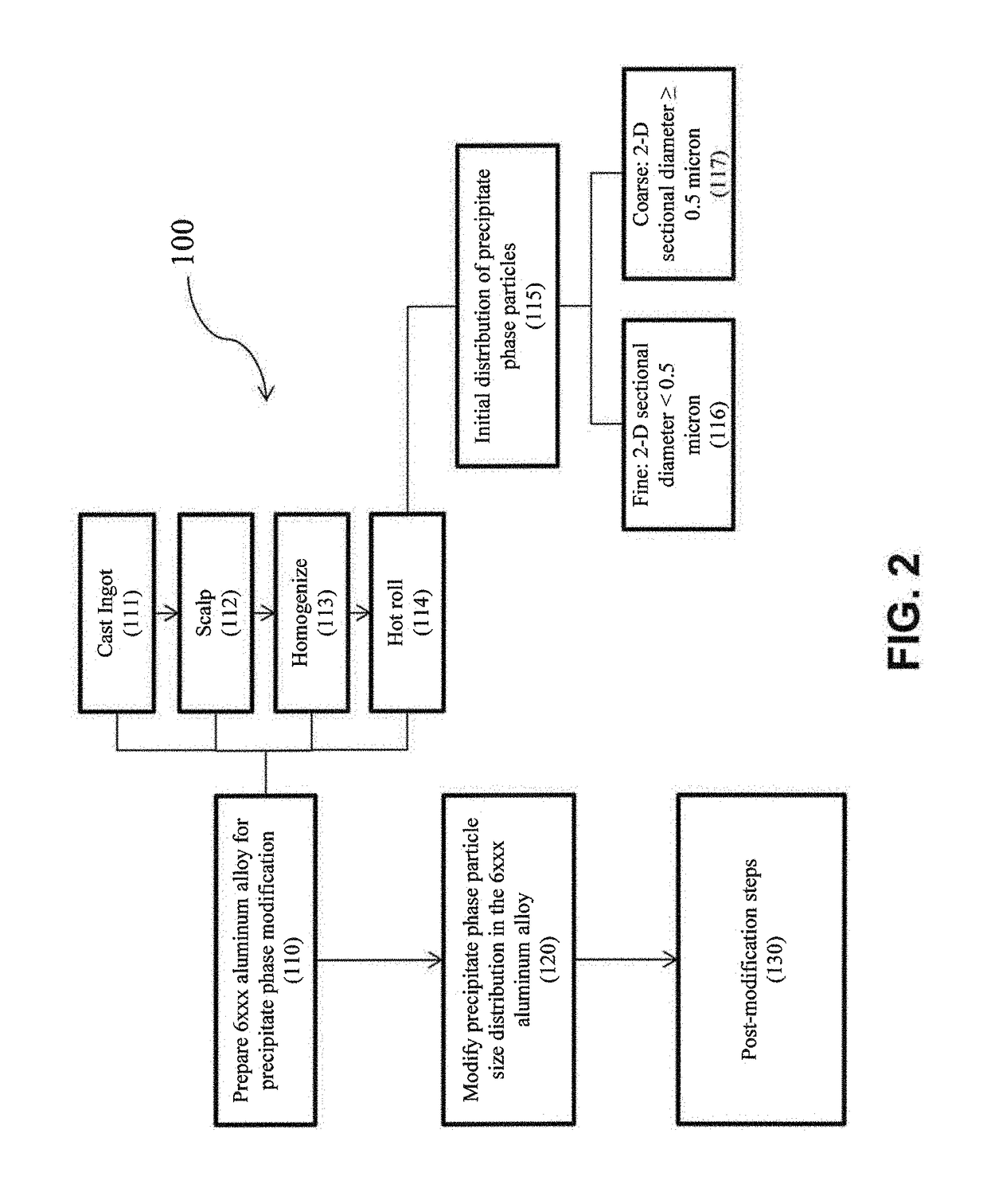
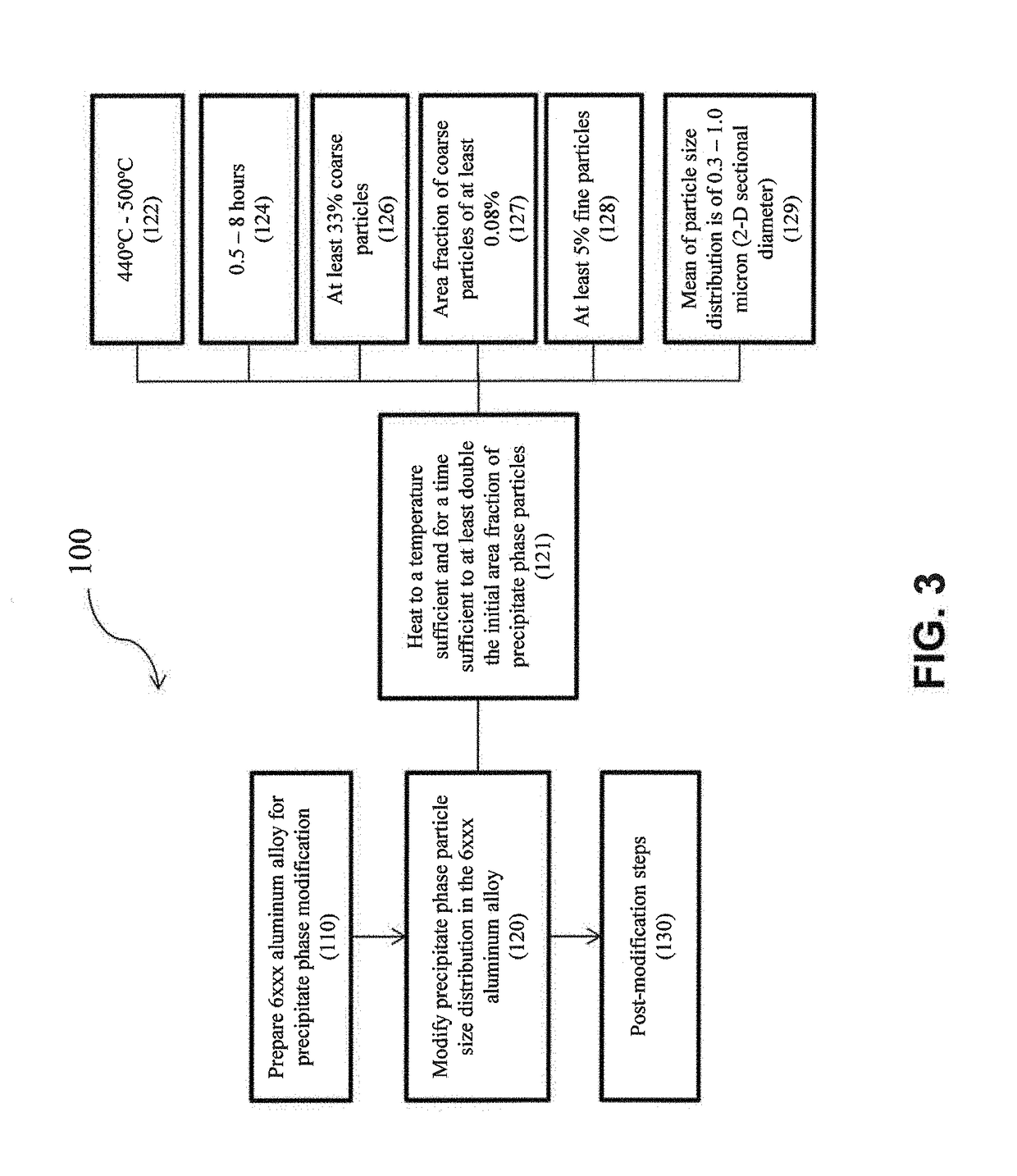
[0055]A first ingot of aluminum alloy 6022 was cast (“Alloy 1”). Alloy 1 was then scalped, homogenized, and then hot rolled to an intermediate gauge about of 5 mm (0.2 inch). Alloy 1 was then heated to an annealing temperature of 468° C. (875° F.) where it was held for 4 hours, and then air cooled to room temperature. The annealed intermediate gauge strip was then cold rolled to a final gauge about 1 mm (0.04 inch). The final gauge sheet was then solution heat treated, quenched, and then processed to a final gauge T4 sheet product. A second ingot of aluminum alloy 6022 was cast (“Alloy 2”) and produced using the same steps and conditions as used for Alloy 1, except that Alloy 2 was heated to an annealing temperature of 427° C. (800° F.) where it was held for 4 hours, and then air cooled to room temperature.
Particle Size Distribution Analysis
[0056]During their production, samples of Alloy 1 and Alloy 2 were taken at various points of the production process. Specifically, samples of A...
PUM
| Property | Measurement | Unit |
|---|---|---|
| temperature | aaaaa | aaaaa |
| mean sectional diameter | aaaaa | aaaaa |
| time | aaaaa | aaaaa |
Abstract
Description
Claims
Application Information
 Login to View More